Dino Grandi
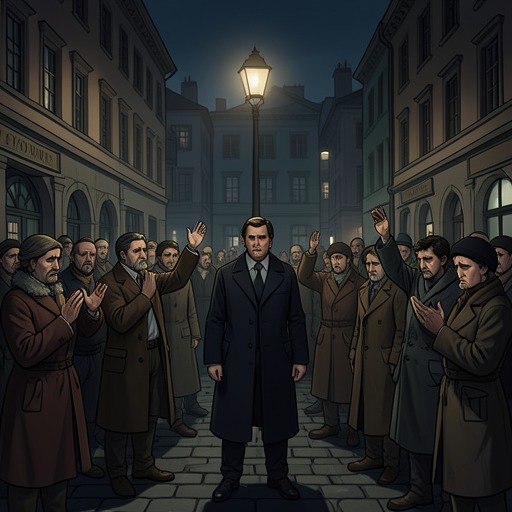
M: Son of the CenturyDino Grandi is presented as a fascist political operative whose documented role during the March on Rome was closely tied to Cesare Maria De Vecchi. Appointed chief of staff to the Quadrumvirate by De Vecchi, Grandi appears at the movement’s command headquarters and later joins an unsuccessful attempt to secure a government led by Antonio Salandra. The account locates him inside the leadership’s negotiations, but offers little evidence of independent action beyond that role.
Position in the Fascist Leadership
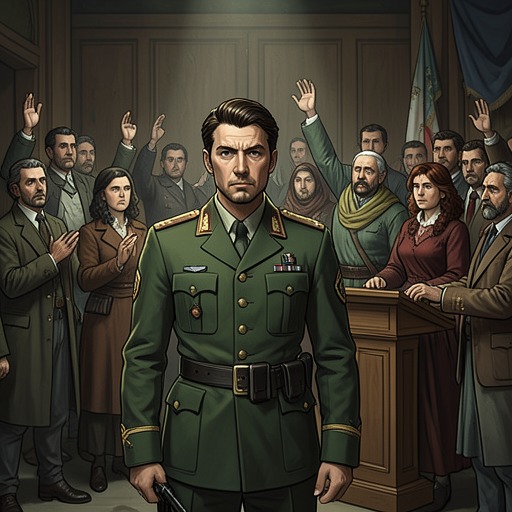
De Vecchi appointed Grandi chief of staff to the Quadrumvirate, placing him within the leadership structure coordinating the march. This was a defined staff position, distinct from the visible command exercised by figures such as Italo Balbo. The narrative does not detail Grandi’s responsibilities or show him directing operations, so his appointment establishes his place in the leadership without specifying the extent of his authority.
At the Perugia Headquarters
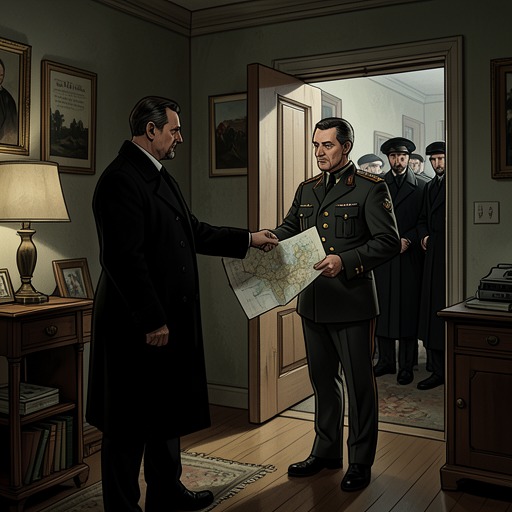
At about eight in the morning, De Vecchi arrived at the Hotel Brufani with Grandi after an eight-hour journey through mud. Inside the command room, the scene contrasted the formal idea of a revolutionary headquarters with disorder and uncertainty: several squadristi were asleep on the floor, and the operations map hung from the wall by a single tack. De Vecchi reported what he had seen on the road to Perugia: exhausted, rain-soaked fascists moving south, many of them unarmed. Grandi’s presence beside him places the chief of staff at this uncertain center of command, though the account attributes the report and the ensuing confrontation with Balbo to De Vecchi, not to Grandi.
The Salandra Negotiation
Later, as Rome and Milan negotiated over the formation of a government, Grandi joined De Vecchi and Costanzo Ciano in one last attempt to obtain a Salandra government. The proposal reflected a competing political course within the fascist leadership. Benito Mussolini rejected it, arguing that mobilizing the fascist army and creating a revolution could not end in Salandra’s return. The call ended with the receiver slammed down; the account records no separate response from Grandi.
Scope and Significance
Grandi’s appearances connect organizational work at the march’s headquarters to the high-level struggle over who would govern afterward. His appointment and his participation in the final approach to Mussolini establish that he was part of the leadership apparatus and involved in its internal maneuvering. At the same time, the narrative keeps him largely in the background: De Vecchi appoints him, travels with him, and takes the lead in the exchanges described. Grandi’s significance here lies in that documented position within a divided command, rather than in a fully developed personal portrait.