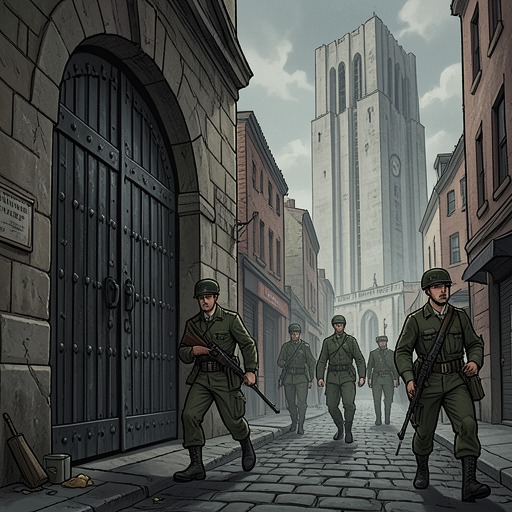
Enrico Caviglia
M: Son of the CenturyEnrico Caviglia was the Italian general responsible for enforcing the Treaty of Rapallo against Gabriele D’Annunzio’s regime in Fiume. His role combined escalating pressure with a temporary pause in the fighting: he issued ultimatums, imposed a blockade, delayed a renewed attack, and later ordered naval fire on the city’s military targets. The sequence places him at the center of the state’s effort to end D’Annunzio’s defiance without treating every decision in the campaign as his alone.
Mission and Ultimatums
At the beginning of December, Caviglia headed the contingent sent from Rome to enforce the treaty. D’Annunzio’s forces had occupied the towns of Veglia and Arbe in defiance of its terms, and Caviglia ordered their liberation. The order made the dispute concrete: the issue was not simply D’Annunzio’s political challenge, but also the limits on territory recognized by the treaty.
On December 20, Caviglia delivered a new ultimatum. D’Annunzio had forty-eight hours to bring his legionnaires back within the borders of the Fiume territory recognized under the agreement. At the same time, Caviglia effectively imposed a land and sea blockade. The ultimatum set a deadline; the blockade increased the pressure on the territory while it remained in defiance. Together, these measures narrowed the space for a negotiated delay, even as the events that followed show that Caviglia did not proceed immediately to an unrestricted assault.
D’Annunzio answered with proclamations rather than compliance. He urged Italian sailors to disobey orders against their fellow Italians, declared resistance the only remaining duty, and appealed to the mothers of the troops who might attack Fiume. These appeals framed enforcement as fratricidal violence. Caviglia’s actions, by contrast, arose from his assignment to implement the treaty and restore the territorial boundary it recognized. The contrast matters: D’Annunzio made the conflict a test of national loyalty, while Caviglia’s successive demands and orders treated it as a military and political challenge to be ended.
The Attack and the Truce
When regular troops attacked, they struck different points along the front, from Val Scurigna to the sea. The legionnaires had initially been commanded not to engage; after retreating to their last line of resistance around the city, they received D’Annunzio’s order to open fire. They reinforced breaches and counterattacked, and by nightfall the defensive line had been restored. This first attack did not settle the confrontation.
General Ferrario, the Army Corps commander, ordered extensive artillery for a renewed action on Christmas Day. Caviglia, identified as head of operations, imposed a truce until dawn on December 26, hoping the D’Annunzian forces would repent. The distinction between the two generals is significant: Ferrario called for the resumption of the attack, while Caviglia set a pause. The truce did not end the campaign, but it interrupted its immediate momentum and created a short interval before combat resumed.
At 6:50 a.m. on December 26, regular troops renewed the attack with artillery support, concentrating on the central sector. The legionnaires again held their line and counterattacked, capturing a cannon and taking prisoners. By midday, the account judged that entry into the city would require a massacre. Caviglia then ordered Admiral Simonetti, commanding the battleship Andrea Doria off Fiume’s port, to fire on military targets in the city. The decision marked a grave escalation: the confrontation had moved from pressure and attacks on the perimeter to bombardment from the sea.
From Bombardment to Demobilization
After the bombardment began, word spread that D’Annunzio had been killed, though he was alive. The fighting continued, and civilians were killed or wounded. These consequences formed the setting for the final effort to bring the conflict to a close, but the account does not attribute the subsequent decisions to Caviglia personally. On December 28, it was Ferrario who refused to negotiate the legionnaires’ surrender and threatened heavier bombing. Citizen representatives then implored D’Annunzio to surrender his powers, which he handed to the mayor and the people of Fiume.
On December 31, an agreement was signed at Abbazia for the legionnaires’ total demobilization from the city. Caviglia’s part in the outcome is therefore best understood through the sequence of actions directly assigned to him: enforcing the treaty, setting the ultimatum and blockade, imposing a temporary truce, and ordering fire on military targets. The final agreement followed the transfer of D’Annunzio’s powers and the refusal of Ferrario to negotiate; the evidence does not establish Caviglia as the author or signatory of that settlement.
Narrative Role
Caviglia appears through decisions and command relationships rather than private scenes or personal reflections. The narrative identifies him first by his task, then by his capacity to interrupt the campaign, and finally by the order that brought naval guns into the confrontation. This progression resists a simple portrait of either unbroken restraint or unqualified aggression: he delayed the renewed action, but later authorized a form of attack that intensified the danger to Fiume.
The careful separation of roles also defines the limits of his significance. Ferrario commanded the Army Corps and called for heavier action; Simonetti commanded the battleship that received Caviglia’s order; D’Annunzio directed the legionnaires and ultimately surrendered his powers. Caviglia was neither the sole commander of every operation nor the figure who personally resolved the political dispute. He was, instead, the operations chief whose choices repeatedly altered the pressure on the city, from treaty enforcement and blockade to truce and bombardment. Through that changing sequence, the episode presents state authority as a chain of orders whose consequences grew increasingly difficult to contain.