Fascist Cheka
M: Son of the CenturyThe Fascist Cheka was a clandestine unit created in January 1924 under Benito Mussolini’s direct supervision to strike at the enemies of fascism. Conceived as a means of acting where the remaining liberal laws obstructed the party, it joined public claims of legal political participation to a secret structure for political violence. The evidence presents it not as an autonomous police body but as an instrument controlled by senior Fascist leaders and supported through personal patronage and party resources.
Creation and Purpose
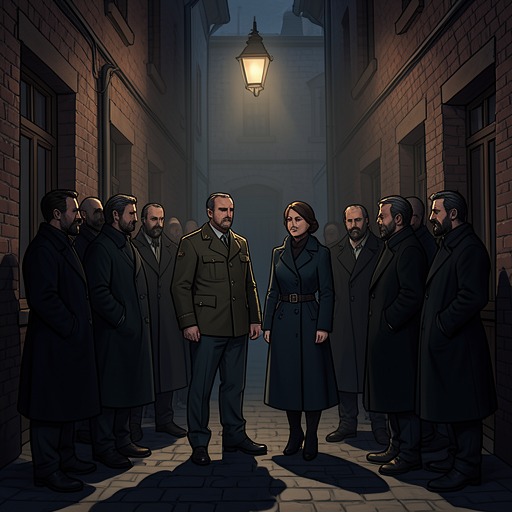
On January 10, 1924, Cesare Rossi, Francesco Giunta, Giovanni Marinelli, and Emilio De Bono met at Mussolini’s residence on Via Rasella. Their purpose was to establish a secret unit, directly supervised by them, that could strike at fascism’s opponents. Mussolini considered such an organization indispensable during a transition in which the law still bore traces of liberalism: the unit was intended to bridge the gap between what the leadership wanted to do and what could be done legally.
The name reflected the model its founders invoked. At the meeting, Mussolini expressed admiration for Vladimir Lenin’s authorization of the Cheka, the Russian secret police, and its use of terror in the early period of the communist state. His advisers proposed naming the clandestine organization the Fascist Cheka. The comparison was more than a label: it situated the new unit within a conception of political power that treated covert coercion as a usable instrument of state-building and partisan struggle. The available account establishes the leaders’ purpose and chosen model, but does not set out a formal charter, membership list, or complete chain of command.
Leadership and Patronage
The unit’s organization depended on overlapping authority rather than a clearly delineated public office. Marinelli jealously protected his position as its head, while sharing command with Rossi. The two men occupied different but complementary roles: Marinelli, the National Fascist Party’s treasurer, controlled money and guarded his command over the operatives; Rossi communicated with Mussolini and handled practical arrangements. The description of the unit as secret and directly supervised by senior leaders sits alongside Marinelli’s later status as its head, indicating both collective political oversight and a contested inner circle.
Amerigo Dùmini was proposed to lead the organization, and Mussolini welcomed the choice. Dùmini had already undertaken secret missions in France to eliminate antifascists living in exile. In early February, Mussolini received him at home and appointed him to oversee the Fascist Cheka. The appointment placed an operative with prior clandestine experience inside an organization designed for covert action, while tying his position to the personal approval of the party leader.
That relationship was sustained through material support. Giovanni Marinelli proposed giving Dùmini a cover position as a traveling sales supervisor for Corriere Italiano, directed by Filippo Filippelli. The arrangement included a monthly salary of 2,500 lire, use of the newspaper’s car, accommodation at the Hotel Dragoni, and a rented apartment on Via Cavour costing 400 lire a month. Additional payments and expenses were also covered at the party’s expense. These provisions show how party resources could support a covert operative’s public cover and private living arrangements; they also reveal the unit’s dependence on political patrons rather than an independent administrative structure.
Logistics and Operations
Travel was one practical requirement of Dùmini’s work. In a letter dated January 23, 1924, Rossi asked Mussolini to arrange a permanent railway pass for him beginning February 1. The letter explained that Dùmini frequently had to travel by train to carry out assignments from Rossi, Mussolini, or others, and that this need would grow during the approaching electoral period. The request makes the chain of patronage concrete: senior figures issued or conveyed mandates, while the party’s access and influence were used to facilitate an operative’s movement. The letter records a request for the pass, not confirmation that it was issued.
The evidence offers few specific operational details about the unit’s actions after its creation. It does, however, connect its purpose to the wider pattern of Fascist leadership treating violence as a political instrument. In 1919, a confidential government circular had urged Fascist collaboration in suppressing revolutionary attempts, even violently, provided the groups accepted official command. By December 1921, Prime Minister Ivanoe Bonomi’s attempt to regulate the squads had been frustrated after Michele Bianchi declared party sections and combat squads inseparable. These earlier episodes do not describe the Fascist Cheka itself, but they establish a political setting in which Fascist violence could be alternately accommodated by institutions and organized beyond ordinary legal control.
Political Role and Significance
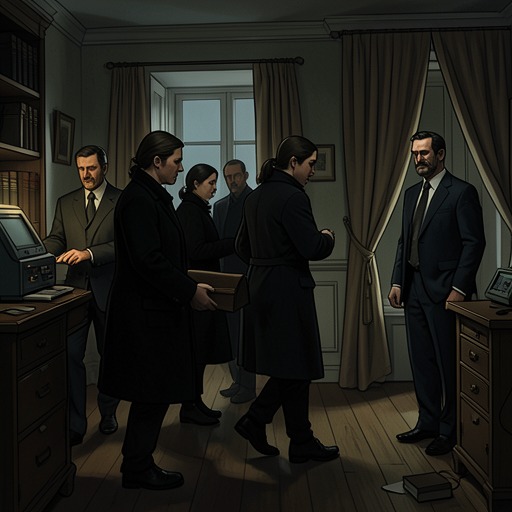
The unit’s clandestine purpose sharply contrasts with the public language of legality and parliamentary politics. In January 1924, Mussolini and his advisers judged that laws retaining a liberal character made some actions impossible through legal means; their answer was not to wait for a change in the law, but to create a secret mechanism under their supervision. The Fascist Cheka thus embodied a division between the visible party and an internal apparatus intended to act beyond normal legal procedures.
The evidence also ties the organization to the leadership’s response to Giacomo Matteotti. After Matteotti’s parliamentary speech, Marinelli remained protective of his command over the unit, and Mussolini angrily questioned what Dùmini and the Cheka were doing, objecting that Matteotti could still be at liberty after such a speech. Following a Fascist directorate meeting at Palazzo Wedekind on June 1, 1924, Mussolini summoned Marinelli for a private conversation; he called him in again the next day. These details place the organization within the political crisis surrounding Matteotti, but they do not, on their own, establish what was discussed in those meetings or prove a specific order from the unit.
The Fascist Cheka’s significance therefore lies both in its stated function and in the relationships that made it possible. Its creation connected political direction, covert operatives, party finance, employment cover, and travel logistics. The contrast between parliamentary appearances and secret preparations was not incidental: it was the reason for the unit’s existence. The record shows a leadership building a clandestine capacity alongside its public political machinery, while leaving the precise scope and outcomes of that capacity only partially visible.