Filippo Turati
M: Son of the CenturyFilippo Turati was a lawyer, political expert, gifted speaker, and founder of the Italian Socialist Party’s humanitarian wing. A moderate and gradualist, he argued for political judgment against calls for a decisive revolutionary clash. His career traces the narrowing space for that position: first within a socialist movement divided over violence and strategy, then in an opposition confronting fascist power through parliamentary speech, abstention, and moral protest. He remained an important voice against accommodation, but the crises around him repeatedly showed how little speech alone could command.
Identity and political method
Turati’s politics were grounded in gradualism and humanitarian socialism. He did not treat the language of revolution as a substitute for the difficult question of whether a movement could actually prevail. At a socialist congress, as leaders debated when to act, he regarded a premature revolutionary attempt as folly. He warned that the fascist squads would answer a socialist call to violence with far better arms. The narrative presents him as vindicated in this assessment, while also emphasizing the limits of foresight: the future did not simply reward the person who had judged the immediate balance of force correctly.
His caution was not a belief that violence was remote from working people’s lives. The account locates socialist debate amid a history in which workers had experienced arrest, imprisonment, and state force, and portrays them as familiar with violence through having suffered it. Turati’s distinction was strategic: recognizing the violence of the existing order did not mean that a poorly prepared attempt to overthrow it would succeed. His insistence on judging the terrain set him against those who treated revolutionary action as an imminent obligation, while his own political method depended on the possibility that reasoned persuasion and organization could still alter events.
That method also appears in his parliamentary warning about the campaign surrounding Italy’s possible agreement with the Allies. Addressing Vittorio Emanuele Orlando and Sidney Sonnino, he argued that the country’s public expectations were becoming a trap. If the government knew an agreement was certain, he asked in effect, there was no need to build opinion to such a pitch; if it did not know, that mobilization could make retreat possible only through deep humiliation. The warning identified a danger in political spectacle: leaders could stir public feeling until it constrained their own choices. His intervention was an early instance of a recurring concern in his politics—the consequences of setting forces in motion without knowing whether they could be controlled.
Warnings amid socialist conflict
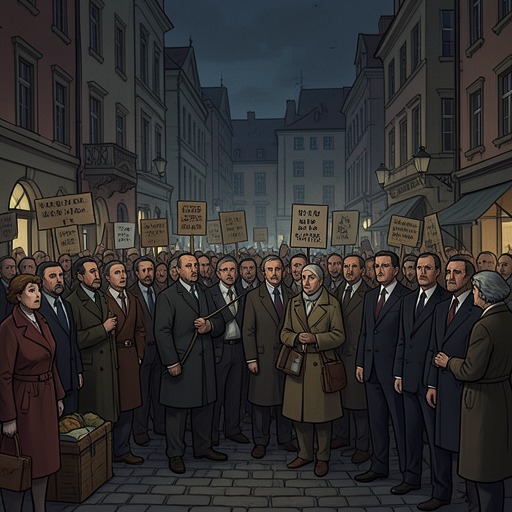
Turati’s position became harder to sustain as the socialist movement faced demands for revolutionary action and the growing threat of fascist violence. At a socialist rally on Via Garigliano, he was expected to speak but did not appear. Ezio Schiaroli took his place, attacked Benito Mussolini, and urged workers toward violence. The demonstration ended in a lethal confrontation with the police. Turati’s absence is not explained, and the episode does not establish what he would have said from the platform. Its significance lies instead in the contrast between his repeated warnings about the risks of a violent showdown and the escalating confrontational politics unfolding in his party’s name.
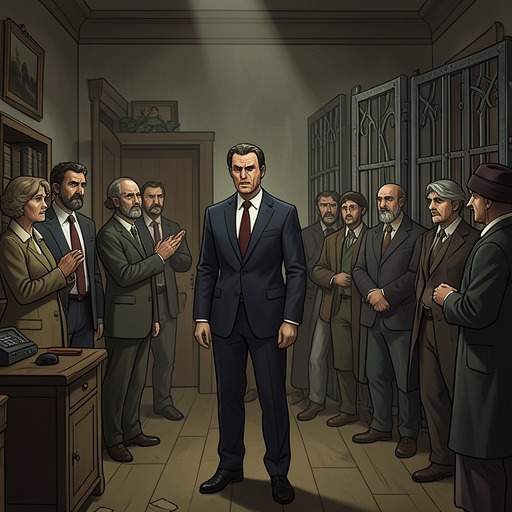
The division became institutional in Rome at the Italian Socialist Party’s congress on October 3. Giacinto Menotti Serrati’s proposal to expel the reformists passed by a narrow margin. Turati and Giacomo Matteotti were among those removed from the party to which they had devoted their political lives. The congress then resolved to join the Communist International and send a delegation to Moscow. The split was described as suicidal but, by then, difficult to avoid: both wings were driven by desperation, while their incompatible strategies left little ground on which to remain united.
The expelled reformists established the Unitary Socialist Party, and Matteotti became its secretary. Turati, the older and more established figure, was his most illustrious supporter. The new party freed its members from the maximalist promise of a revolution perpetually announced but never attempted; it did not supply an equally clear path forward. The narrative stresses this paradox of political freedom without a settled course. Turati’s experience thus became part of the larger crisis of Italian socialism: a movement could reject an unworkable strategy and still lack the strength to replace it with an effective one.
Opposition, strategy, and isolation
Turati’s relationship with Matteotti combined political alliance with generational difference. The younger secretary wrote to him in a combative spirit, promising not to retreat and condemning colleagues who yielded to the attractions of the new powers. In those letters, Matteotti sought Turati’s support while pressing a harder line against accommodation. The exchanges give Turati a place not only as a public leader but as a senior interlocutor to whom a younger opponent of fascism could state his fears and resolve.
The alliance did not erase disagreement within the left. After Turati met the king on July 29, radical socialists treated the encounter as a betrayal, and communists mocked him. A political accusation circulated that collaboration with the monarchy and the bourgeoisie marked the end of his relationship with the party and that his side had broken the unity it once claimed to defend. The dispute reflected the impossible burden placed on reformist action: any attempt to engage existing institutions could be represented by revolutionaries as surrender, while refusing engagement left the movement with fewer means of influencing events.
In early 1924, Matteotti tried to bring anti-fascist forces together around mass abstention. For a time, an agreement with the democrats of Giovanni Amendola seemed close, and the prospect of organizing left-wing groups around a united proletarian front appeared possible. The effort quickly fell apart. Matteotti returned to bitter arguments with the Italian Socialist Party, accusing its leaders of making reformists bear responsibility for the divisions among workers. With unity gone, the Unitary Socialist Party abandoned abstention: withdrawal from the electoral contest, Matteotti concluded, would amount to evasion rather than resistance. On the eve of the election, he wrote to Turati that the party needed to toughen its stance and occupy political ground between the government and its opponents, refusing to retreat from the struggle.
Turati’s own appeals show the cost of trying to maintain such resistance amid political exhaustion. He was distressed by socialist colleagues who appeared at ease with fascist deputies or joked with ministers. In a letter to Anna Kuliscioff, he described a movement whose members were tired of constant struggle and longed for a pause. His response was not to claim that contempt could defeat fascism by itself, but to regard contempt for political accommodation as one of the few remaining resources of a depleted opposition. Matteotti’s parliamentary attack later left Benito Mussolini under pressure, yet the underlying equivocation of the government could not be ended by moral argument alone.
Matteotti’s murder and public mourning
The murder of Matteotti transformed Turati’s political opposition into personal grief and public witness. On June 27, before the assembled opposition groups, he spoke in memory of his murdered friend. The moment was charged even before he began: when the clerk inadvertently read Matteotti’s name during the roll call, members of the chamber answered that he was present. The absent deputy was thus made present by a parliamentary ritual, while Turati’s tribute sought to give public form to a loss that the chamber could neither undo nor contain.
When Matteotti’s remains were found, Turati was among the first deputies of the Unitary Socialist Party to reach the search site. He staggered and pressed a handkerchief to his face. The account records the physical force of his response without turning it into a political speech: his grief was immediate, and the murdered man was not simply a symbol for the opposition. The discovery brought the dispute over fascist violence into the presence of the people who had worked beside Matteotti and had continued to hope that parliamentary struggle could matter.
Turati’s place in the funeral was also shaped by the conflict over how the dead should be remembered. On August 21, Matteotti was buried in Fratta Polesine, in his own region, according to the wishes of his wife, Velia. She refused Turati’s proposed political burial at Rome’s Verano cemetery. The choice kept the funeral from becoming the kind of political ceremony Turati had wanted, and it underscored that public commemoration remained contested even among those united in mourning. For Turati, friendship and political purpose could not simply be separated; for Velia, her husband’s return to his region took precedence over that proposed public ritual.
Later resistance and narrative significance
Turati continued to oppose the government in Parliament as it advanced measures restricting press freedom. He confronted Mussolini over those provisions, and Vittorio Emanuele Orlando joined him a few days later. With successive votes, the government lost support; on November 24, the playwright Sem Benelli announced his resignation and framed the choice as one between fascism stepping down and the state resigning. Turati wrote to Kuliscioff that the succession was now open. The remark registered political possibility, but not a settled outcome: the government’s weakening had not yet resolved who could replace it or how opposition forces might overcome their divisions.
Turati’s trajectory is defined by the persistence and limits of democratic opposition. He repeatedly identified the danger of political mobilization without a viable route back, warned that revolutionary words could invite a disastrous imbalance of force, and resisted the idea that retreat from the electoral and parliamentary arenas was automatically principled. Yet the socialist split, the failure of anti-fascist coordination, the murder of Matteotti, and the pressure on the press each exposed the shrinking reach of argument. His role is neither that of a leader who simply foresaw and prevented catastrophe nor that of a passive witness. He was a strategist of caution and a persistent opponent of accommodation, whose political judgment survived the collapse of the organizations and procedures on which his gradualism depended.