Lancia Lambda
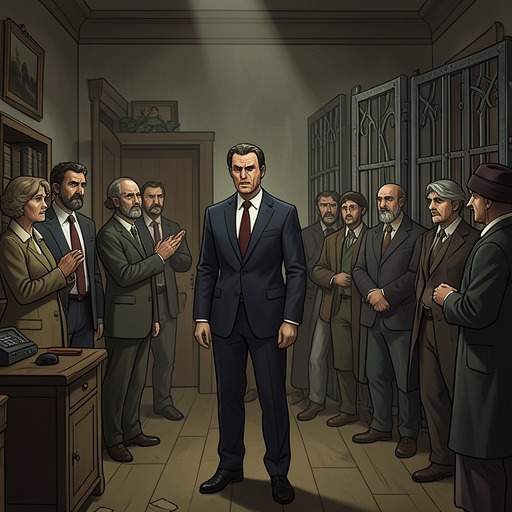
M: Son of the CenturyThe Lancia Lambda, a six-seat enclosed limousine, became the vehicle used by Amerigo Dumini and four accomplices to abduct socialist deputy Giacomo Matteotti in Rome on June 10, 1924. Its spacious, divided cabin offered the appearance of modern utility, but in the operation it served as a concealed waiting room, a means of seizure, and a moving enclosure in which the abductors tried to silence their captive. When Matteotti broke the glass partition between the passenger compartment and the driver, the car’s material design became an obstacle to the men who had chosen it for control and concealment.
Design and Acquisition
The narrative identifies the Lancia Lambda as a recent model from Vincenzo Lancia’s car factory. It had six seats, described as two exterior and four interior, with two fixed and two movable. A sliding glass partition separated the passenger compartment from the driver’s seat. The enclosed, limousine-type body could carry the group while screening its occupants from view; that same partition would later become a point of vulnerability when the kidnapping did not proceed as planned.
Filippo Filippelli, editor of Corriere Italiano and a former personal secretary to Arnaldo Mussolini, rented the car from a public garage. The rental came without a driver, leaving the operation’s members in control of the vehicle. On the night before the abduction, Dumini brought it into the courtyard of Palazzo Chigi. He told the Carabinieri on guard that the car was needed for an important government mission, relying on their familiarity with his work for the prime minister’s press office. The official-sounding explanation gave the vehicle a place inside a government building before it was used in a clandestine operation.
A Sealed Waiting Place
The car was parked at the corner of Via Scialoja and Lungotevere Arnaldo da Brescia, positioned to watch the entrance of Via Giuseppe Pisanelli 40, where Matteotti lived with his wife and three children. The windows were raised and blackout curtains lowered. Dumini forbade exchanging the air inside with the hot air outside, and the men waited out of sight. The car’s enclosure was therefore not incidental: it hid the group from passersby while keeping them close to the door they were monitoring.
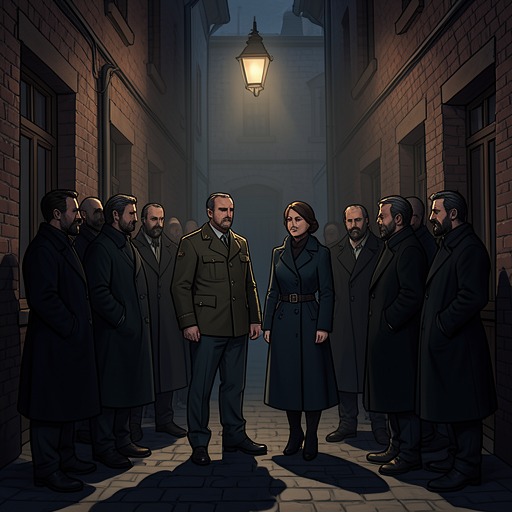
The five men were Dumini, Giuseppe Viola, Albino Volpi, Augusto Malacria, and Amleto Poveromo, all former Arditi and all previously imprisoned or convicted for non-political offenses. The account places their waiting within an extended period of preparation. Since May 22, Giovanni Marinelli had financed their meals and leisure, and the group had spent ten days eating and drinking at the party’s expense. After an earlier attempt to arrange Matteotti’s abduction during foreign travel was abandoned, the plan shifted to intercepting him as he left home. The car made that change possible by allowing the men to wait near the target and then pursue him along the river.
The Abduction and the Broken Divider
At about 4:40 p.m., Matteotti emerged without a hat, wearing a light-colored suit and carrying a white envelope under his arm. Instead of following his usual route, he crossed the Lungotevere and walked beside the river, where a Carabinieri officer, swimmers, a street sweeper, and two children were nearby. Dumini ordered Viola to start the engine and remain in the car with him. The Lancia Lambda moved past Matteotti, stopped, and opened its doors. Malacria first tried to seize him; Volpi pointed him out, and the men had to improvise when Matteotti resisted.
The abductors eventually got Matteotti into the car and drove northeast across Ponte Milvio, using the horn to cover his cries as they left the city. During the drive, Matteotti continued to struggle. He kicked through the glass divider separating the passenger compartment from the driver’s seat, breaking the barrier that had distinguished the enclosed passenger space from the front of the car. Dumini, seated in front, was struck by flying glass. The episode exposed the limits of the vehicle as a means of control: its partition had divided the cabin, but it could not keep the captive’s resistance contained. The car carried Matteotti away, yet the noise and damage registered how far the operation had departed from its intended script.
Concealment and Cleanup
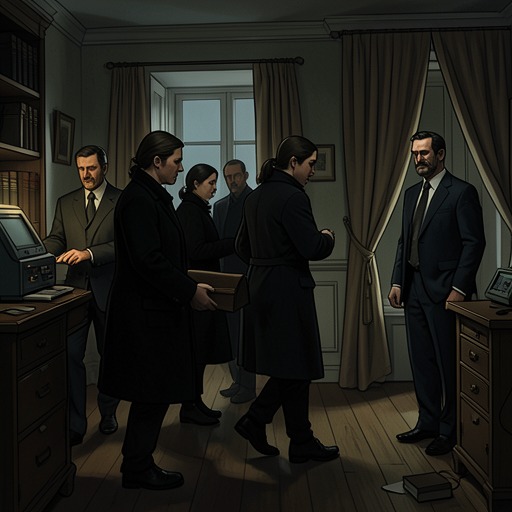
The vehicle remained a practical problem after the abduction. Filippelli had hidden it in the garage of one of his managing editors. When Cesare Rossi confronted him, Filippelli affected nonchalance and suggested that the upholstery had been soiled. Dumini was to clean the car before it was returned. The need to remove traces from the cabin joined the vehicle to the subsequent effort to manage evidence, rather than ending its role when it left the scene.
Around lunchtime after Matteotti’s disappearance, the gang met Marinelli at the Hotel Dragoni. He gave them 20,000 liras for their escape and instructed them to leave the city after cleaning the car. Thus the Lancia Lambda linked the operation’s initial preparations, the abduction itself, and the practical work of concealment afterward. Its enclosed body had helped the men wait unseen and transport Matteotti; its damaged divider and soiled upholstery made it a material record of resistance and violence that then had to be cleaned and hidden.