Roberto Farinacci
M: Son of the CenturyRoberto Farinacci was a railwayman, former socialist, early Fascist, and the organizer who made Cremona one of the movement’s provincial strongholds. A forceful advocate of squad violence, he helped build the Lombard formations on which Benito Mussolini relied, but repeatedly challenged the leader’s efforts to subordinate local armed power to a centralized party and militia. His trajectory makes him both an instrument of Fascist expansion and a persistent test of Mussolini’s control over it.
Background and Rise in Cremona
Farinacci’s political identity combined working-class origins with an interventionist nationalism and a place in the Fascist movement from its early days. The account identifies him as a railwayman and socialist before describing his ardent support for intervention in the war; he was later suspected of evading military service. It also characterizes him as an unpolished tabloid journalist, a determined and unscrupulous political operator, and an associate of Mussolini. Above all, he became the backbone of the Lombard squads.
His local importance is visible in the movement’s sparse early membership figures. At the May congress, Fascism could count 600 registered members in Milan, 300 in Cremona, and 300 in Rome, with only small groups elsewhere; the national total was 2,375. The Cremona figure was credited to Farinacci’s activism. The number gives scale to his achievement: the local organization he built stood among the largest Fascist bases at a time when the movement remained small nationally.
His reach also extended beyond recruitment. When Mussolini prepared for possible attacks, Farinacci demanded a higher reimbursement for four of his men than the standard allowance for travel and an overnight stay, describing them as experienced criminals ready for anything. This episode places him within a culture that treated intimidation and violence as operational assets. It also shows how the squads’ practical machinery depended on local leaders who could supply personnel, bargain over resources, and mobilize men whose loyalty ran through provincial networks.
The Cremona Assault and the Limits of Command
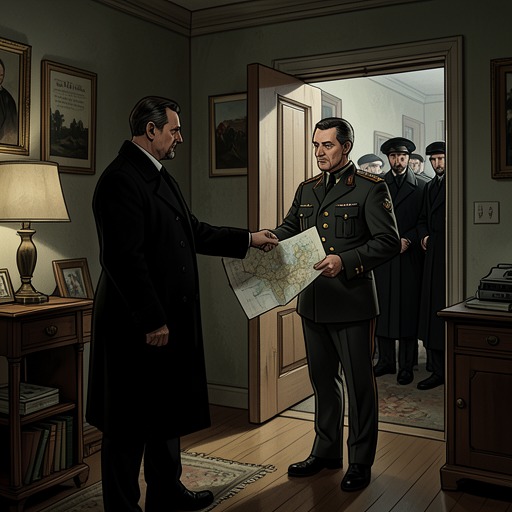
Farinacci’s most consequential demonstration of local power came in Cremona during the Fascist action against the prefecture. The operation began prematurely. At six in the evening, a squad member sabotaged the electric lighting in the prefecture and nearby streets, and roughly seventy squad members entered the building on Farinacci’s orders. Other groups occupied the telegraph and telephone offices. Carabinieri and royal guards allowed the initial entry, but the attack had begun hours before the established time and without adequate assessment of what might follow.
The prefect recovered from his initial confusion, alerted the garrison, and arranged for military reinforcements. Forty captured Fascists were held together in one room. They tried to secure their release by claiming that a nationwide mobilization was under way, supposedly arranged by Mussolini with senior state officials. The prefect had received no such information; what he knew was that other Fascists had started a fire in San Giovanni in Croce, outside Cremona. The prisoners’ appeal reveals the gap between the authority they claimed and the authority they actually possessed.
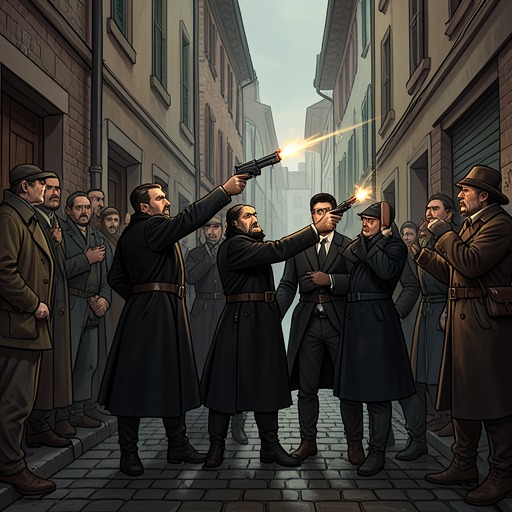
A second contingent attempted another assault a few hours later. Some attackers drove a speeding car into the soldiers’ cordon, while others tried to reach the prefecture’s windows by climbing ropes. After bugle calls, soldiers advanced with rifles aimed at the attackers. Farinacci urged his men to stop shooting, apparently convinced that the soldiers must be firing blanks. The exchange exposed the danger of treating state force as a bluff and of mistaking prior complicity for an assurance of permanent protection.
The operation ended in a direct contest between local militancy and orders from the movement’s leadership. Italo Balbo, having heard that the action had started early, sent an emissary from Perugia to call it off. Farinacci instead gave the emissary a handwritten note for Mussolini declaring that his men would remain and that there would be no cancellation. The refusal was more than a tactical disagreement: it made visible a provincial commander’s claim to decide when the squads would act, even when the national leadership sought to restrain them.
Opposition to Normalization
After the March on Rome, Farinacci turned from being an enthusiastic leader of the movement’s advance to promoting discontent within it. Excluded from a senior appointment, he refused a secondary role and entrenched himself in Cremona, where he organized dissenters. In Cremona Nuova he attacked negotiation and warned against disarming or making contacts with former enemies. His language presented political compromise as contamination and dissent as something to be purged, preserving a revolutionary identity against the prospect of becoming a conventional governing party.
At the first meeting of the Grand Council of Fascism, held in the prime minister’s private apartments, Farinacci sat in the back row, prepared to obstruct normalization and demobilization. Mussolini warned the assembled leaders that Italy could tolerate only one Mussolini, not many. Farinacci answered the central question indirectly: he argued that the squads were more effective than the militia at keeping the country obedient, especially in a crisis. That position asserted the continuing utility of independent squad power just as Mussolini was trying to replace it with an organization answerable to the regime.
The dispute did not make Farinacci an outright separatist from the movement. He remained in its councils and continued to affirm personal loyalty, but his conduct repeatedly placed the leader’s authority under pressure. During the summer he resisted required examinations for militia officers, which could confirm or deny their ranks, and refused to submit despite the stated possibility of expulsion. He also clashed with Mussolini over command appointments for his associates in the legions of Tripolitania. When Farinacci threatened resignation, Mussolini secretly instructed Cremona’s prefect to arrest him for insubordination if he did not withdraw it. Only then did Farinacci telegraph Rome to retract the threat, ending his message with an assurance of undiminished affection and loyalty.
These reversals capture the unstable balance between dependence and defiance. Farinacci could be threatened through state authority, yet Mussolini still had to manage him rather than simply erase his influence. The leader’s recurring problem was that the squads had helped make Fascism powerful, while their local commanders could use that same force to resist the discipline required by government.
The Second Wave and the Politics of Violence
Farinacci continued to argue that Fascism’s power rested on violence. His provincial newspaper carried a call for a renewed campaign of squad action to complete the revolution and crush dissent, framed as a second wave. During debate over electoral reform, he favored a single-member district system that could protect the influence of provincial Fascist leaders and their local constituencies. Mussolini instead preferred a system based on national lists and a majority premium. The disagreement joined electoral design to the larger struggle over whether Fascism would be controlled from Rome or remain responsive to the provincial leaders who had built its strength.
Farinacci’s appeal was not confined to fellow squad leaders. The narrative observes that even some surviving socialists, including the young Piero Gobetti, expressed admiration for him, despite the danger posed by the violence he championed. That paradox was linked to a distinction between intellectual authority and physical action: Farinacci’s roughness and lack of polish could be represented as proof of sacrifice and authenticity, in contrast to political theorists and officeholders. His supporters treated the truncheon as the proper instrument of a useful Fascism, making violence not an incidental excess but a claim about what political action ought to be.
The language of renewal surrounding Fascism sharpened this position. The movement described its growth as a passage from small groups to legions and from volunteers to a people becoming a nation and a state. Farinacci’s insistence on preserving the squads belonged to that wider promise of national rebirth through disciplined force. Yet his own methods repeatedly produced disorder: the premature assault in Cremona and his resistance to demobilization show how the supposed instrument of national discipline could also frustrate central command.
Matteotti, the Regime, and Farinacci’s Role
In the aftermath of Giacomo Matteotti’s killing, Farinacci’s relationship to the regime acquired a further significance. From Cremona, where he served as an advocate and political figure, he agreed at Mussolini’s suggestion to join the defense team for Amerigo Dùmini. The proposal had been made to him ten days earlier and he had refused it; he now accepted. The reversal placed him on the side of the defense of Matteotti’s killers, as the regime itself became involved in defending those implicated in the murder.
Farinacci therefore occupies a revealing position in the book’s account of Fascism: neither merely a subordinate nor an independent rival, he was a provincial power broker whose value came from the same coercive energy that made him difficult to control. His career moves between recruitment, armed action, party dissent, and political defense work. Each turn returns to the same unresolved question: whether Fascism could convert the violence that brought it to power into a state monopoly, or whether men such as Farinacci would continue to claim the right to wield it on their own terms.