Butchers Motorcycle Club
MARRIED TO MY MASTER: A Bad Boy Hitman RomanceThe Butchers Motorcycle Club emerges from the aftermath of a devastating clubhouse massacre and the survivors’ decision to continue under a new name. Once known as the Skinners, the club is later identified as the Butchers, with Grizzly as its president. Its portrayal holds two aspects of club life together: the authority and reach attached to leadership, and a fierce expectation that members look after their own. The change of name marks a passage through violence, but not a clean break with the losses that came before.
Identity and Transformation
The club’s earlier identity is the Skinners. In the immediate aftermath of the clubhouse attack, Grizzly searches through the wreckage for a woman he calls Duchess and recalls the difficult, often dangerous character of Skinner life and motorcycle-club life more generally. Later, when he and his men are encountered at a bar, the club is no longer called the Skinners: Grizzly’s group now goes by the Butchers. The shift establishes a before and after in the organization’s history, although the available account does not set out a formal renaming process or explain who chose the new name.
The Butchers’ outward presence is recognizable on the road. Their kuttes carry a bloody-bear emblem, and Ana identifies the same mark when motorcycles pass her on the highway. The image connects the club’s name to a visible badge of membership: she recognizes the group from its clothing before she can distinguish Grizzly among the riders. The scene also shows the club moving together beyond its clubhouse, its identity legible to people who know its members and insignia.
The Massacre and Its Aftermath
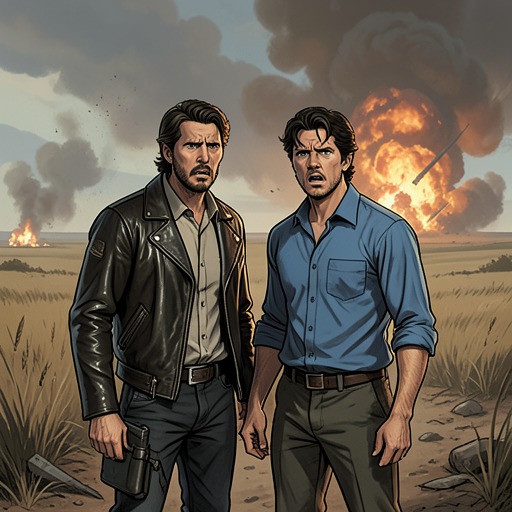
The clubhouse is shown after an attack that has left its front riddled with bullet holes and its windows shattered. The damage is described as pervasive, extending across the building rather than remaining confined to one part of it. Grizzly surveys the scene among the bodies and thinks of those who have been affected physically, mentally, or emotionally. More than half of the people in the club have been killed; those who remain are also struggling with the aftermath.
The account gives attention to the work of dealing with the dead. Grizzly sees bodies that need to be moved and treated with the respect their friends deserve. Some are already absent, and he can only guess that relatives have come to collect them. The losses are therefore both immediate and communal: the clubhouse is damaged, members are dead or injured, and the people left behind must begin the practical work of mourning and recovery without knowing the full disposition of every body.
Grizzly’s response is not to treat the attack as the end of the club. He reassures a visibly shell-shocked member, placing a hand on his shoulder, and resolves that the violence will not break them. His resolve does not undo the deaths or the damage; it gives the survivors a purpose amid them. The club’s later identity as the Butchers follows this scene of collective devastation, making its continuation a central part of its history.
Leadership and Membership
Grizzly’s position as president gives him authority within the Butchers. In one account of the club on the road, he is accompanied by club members and speaks of his word as carrying the force of his office. The scene places the president at the center of a pronounced hierarchy, though it does not describe formal rules, ranks, or decision-making procedures. It shows authority in practice rather than supplying a constitution for the organization.
The narrative also associates leadership with responsibility for members’ safety. Years after the massacre, the Butchers are widely talked about for their unusually strong care for their own. Grizzly is singled out as especially committed to that duty, having entered several life-threatening confrontations in efforts to keep club members out of trouble and prevent them from being hurt. Ana finds this record admirable. His reputation thus rests not only on being president, but on a willingness to take risks on behalf of the people he leads.
The club’s social world includes club girls as well as its male members. During a visit to a town, Grizzly is accompanied by women who are part of that scene, and the passage presents his presidential authority as extending into his dealings with them. This indicates an unequal power dynamic within the club’s orbit, but the evidence does not define the women’s formal status or establish organizational rules governing them. The distinction matters: the narrative depicts a social hierarchy without providing a complete account of the club’s structure.
Reputation and Narrative Significance
The Butchers’ identity is built from both public signs and reported conduct. The bloody-bear patch makes the group recognizable on the highway, while its reputation for protecting members gives that recognizable presence a social meaning. The club is not portrayed merely as a collection of riders: it is a network bound by loyalty, authority, and the expectation that its president will personally intervene when members face danger.
That image is complicated by the history that precedes it. The club’s continuity follows a massacre that killed more than half its members and left the survivors in grief and shock. Grizzly’s protective reputation therefore resonates against an earlier scene in which he tries to keep the surviving group from being broken by loss. The later account of his leadership makes that commitment ongoing rather than momentary, while the change from Skinners to Butchers marks the organization’s altered identity.
The Butchers’ narrative role lies in this tension between vulnerability and force. Its members can be devastated by violence, and the clubhouse can be reduced to a scene of wreckage; the group can also regroup, travel together, and become known for protecting its own. The available evidence supports a picture of a club remade after catastrophe, not a detailed history of its operations. Its most clearly established foundations are the survivors’ persistence, Grizzly’s leadership, the shared emblem, and the expectation of mutual protection.