Kevin's Bar
MARRIED TO MY MASTER: A Bad Boy Hitman RomanceKevin’s Bar is both a crowded center of the town’s social life and a precarious workplace for Ana. Its nightly traffic gives her access to tips, but the bar’s commercial priorities leave its female workers to deal with customers’ misconduct on their own. Across two sharply different shifts, the bar becomes a place where Ana’s vulnerability is visible—and where the people around her reveal whether they will act on it.
Setting and Working Conditions
Kevin’s Bar is described as the biggest and most popular bar in town, with a full house every night, weekends included. The town’s patrons treat drinking as an ordinary part of any day, while Kevin, the owner, is characterized as unwilling to give his workers time off. The steady crowd makes the bar successful, but that success depends on labor that the narrative presents as demanding and poorly protected.
Ana is regularly assigned Friday shifts. They can be good for her tips, but the volume of customers makes them difficult to endure. She has grown used to navigating male patrons who make her uncomfortable and cross boundaries. Her familiarity with that behavior is practical rather than reassuring: she knows how to get through a shift, but the workplace offers little indication that management will step in to make it safer.
The bar’s labor includes more than one kind of service. During a later, slower night, Ana tends the bar and also works tables because she has time to spare. She tries to stay occupied and keep customers’ attention, in part to earn good tips and in part to keep her thoughts from wandering. The contrast between a packed Friday and a quiet shift shows how the same workplace can move between exhausting crowds and stretches of time in which Ana is left alone with her worries.
Harassment and Grizzly’s Intervention
On a busy night, Jerry treats Ana’s work as permission to cross personal boundaries. He makes degrading assumptions about her and reaches into her clothing to grope her. The episode makes concrete the risks behind her earlier description of customers who routinely cross the line: the bar’s service relationship does not protect her from being treated as available to patrons.
Ana intends to handle the situation herself. That response is shaped by the owner’s indifference: she understands that the female workers are expected to manage their own treatment, while the business benefits when customers remain pleased. Her anger and resolve also accompany the sense that an older, tougher version of herself, the one she associates with having been Duchess, has been surfacing more often. The bar therefore tests both her immediate ability to defend herself and her changing sense of who she can be.
Grizzly interrupts when Jerry has a grip on Ana’s hair. He releases her by seizing Jerry by the throat, then checks with Ana about whether the man is bothering her. Jerry’s fear and Ana’s lack of sympathy for him mark a reversal in the encounter: the customer who had acted with confidence is suddenly at the mercy of someone larger and more threatening. Grizzly’s intervention provides the protection the workplace itself has not offered. The scene also repeats a familiar pattern for Ana, who recognizes Grizzly’s voice and experiences the moment as déjà vu.
A Later Encounter During Ana’s Pregnancy
The bar remains part of Ana’s life when she is pregnant and still working. The prospect of beginning to show makes her question whether Kevin will keep employing her; she doubts that a bar’s customers will respond as well to a pregnant worker and has begun looking for a more stable, more suitable job for a mother-to-be. Until she finds one, she remains at Kevin’s Bar, carrying both the strain of work and the hurt that Grizzly has not come for her.
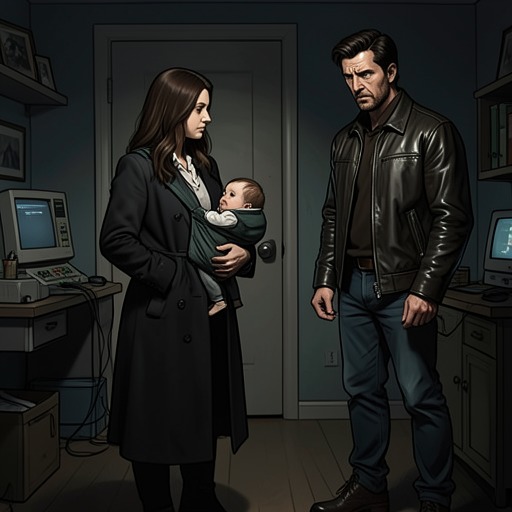
During a slow shift, someone Ana is not serving takes her by the hips and pulls her into his lap. For an instant, she hopes it is Grizzly arriving to claim her; the smaller body and different voice quickly undo that hope. The man is Rodent, whom Ana has not seen for a long time. The bar’s ordinary work setting thus becomes the site of an unexpected return, and Ana’s longing for Grizzly is exposed by the brief gap between what she hopes for and whom she actually sees.
As Rodent leads and nudges Ana toward the exit, the other patrons do not intervene. Kid, seated near a corner, begins to stand with a hand inside his kutte. Ana sharply signals him not to act, then communicates that he should go get Grizzly. Her restraint is explicitly connected to the baby: furious as she is, she keeps her composure for the child’s sake. In this moment the bar offers no collective protection; Ana has to make a quick choice about how to respond, while Kid becomes a possible link to help outside the immediate exchange.
Narrative Significance
Kevin’s Bar gathers together the pressures that shape Ana’s everyday life without making it a refuge from them. It is a source of income, a place where she has learned to manage unwanted attention, and a setting in which her safety can depend on an individual intervening rather than on the owner or the customers as a group. The two encounters sharpen that contrast: Grizzly steps in during Jerry’s harassment, while Rodent’s appearance draws Ana toward the exit as the surrounding patrons remain passive.
The bar also makes Ana’s changing circumstances tangible. Friday tips matter to her, but so does the question of whether her pregnancy will make the job untenable; her hopes about Grizzly surface even amid routine work; and her response to Rodent is governed by her concern for the baby. As the story returns to this workplace, its busy and quiet shifts alike expose the distance between earning a living and being protected while doing so.