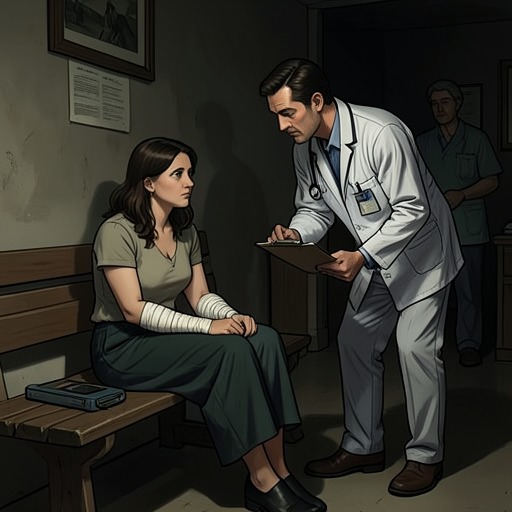
PTSD in veterans and first responders
MARRIED TO MY MASTER: A Bad Boy Hitman RomancePTSD in veterans and first responders is presented through Benton Bishop’s struggle after military service and the controversy surrounding Hymalete, a drug promoted to people with symptoms like his. The novel connects an individual’s continuing difficulties to failures in treatment and institutional support: Benton’s doctors assured him that medication would help, while Dane Bishop later discovers evidence that BioSphere had overstated Hymalete’s effectiveness. The issue becomes the basis of Dane’s campaign to expose the company and seek accountability for the harm he believes was done to his brother.
Benton Bishop’s Experience After Service
Benton’s PTSD is situated in the difficult transition from military service to family life. In a remembered backyard gathering, he is home with his family while the children play in the sprinklers and he tends the grill. The scene holds recovery and ongoing distress together: Benton is glad to be back after years in the military, yet acknowledges that he is still struggling. The domestic setting does not mark the end of his symptoms; it shows the effort of trying to resume family life while living with them.
His account also describes a painful contradiction in the support available to service members. Benton says that people are encouraged to acknowledge PTSD, then treated as liabilities because of it, and left without the help they need. The passage makes his difficulty more than a private medical problem: the stigma and gaps in support shape what it means to seek care and return to civilian life. Benton describes himself as trying to make things work, but that determination does not remove the persistent burden.
Hymalete and the Failure of Treatment
Before the murders of Benton’s wife and children, Benton’s doctor prescribed medication with assurances that it would improve his depression and PTSD symptoms, that its effects would take time, and that side effects would fade. Dane later recalls those assurances as false. Benton had recently begun taking Hymalete, and Dane believes it was connected to his brother’s psychotic break. The novel establishes this as Dane’s understanding and the basis of his advocacy, rather than presenting a general medical conclusion about PTSD or treatment.
Dane’s efforts to defend Benton in court and in the press run up against a lack of belief. He argues that Hymalete may have caused or worsened Benton’s condition, but says that no one would listen and BioSphere directed him to its public-relations department, where he received no substantive response. The company’s handling of his complaint compounds his sense that the family has been abandoned: the problem, as he sees it, is not only that treatment failed, but that the manufacturer evaded scrutiny when he tried to explain what had happened.
Evidence and Public Accountability
The account changes when Emily West tells Dane that studies show Hymalete does not work as effectively as BioSphere claims. Dane responds by interpreting the gap between the studies and the company’s claims as deliberate deception. Emily’s own reaction is one of anger and fear as she confronts what she has learned. Her disclosure gives Dane a new basis for pursuing accountability, turning his earlier suspicion about Benton’s medication into a broader investigation of the drug’s evidence and marketing.
Emily later tells Dane and Jas Robertson that Edward Barker had driven the effort to secure approval for the drug, bribed federal inspectors, and may have had support from the company’s highest levels, including its board. She says she has seen emails and spoken with him, and describes the legal challenges and fines as being treated inside the company as minor costs. This information places the Hymalete dispute within a larger alleged corporate scheme, rather than framing Benton’s experience as an isolated case of unsuccessful treatment.
Dane makes the conflict public in a recorded message addressed to Charlene Padilla. He identifies Benton as a death-row prisoner convicted of murdering his family during a psychotic break, says Benton had taken Hymalete, and alleges that BioSphere possessed evidence that the drug did not work and that its data had been falsified to secure approval. He also states that Hymalete was being marketed to first responders and service members experiencing symptoms like Benton’s, with promises of improved mental health. The drug’s alleged failures therefore carry stakes beyond one family: the same assurances were reaching other people seeking help for trauma-related symptoms.
Consequences and Continuing Significance
The later account connects the lawsuit against BioSphere to Benton’s legal defense. Money from the suit, described as arising from the company’s knowing release of a harmful product and misleading customers and doctors, helps fund the defense. After the news breaks, new evidence supports an appeal; Benton’s sentence is changed on the basis of temporary insanity, and he is freed after treatment in a facility. The novel thus makes institutional accountability materially consequential: the case against the company helps create the means to revisit Benton’s conviction.
Freedom does not erase the strain of the brothers’ ordeal. In a later televised conversation, Benton describes the pain of having Dane take his place in prison, even while recognizing that consequences remain. The treatment-facility reference and Benton’s earlier admission that medication was not working leave his experience more complicated than a simple recovery narrative. Across these scenes, PTSD is both a lived condition that persists within family life and the focus of a public argument about whether institutions can be trusted to provide effective care. The novel’s central contrast is between the promise of help made to people who have served and the failures of doctors, a drug manufacturer, and systems of support that Dane believes left Benton without what he needed.