United States Army
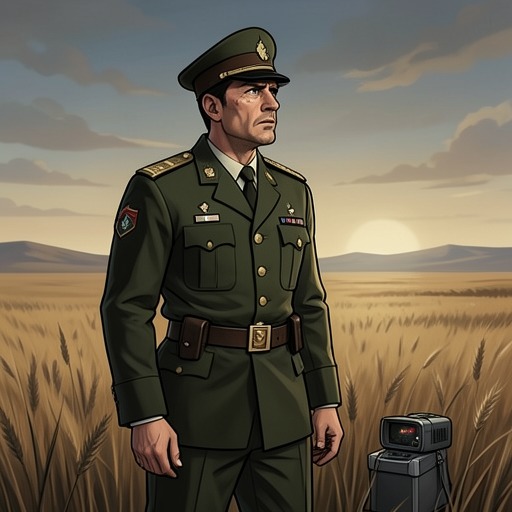
MARRIED TO MY MASTER: A Bad Boy Hitman RomanceThe United States Army appears in the novel chiefly through Benton Bishop’s service as an infantry soldier and the difficulties that continue after he returns home. His military experience is central to Dane Bishop’s account of the family tragedy and to Dane’s effort to expose BioSphere’s handling of Hymalete. The Army is not depicted through its command structure or a specific treatment program; instead, its significance emerges through Benton’s combat exposure, his struggle to readjust, and the competing accounts of what caused his mental-health crisis.
Service and Return to Civilian Life
Dane describes himself and Benton as twin brothers who chose different branches of service: Dane joined the United States Air Force as a fighter pilot, while Benton served in the United States Army as an infantryman. In Dane’s comparison, Benton experienced substantially more combat. That difference gives Benton’s service a particular weight in the story, but the evidence does not provide a deployment history, unit, rank, or account of specific combat operations.
When Dane returned home after his discharge, Benton had already been back for about a year. He appeared changed to Dane, though he was trying to settle into civilian life with his wife, Marianne Bishop, and make a life for the family. In a later conversation, Benton describes the return as difficult: he wants to do better, but finds it hard to manage the effects of his service. His words present readjustment not as a single completed transition but as ongoing work.
Mental Health and Treatment
Benton’s doctor prescribed medication with the expectation that it would improve his depression and Post-traumatic stress disorder (PTSD) symptoms. Benton was told that the medication would take time to work and that its side effects would subside. The account makes clear that these assurances did not match his experience: Dane remembers that the treatment had not helped as promised. The narrative does not identify the doctor as an Army physician or establish that the Army selected or supplied the medication.
Benton’s own description also conveys a broader frustration with the difficulty of seeking help after service. He says that people want veterans to acknowledge PTSD, then appear to reject them because of it, and fail to provide the assistance they need. His complaint connects the personal burden of symptoms with the difficulty of obtaining support, without specifying which agency or individual is responsible. The Army’s presence in this part of the story is therefore tied to the demands and aftermath of Benton’s service, while the precise institutional path of his care remains unstated.
Hymalete and the Family Tragedy
Dane attributes the murders of Benton’s wife and children to a psychotic break and argues that Hymalete, which Benton had recently begun taking, caused or worsened the crisis. This is Dane’s account and allegation, not a detailed medical finding presented independently by the narrative. The distinction matters: the story establishes that Benton had combat experience, mental-health symptoms, and a medication that failed to meet the expectations described to him, but it does not resolve every medical or institutional question through those facts alone.
After the murders, Benton was convicted and placed on death row. Dane tried to defend his brother in court and in the press, but says that others would not accept his claim about Hymalete. He also tried to contact the manufacturer, BioSphere, and was referred to its public-relations department, where he received no substantive engagement. In Dane’s recollection, these failures compound one another: his brother’s suffering, the loss of the family, and the absence of a response to his warning leave him feeling that no one is listening.
Public Claims and Accountability
Dane eventually makes the military context part of a public appeal to Charlene Padilla. He identifies Benton as a former Army serviceman who had been convicted after a psychotic break, then alleges that Hymalete did not work as claimed and may have worsened Benton’s symptoms. He further claims that BioSphere held evidence that the medicine was ineffective and that the approval process had been manipulated. These statements are part of Dane’s campaign to bring attention to the scandal; they should not be read as evidence that the Army itself approved Hymalete or knew of BioSphere’s alleged conduct.
The case widens when Emily West tells Dane and Jas Robertson that Edward Barker had pushed the drug through approval and bribed federal inspectors, with possible involvement reaching the company’s board. Her account places the alleged misconduct within BioSphere and federal oversight, rather than establishing Army involvement. In the story’s division of responsibility, Benton’s service explains why he was among the people Dane believed the drug was intended to help, while the allegations about efficacy and approval concern the manufacturer and regulators.
Narrative Significance and Limits
A year later, Emily describes the Hymalete scandal as one of the major pharmaceutical scandals of the preceding decades and reflects on Dane’s decision to force the issue into public view. She frames his actions through the family relationship at the center of the story: Benton’s death-row conviction and Dane’s belief that the drug contributed to the catastrophe. The Army thus remains a crucial part of the underlying history, even though the later public reckoning focuses on BioSphere and the evidence connected to the drug.
The novel uses Benton’s Army service to connect combat exposure with the difficult and imperfect process of returning home, seeking treatment, and being believed. It does not provide a comprehensive portrait of the United States Army, establish an Army-wide policy, or demonstrate that military authorities caused Benton’s crisis. Its narrower focus is the human consequence of service as understood by Benton and his brother, and the way that context fuels a dispute over medication, accountability, and the institutions that failed to answer Dane’s concerns.