Butchers MC Clubhouse
MARRIED TO MY MASTER: A Bad Boy Hitman RomanceThe Butchers MC Clubhouse is a place marked by two connected histories: the destruction of the Skinners’ clubhouse in a mass attack and the later presence of a club that no longer uses the Skinners name. The premises are not merely a setting for the group’s activity. In the aftermath, their condition reflects the scale of the loss, while later scenes place Grizzly among the people he is trying to lead and protect.
Identity and Setting
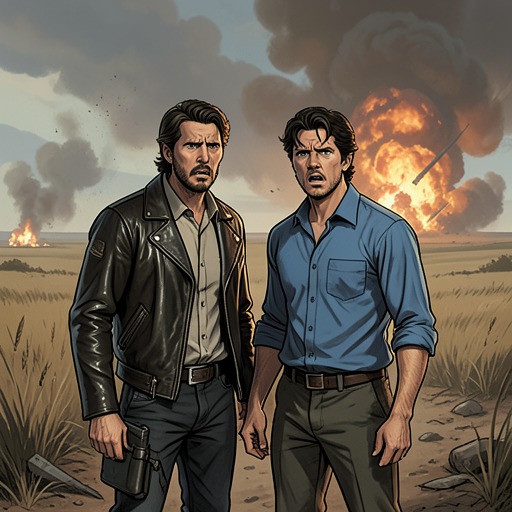
The clubhouse first appears as the Skinners’ gathering place, in the immediate aftermath of an attack. Its condition is described through damage across the building rather than through one isolated point of destruction: the front has been hit by gunfire, the windows have been blasted out, and no surface seems untouched. The description makes the site a record of what happened there. The damage is physical, but it also corresponds to a community in which every person has been affected by the violence.
The account does not establish architectural details, the clubhouse’s exact location, or the practical arrangements of its rooms. It does, however, place the building at the center of the club’s shared life. Members return to it after the attack, bodies remain there to be collected, and the survivors’ first concerns include how to care for their dead and one another. Its importance comes from those uses and responsibilities, not from a detailed description of its design.
Destruction and Immediate Aftermath
The attack has taken place the night before Grizzly surveys the clubhouse. By morning, more than half of the group has been killed, while those who remain are struggling physically and emotionally. The scale of the loss makes the damaged building inseparable from the club’s crisis: the broken windows and scarred interior are the visible counterpart to a membership that has been decimated.
Grizzly looks across the bodies still on the floor, thinking about the need to gather and arrange them properly because their friends deserve better than to be left there. Some bodies are already gone; he does not know why, and can only suppose that relatives have come to collect them. His uncertainty and mental fog are part of the aftermath, not a solved account of what happened to each person. The clubhouse is therefore presented as a place where practical obligations continue even when the survivors are too shocked to make sense of events.
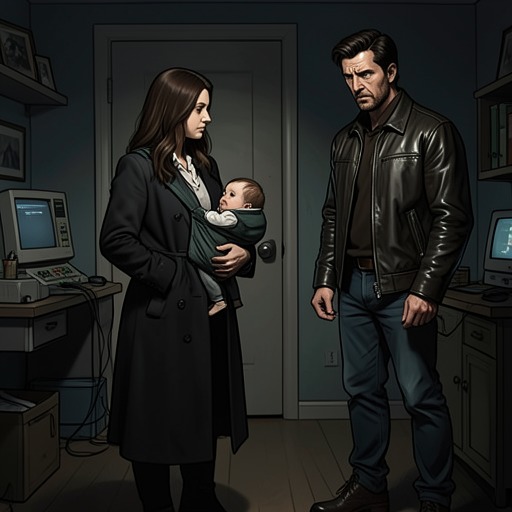
The space also holds a personal absence for Grizzly. The night before, he carried Duchess away from the body of her boyfriend, Rodent, who had been mortally wounded. The next morning, Grizzly searches for her in the clubhouse but cannot find her. When another member suggests she may have left after Rodent’s brother arrived, Grizzly later remains unable to confirm that explanation or locate her. The loss of Rodent and Duchess’s disappearance give the damaged premises a further meaning: it is where the club’s collective catastrophe intersects with a relationship whose future has abruptly become uncertain.
The Survivors’ Responsibilities
Grizzly’s response is divided between grief and the demands of leadership. He has long wanted to protect Duchess, but he recognizes that she makes her own decisions; he also has surviving members to look after. Rather than leave the club in pursuit of her, he stays with the people who remain. At the clubhouse, he tries to reassure a shell-shocked member with a hand on the shoulder and resolves that the attack will not break them. The resolve does not undo the losses or make recovery immediate. It establishes the work the survivors must attempt while surrounded by evidence of their defeat.
The clubhouse thus frames an early test of the group’s continuity. The survivors have to address the dead, support injured or shaken members, and decide how to carry on after losing more than half their number. The account gives no complete description of how those tasks unfold. Instead, it emphasizes Grizzly’s immediate conduct: he attends to the dead, checks on a brother, and accepts that his responsibilities are now with the people still there. The place matters as the ground on which those responsibilities become unavoidable.
The Butchers and the Later Clubhouse
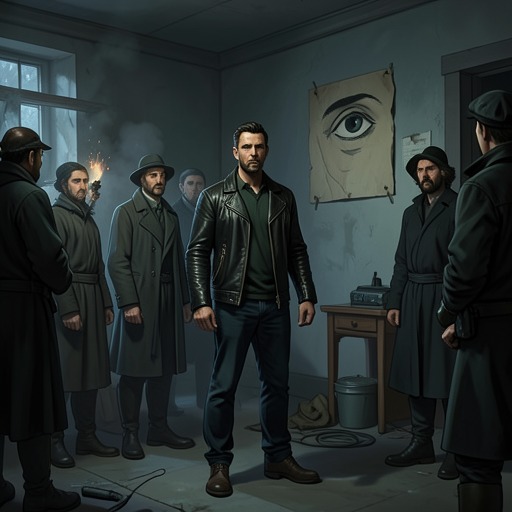
Years later, the club is no longer called the Skinners. In a later scene, Duchess is back in the same clubhouse setting, cleaning broken glass from the floor and returning to work while avoiding looking at Grizzly. He joins the men who are with him, and she realizes that they are his group; they are now known as the Butchers. The scene links the later club to the earlier wreckage without claiming that every consequence of the attack has been repaired. Broken glass remains part of the immediate surroundings, while the change in the group’s name signals that its collective identity has changed.
Grizzly’s conversation about Kid shows another aspect of what the club has become. Kid has a good heart but is young and sometimes foolish, and Grizzly says he tries to keep him in line. Kid’s older brother had been a Prospect before the events that changed the group, and Kid looks up to what Grizzly and the others have built. The concern that the same thing must not happen again connects the older attack to the present work of guiding the younger member. The clubhouse is not only the site of past catastrophe; it is also where the club’s surviving leadership tries to make its future different.
Across these appearances, the building anchors a movement from devastation toward continued, if incomplete, communal life. The Skinners’ clubhouse bears witness to the night that killed more than half the members; the later Butchers setting holds the survivors’ changed identity and Grizzly’s ongoing efforts to protect his people. The account offers no simple restoration narrative. Instead, the clubhouse’s damaged surfaces, the absent and lost members, and the newer generation’s presence keep the cost of survival in view.