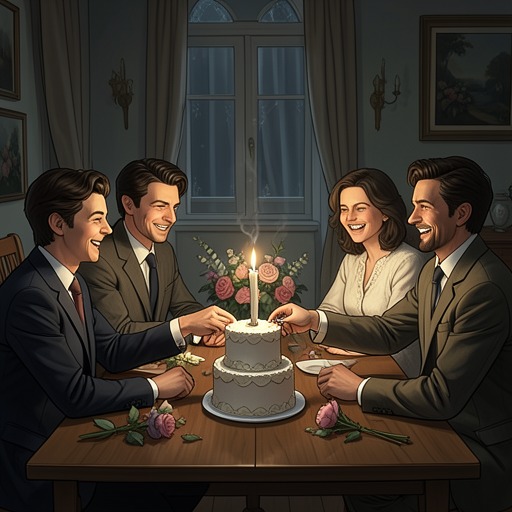
Enrique's proposal to Sophia
MY POSSESSIVE BILLIONAIREEnrique's proposal to Sophia is the turning point that recasts a family-imposed marriage arrangement as a relationship the couple publicly and emotionally claims for themselves. Its decisive image is not a contract between wealthy families but Enrique kneeling in a flower-filled gazebo, asking Sophia to marry him and offering a 24-carat diamond engagement ring; Sophia's acceptance changes the meaning of the impending wedding from inherited obligation to professed love.
Causes and Background
The proposal grows out of the commercial and familial arrangement created by Joaquin Montero II and Fredo Castello. When Enrique was twenty and studying Business Administration at Harvard University, his father explained that Fredo had once saved his life from a fire, and that the two men had become protectors, confidants, and business partners whose friendship resembled brotherhood. Because Fredo and Marcella Castello had no son to inherit their wealth, they regarded the marriage of their children as the solution to preserving both families' fortunes. Enrique initially rejected the arrangement as obsolete and privately resolved that, even if he obeyed it, he would retain his mistresses and continue living as a bachelor.
Sophia likewise objected to the idea that marriage should function as a joint venture protecting family assets. During their early confrontation, she argued that marriage should be based on love, trust, and respect rather than wealth preservation. Enrique answered through family duty and rational calculation, giving her his calling card before leaving for the States and telling her to contact him if she changed her mind about pursuing the marriage. His position made the relationship appear governed by promises made by their fathers, while Sophia's position defended personal choice against that inherited obligation.
The proposal therefore answers a conflict already established between business logic and emotional legitimacy. Enrique had first treated Sophia as the reckless heiress he was being ordered to marry, while Sophia resisted being selected as the instrument of a family alliance. Their later engagement announcement was also improvised: after their parents discovered them together following a passionate night in Sophia's hotel suite, Enrique told Fredo and Marcella that he loved their daughter and that they planned to marry soon, insisting that their decision was based on love rather than the arranged marriage. The gazebo proposal gives that hurried public claim a deliberate form.
What Happens
Before the proposal, Enrique and Sophia prepare dinner together at the mansion. Sophia cooks while Enrique helps peel and slice carrots, potatoes, and string beans, taking so long to make every piece equal that dinner, intended for seven o'clock, is delayed until almost eight. The domestic comedy matters because it places Enrique's grand declaration after an ordinary shared task: the relationship is represented not only through wealth, desire, and family pressure, but also through cooperation, teasing, and their enjoyment of one another's company.
After dinner, Enrique leads Sophia outside to the gazebo. The garden is surrounded by roses, tulips, daisies, and ferns, creating a setting separated from the household's negotiations and business concerns. He embraces and kisses her passionately, then kneels. He admits that this is the first time he has made such a gesture and that he is nervous. When Sophia asks what he is doing, he explains that although they are already scheduled to marry that Saturday, he does not want to miss the chance to ask her properly. He then says, "Sophia, my darling, will you marry me?"
Enrique's physical anxiety underscores the risk of the scene. He remains on one knee, opens a small red velvet box, and waits with his pulse racing while the 24-carat diamond ring glimmers before Sophia. The ring functions as a visible sign of commitment, but the proposal's emotional force comes from the possibility that Sophia might refuse despite the scheduled wedding. The ritual distinguishes a marriage imposed by parents from a marriage requested directly by the man who wants Sophia's answer.
Sophia accepts without hesitation. She answers, "Oh yes Enrique, I will marry you." Enrique responds that she has made him the world's happiest man, then takes the ring from the box with trembling hands and slips it onto her finger. Sophia admires the ring, tells him that she loves him, and says that she cannot wait to marry him. When Enrique asks her to repeat the declaration of love, the proposal becomes a reciprocal exchange rather than a one-sided demand: his question seeks consent, and her answer supplies both consent and emotional confirmation.
Consequences and Aftermath
The proposal produces a value shift from uncertainty to chosen commitment. Earlier, marriage had represented a threat to Sophia's freedom and a duty Enrique intended to fulfill without fidelity. In the gazebo, the same impending wedding is reinterpreted through mutual language: Enrique says he wants to make everything right, and Sophia answers with love rather than protest. The engagement ring materializes that shift, attaching a concrete object to a promise that had previously existed mainly as a family obligation.
The scene also consolidates the public story Enrique has already improvised for the Castello family. His earlier announcement that he and Sophia loved each other had been made under pressure, as he searched for a way to calm the alarm caused by their discovery. The later proposal supplies the emotional evidence that announcement lacked: a prepared setting, a formal question, a ring, and Sophia's explicit acceptance. In narrative terms, the speech act of asking creates an engagement only when Sophia's answer completes it.
The proposal does not erase the coercive history surrounding the relationship. Enrique has repeatedly acted through possession and control: he throws away a bouquet from Draco, threatens to force his way into Sophia's room, physically removes her from a strip-club stage after punching a man who challenges him, and angrily demands that she dance for him while denouncing the men watching her. These actions complicate the proposal's language of love and consent. The ring and the kneeling posture present devotion as tenderness, yet they coexist with a pattern in which Enrique treats protection, jealousy, and authority as expressions of romantic attachment.
Narrative Significance
As a romance event, the proposal occupies the grand-gesture and commitment phase of the story's movement from resistance toward union. Its imagery deliberately contrasts two systems of value. The families' original arrangement is explained through inheritance, wealth, business continuity, and promises between powerful fathers; the proposal is staged through a garden, bodily vulnerability, a question, and an answer. Neither wealth nor family authority disappears, but the scene claims that the couple's relationship has acquired an emotional basis of its own.
The event also completes a reversal in Enrique's understanding of Sophia. He had seen the portrait of the Castello heiress as deceptive, associating her beauty with recklessness and refusing the idea of fidelity before truly knowing her. Later, he recognized that both he and Sophia had been misled by rumors and that she was also a victim of false public impressions. His nervous kneeling therefore marks more than a conventional romantic gesture: the man who once planned to obey the arrangement while preserving bachelor freedoms now risks an answer from the woman whose heart he wants.
For Sophia, acceptance is a movement from condemning marriage as a family asset-protection scheme to accepting Enrique's personal declaration. The contrast does not make the original arrangement disappear; instead, it shows how the narrative attempts to convert an imposed structure into a chosen one. The proposal's lasting significance lies in that conversion: the wedding was already planned, but the engagement becomes meaningful only when Enrique asks and Sophia says yes.