
Levee’s Ambition and Collapse
Ma Rainey's Black BottomThis thread traces Levee Green’s desire to make music on his own terms from a bid for recognition to a violent collapse after rejection.
increasing Bearing strength in each event
 decreasing
Bearing strength in each eventdecreasingThe Shoes and the Promise
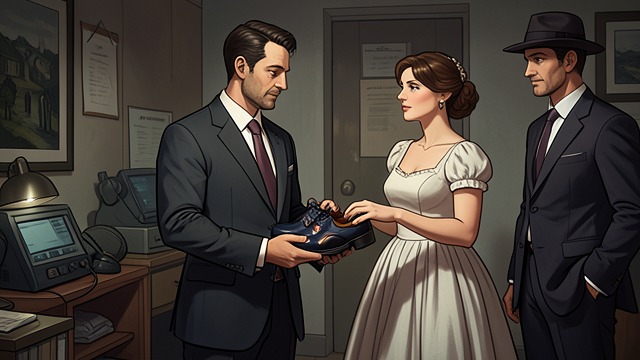
A future imagined in music
A show of aspiration
Levee arrives with new shoes bought partly with money he won from Cutler. He treats them as more than clothing: they help him present himself as a musician destined for something beyond the accompaniment work expected of him.
He tells the others that Sturdyvant has promised him a chance to record his own songs once he assembles a band. The promise gives Levee a picture of a future in which he can choose the music, lead the players, and turn his talent into independent standing.
The ambition takes shape
Levee distinguishes his writing and trumpet playing from what he calls old jug-band music. He wants his arrangement of Ma Rainey’s Black Bottom to catch listeners with a modern, exciting sound, and he treats the session as an opportunity to demonstrate that vision.
His confidence also exposes a vulnerability: his imagined future depends on approval from the same company whose authority he resents. The shoes, songs, and talk of a band become visible signs of a promise he has not yet secured.
A Bid for the Arrangement
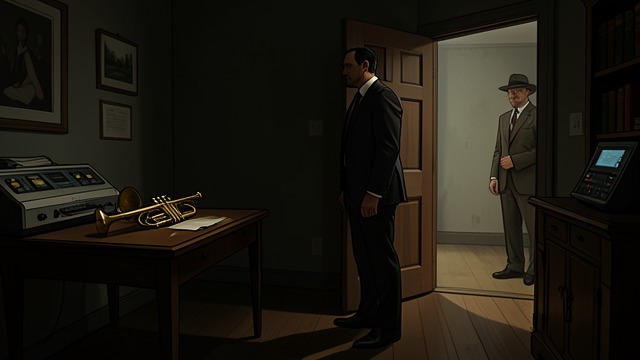
Recognition through the music
Contesting the bandleader
Levee insists that the musicians rehearse his arrangement of Ma Rainey’s Black Bottom, arguing that Irvin has told him it will be used. Cutler resists, reminding him that his job is to play what Ma chooses, not to dictate the band’s direction.
When Irvin confirms that Levee’s version is on the list, Levee treats the decision as proof of his standing. He expects the others to recognize that the company has given his musical judgment a place in the session.
A borrowed authority
Toledo sees the danger in Levee’s satisfaction: the arrangement is validated by white executives, not by the musicians’ own authority. Levee instead reads Irvin’s approval as evidence that he has won his dispute with Cutler.
The rehearsal thus gives him a temporary victory without securing the power he wants. Ma soon rejects the arrangement, revealing that Levee’s influence rests on a decision she can overrule and on an executive approval that cannot guarantee him a recording career.
Confidence Against the Past
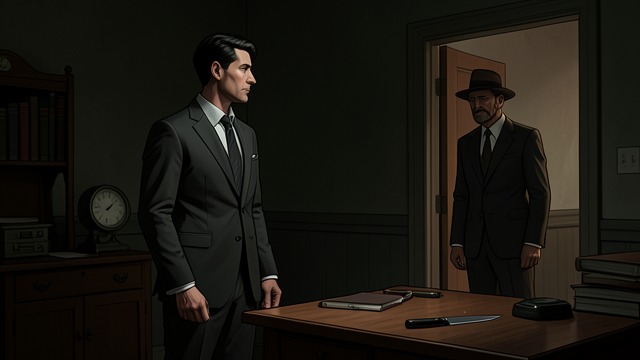
Defiance built on old violence
The claim to self-command
When Cutler and Toledo suggest that Levee is intimidated by white authority, Levee insists that he knows how to handle white people. He says that polite submission can be a deliberate strategy, not proof that he is afraid.
To explain his confidence, he recounts how white men attacked his mother when he was eight. He tried to defend her with his father’s knife, was wounded, and later learned that his father secretly returned to seek revenge against the attackers.
A lesson that cannot settle
Levee remembers his father smiling at one of the men while selling him the family’s land, then returning to violence after the family moved away. He presents that history as proof that apparent deference can conceal control and a plan to strike back.
The story makes his bravado understandable without making it secure. His confidence depends on turning a family catastrophe into a rule for surviving white power, but the violence he witnessed remains unresolved in his own account of what strength and freedom mean.
The Recording Fails
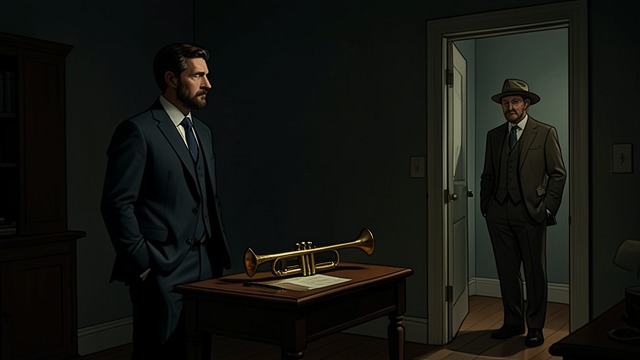
A moment of musical loss
The take is interrupted
Ma insists that Sylvester Brown deliver the spoken introduction, and Levee plays during the recording attempt. When the performance finally goes forward, the studio discovers that the microphone connection has failed and the song has not been preserved.
Levee denies damaging the cord, but the other musicians suspect that he was distracted. Ma blames him and prepares to leave, turning a technical failure into another dispute over whether Levee can be trusted to do his job.
His place narrows
Irvin persuades Ma to stay for another fifteen minutes, and the session continues. Levee’s claim that the failure was not his doing does not restore his standing with Ma or the band.
The lost take deepens the divide between the future Levee wants and the work he is actually allowed to do. His chance to shape the song has already been reduced by Ma’s rejection of his arrangement; now the practical failure of the session adds blame to his growing sense of exclusion.
Rejected Songs and Fatal Violence
The promised future closes
Sturdyvant withdraws the offer
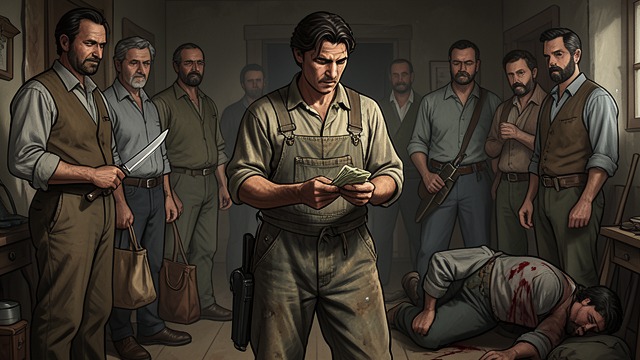
After the session, Levee asks Sturdyvant about his songs and the promise that he could record them. Sturdyvant says the songs are not right for the company and offers only five dollars apiece to buy them, a sum that cannot provide the recording opportunity Levee expected.
Levee argues that the songs need to be heard with him playing them. Sturdyvant refuses to reconsider, pushes the money into his pocket, and leaves, converting a promise of artistic opportunity into a small cash offer.
The outburst becomes irreversible
As the musicians gather their belongings, Toledo steps on Levee’s shoe and apologizes. Levee fixates on the damage, turns the slight into a confrontation, and stabs Toledo in the back with his knife.
He immediately tries to explain the killing as a response to the shoe, then begs Toledo to get up and pleads with Cutler to make him close his eyes. The explanation cannot undo what he has done. Levee’s hoped-for career has not only been rejected; his final reaction destroys the community he still had around him.
Early in the Chicago session, before the band rehearses
During rehearsal, before Ma enters the band room
After Sturdyvant visits rehearsal and praises Levee’s work
During the first successful performance of the song
After the session, as the musicians wait for their pay
