Cutler—Slow Drag
Ma Rainey's Black BottomCutler—Slow Drag is a long-running musical partnership, shaped by years of travel and performance and rendered onstage through comic intimacy rather than sentiment. Slow Drag counts twenty-two years together on the roads and in venues; Cutler’s teasing refusal to share his reefer shows that even such a history does not erase everyday boundaries. Their bond is both the accumulated life they recount and the lively argument they continue to have.
Identity and Shared History
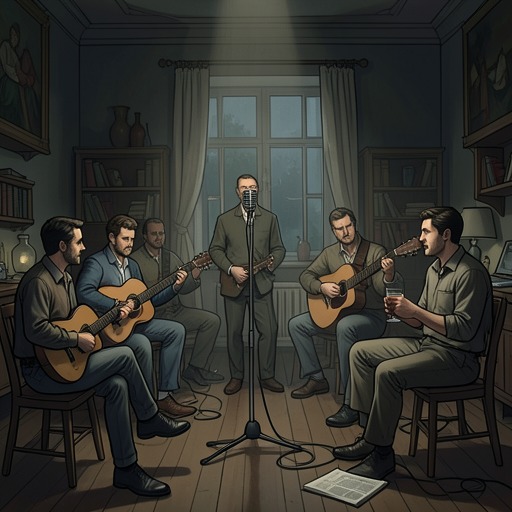
Slow Drag describes their partnership as twenty-two years of doing things together. He recalls a life moving along back roads, side roads, and front roads, playing juke joints, whorehouses, barn dances, and city sit-downs. The list gives their companionship a practical foundation: they have worked through different settings and audiences, not merely met for one performance. Their shared past stretches across a circuit of music-making, with the road itself as a recurring condition of their relationship.
Slow Drag’s account makes the partnership intimate as well as professional. He says they have lied for each other and with each other, laughed and fought together, and slept in the same bed. He ends the inventory with the deliberately earthy image of having sucked on the same titty. The details are delivered as an argument for why Cutler should give him some reefer, but their force comes from the breadth of life they claim to have shared. Loyalty, conflict, work, and bodily familiarity all appear in the same breath.
Familiarity and Friction
The immediate exchange turns that history into a small contest over possession. Slow Drag asks Cutler for reefer and invokes their years together; Cutler answers by asking why Slow Drag does not have his own and why he is always asking. When Slow Drag expands the appeal into a catalogue of shared experience, Cutler repeats the request to Toledo and makes clear that the story still will not earn Slow Drag any of his reefer. The refusal is emphatic, but it takes place within a conversation whose easy teasing depends on their familiarity.
Toledo’s brief description of the appeal as African adds another note to the exchange, without resolving its meaning. Cutler’s response keeps the moment grounded in the practical joke: he objects to being talked out of his reefer, even while Slow Drag presents their history as a reason he ought to share. The two men thus display closeness without idealizing it. Slow Drag can appeal to an old bond; Cutler can decline him outright. Their companionship accommodates both the claim of mutual obligation and the pleasure of resisting it.
The Story Behind Slow Drag’s Name
Cutler also tells Levee how Slow Drag acquired his name, turning their shared past into a performance for another listener. At a dance contest in Bolingbroke, about a hundred miles outside Macon, the prize for the best slow draggers was twenty dollars. Slow Drag surveyed the competition, came down from the bandstand, and took hold of a woman. He danced with such tenacity that the crowd stopped to watch; her dress became soaked, and Slow Drag later remembers how excited she was.
The dance becomes more dangerous when the woman’s companion arrives with a foot-long knife. People begin clearing out and ducking beneath tables, anticipating a fight, but Slow Drag does not stop dancing. Looking over the woman’s shoulder, he tells the armed man that he is helping her win ten dollars so she can buy him a gold watch. The man accepts the explanation, while warning Slow Drag to make sure he wins. The episode links the nickname to persistence, showmanship, and a quick response under threat: Slow Drag keeps the dance going and turns a confrontation into part of the contest’s stakes.
The story also ends with a consequence for the musicians as a group. After Slow Drag’s performance made women gather around him, the men in the town ran the band out. Cutler narrates this outcome with the same amused command with which he recounts the danger, while Slow Drag’s interjections lend the memory a second voice. Their exchange makes shared history public: Cutler tells the story, Slow Drag supplies his own recollection, and Levee’s question prompts the account to continue.
Partnership in the Play’s Musical World
The relationship belongs to a wider world of Black musicians whose working lives have connected Southern roads and venues with northern city life. Slow Drag’s itinerary—from back roads and dances to city engagements—echoes the play’s broader account of music learned across Southern and urban settings and carried into Chicago. In that context, the twenty-two years he names are more than a measure of acquaintance: they are a history accumulated through repeated work and movement.
The play gives that history no polished declaration of affection. Instead, it appears in a plea for reefer, a blunt refusal, an elaborate recollection of shared life, and a story about a knife at a dance. The comic rhythm does not cancel the seriousness of their long association; it shows how their familiarity operates in the present, through argument as readily as through loyalty. Cutler and Slow Drag remain defined by both what they have endured and the freedom each still takes to tease or contradict the other.