Levee Green
Ma Rainey's Black BottomLevee Green is a trumpet player who stakes his identity on musical talent, self-determination, and the hope of making records with a band of his own. In the recording-room drama, that ambition meets a record company’s refusal, while his effort to command how others see him gives way to a sudden, consequential attack on Toledo.
Identity and Entrance
Levee enters carrying a shoe box and is described as being in his early thirties, younger than the other musicians. His flamboyance can be subtle before it asserts itself; his bright, volatile temper and calculated buffoonery let him redirect a situation toward ground he can control. The description makes that behavior more than mere foolishness: Levee is intelligent enough to use it strategically, even as his need to seize control exposes how precarious that control is.
His trumpet playing is marked by a strident voice dependent on breath and by frequent wrong notes. He tends to confuse skill with talent, a distinction that complicates his expansive confidence. The play presents both his musical shortcomings and his belief in his own promise, without making either one cancel the other. His self-image is not simply a measure of demonstrated ability; it is also an insistence that his prospects should not be decided by the judgments of others.
Ambition and Musical Independence
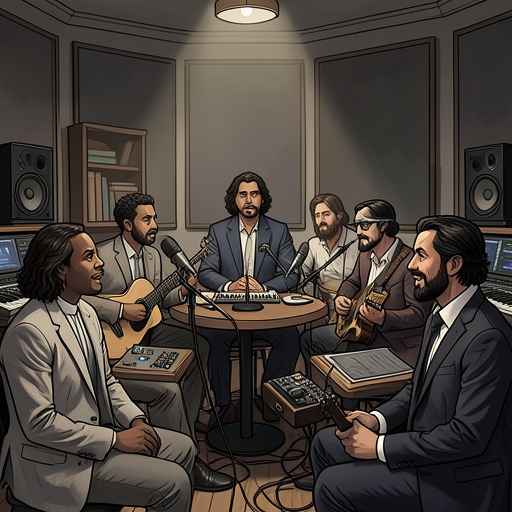
Levee contrasts himself with Cutler, who says that he plays the piece as requested rather than criticizing other people’s music. Levee’s answer is to claim a different kind of musicianship: he regards himself and his horn as closely joined, and imagines a future in which he leads his own band and makes records. He invokes what his father might have named him had he known how he would turn out, giving his ambition a theatrical, almost biblical flourish without surrendering its practical aim.
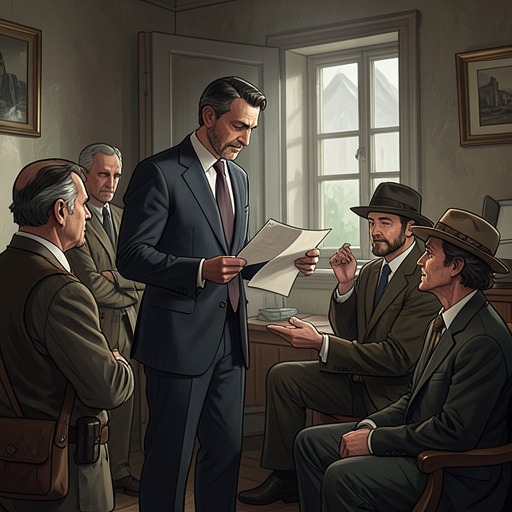
That aim already has a concrete, if unfinished, shape. Levee says that he has given songs to Sturdyvant, who told him he could record them once he had assembled a band. He takes papers from his pocket and explains that he still needs to finish the last part of one song and write another part requested by Sturdyvant. The papers make visible the work behind the boast: Levee is not only imagining a career but revising songs in anticipation of a recording opportunity.
History and Self-Definition
During a confrontation with Cutler, Levee insists that no one else knows him or the kind of blood and heart he has. He pounds his chest as he makes the claim, turning an argument about identity into a physical assertion of self-possession. He then recounts that, at eight years old, he witnessed white men enter his father’s house and assault his mother. The account establishes a childhood trauma that he carries into the present; it also gives specific weight to his refusal to let another person presume to understand him.
The evidence does not make that history a simple explanation for everything Levee does. Instead, it shows the memory surfacing as he rejects Cutler’s assumptions and asserts his independence. His insistence on being known only on his own terms sits alongside a painful history he chooses to disclose, making self-definition both a defense against other people’s judgments and a demand that they recognize what they cannot know for themselves.
The Broken Recording Prospect
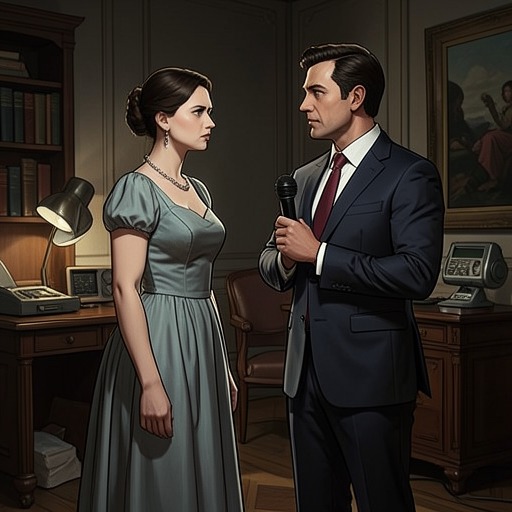
Later, after Irvin has said he will be out front while Cutler gathers his things, Levee approaches Sturdyvant about the songs he submitted. Sturdyvant says he has reconsidered and does not think listeners will buy them; they are not the kind of songs the company wants. The response overturns the prospect Levee had been counting on: the earlier expectation that he could record once he assembled a band is replaced by an outright rejection of the material.
Levee answers that his band is now assembled and that its members play well. He argues that the songs will sell if people hear them. The exchange reveals the gap between his confidence in the music and Sturdyvant’s power to decide whether it reaches an audience. Levee has met the condition he understood to be necessary, but that does not secure the recording opportunity. His readiness and optimism cannot compel the company to honor his expectation.
Levee’s Shoes and the Attack on Toledo
After the recording discussion, a dispute over Levee’s shoes becomes the immediate focus of a final confrontation. Toledo has stepped on one of them; he says he has apologized, while Levee remains furious and repeats the grievance. The other musicians return to packing and deliberately avoid looking at Levee, hoping that withholding an audience will help him calm down. The stage direction shows him trying to regain control and unsure what to do next, before he rushes at Toledo with a knife.
Levee stabs Toledo, then pulls away as the consequence of his action becomes apparent. He repeats that Toledo stepped on his shoe, asks Cutler for help, and directs his attention back to Toledo. The return to the same explanation does not undo the attack; it marks the narrowing of Levee’s response to a single grievance even as the event has become irreversible. His new shoes, first part of the entrance image, thus return at the point where his effort to defend his dignity ends in violence.
Dramatic Significance
Levee’s trajectory in these scenes turns on the distance between self-assertion and control. He presents himself as a musician with a future beyond the role assigned to him, and he has songs, papers, and a band to support that claim. Yet the recording decision belongs to Sturdyvant, while the final dispute with Toledo moves beyond Levee’s ability to contain it. His confidence is therefore shown alongside real limits: musical judgment, commercial authority, and the consequences of his own actions.
The play also places his childhood account beside his later insistence that other people cannot know him. That juxtaposition invites recognition of the history beneath his defensive self-presentation without reducing the attack on Toledo to that history. Levee remains at once ambitious, strategically performative, wounded by what he has witnessed, and responsible for the violence he commits. The shoe dispute closes the gap between his recurring claim to control his own story and an act whose consequences he cannot simply explain away.