Levee stabs Toledo
Ma Rainey's Black BottomLevee stabs Toledo in the final violence of the play, turning a dispute over a damaged shoe into an irreversible attack. The stabbing follows Sturdyvant’s rejection of Levee’s songs and the musicians’ departure from the studio, but its immediate occasion is small: Toledo steps on Levee’s shoe while gathering his belongings. The disproportion between that slight and the knife thrust gives the scene its force. The others’ efforts to avoid provoking Levee cannot stop the violence, and afterward Levee can only repeat the grievance that preceded it.
Economic Pressure and the Immediate Background
The scene comes after a series of negotiations in which payment and control of music are openly contested. Earlier, Irvin tells Ma that Sturdyvant proposed taking twenty-five dollars of Ma’s money to pay Sylvester. Ma rejects the arrangement: Sylvester should receive his own pay, like everyone else. She orders Irvin to return to Sturdyvant and make clear that he risks losing the chance to record her again if he does not pay the boy. Sturdyvant eventually provides two hundred dollars for Ma and twenty-five for Sylvester. Ma receives the money, signs the forms, and warns that another mistake could send her records elsewhere. Her insistence establishes how payment, recording, and the ability to withdraw cooperation remain subjects of active bargaining.
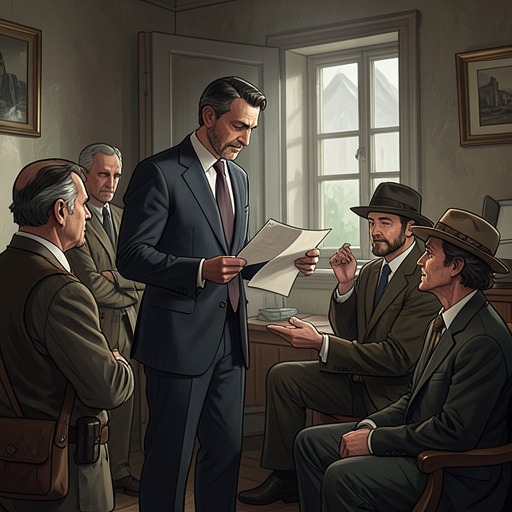
Levee’s negotiation ends differently. He argues that listeners want music that excites them rather than jug-band music, and that he could make his songs work if he played them himself. Sturdyvant refuses to record them, offering five dollars for each song instead. Levee insists that he wants to record them as Sturdyvant had said he could, not sell them for the offered price. Sturdyvant repeats the offer and says he will buy any further songs at the same rate. He pushes the money into Levee’s coat pocket and leaves quickly. Levee follows him to the door, which slams in his face. He takes out the money, crushes it in his hand, and throws it to the floor. The rejected songs, the unwanted payment, and the slammed door leave the immediate scene charged with frustration, though the play makes Toledo’s step on the shoe the direct trigger for the stabbing.
The Shoe as Pretext and Flashpoint
As the other musicians silently collect their belongings, Toledo walks past Levee and steps on his shoe. Toledo apologizes. Levee instead insists that Toledo has ruined it and contrasts his shoe with Toledo’s worn footwear. When Toledo returns to packing, Levee spins him around by the shoulder and shoves the shoe toward his face, repeating that Toledo has damaged it. Toledo again says that he has apologized and asks what more Levee expects him to do.
The shoe becomes the narrow grievance around which Levee’s anger gathers. The scene does not present Toledo as deliberately attacking him: Toledo apologizes and goes back to packing. Nor does Levee’s response remain a demand for an apology. He repeats the injury, presses the object into Toledo’s space, and treats the accidental step as an affront that must be answered. The physical closeness escalates the argument, but Toledo’s attempt to resume gathering his things does not bring it to a close. The ordinary object is not an explanation proportionate to what follows; its importance lies in the way Levee fastens on it at the moment the confrontation turns violent.
The Stabbing
The stage direction describes Levee as breathing hard and trying to regain control. He looks around uncertainly, while Toledo, Cutler, and Slow Drag continue packing and deliberately avoid looking at him, hoping he will calm down without an audience. Then, as the direction describes the weight suddenly falling on him, Levee rushes at Toledo with his knife. He again says that Toledo stepped on his shoe before plunging the blade into Toledo’s back up to the hilt.
The action is abrupt, but the staging shows a visible interval between accusation and attack: Levee struggles to control himself, the others withdraw their attention, and then he rushes forward. Toledo makes a sound of surprise and pain. Cutler and Slow Drag freeze. Toledo falls backward with Levee, whose hand remains on the knife and holds him up; Levee then shoves him forward and steps back. Toledo slumps to the floor. The attack changes the scene at once from an argument among departing musicians into a crisis with Toledo down and Levee confronted by what he has done.
Aftermath and Dramatic Significance
Levee immediately repeats that Toledo stepped on his shoe, appeals to Cutler to help him, and asks Toledo why he did it. He turns toward Toledo and tells him to get up, then asks Cutler to tell Toledo to close his eyes and not look at him. These pleas do not undo the stabbing; they show Levee trying to make the event intelligible through the same grievance he invoked before the attack. Cutler does not answer with reassurance. He tells Slow Drag to get Irvin downstairs.
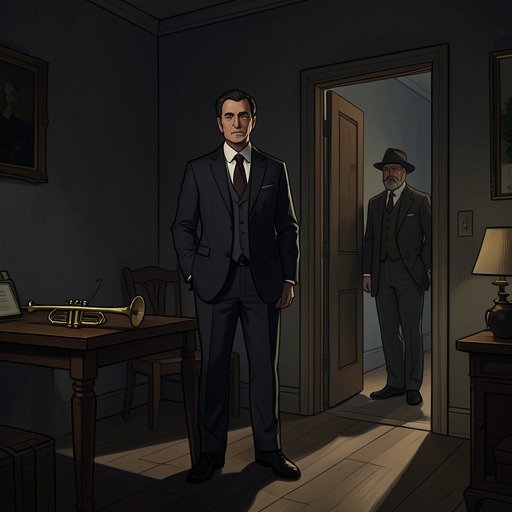
A muted trumpet is heard: Levee’s instrument, struggling toward its highest possibilities and sounding pain and warning. The stage then goes black. The ending does not show what happens next or explicitly confirm Toledo’s fate; it closes on the immediate consequences of the stabbing, Levee’s disoriented pleading, and the other musicians’ response. By placing this final sound after the weapon’s violence, the play leaves music present but altered: the trumpet no longer marks a performance or a negotiation, but a warning that accompanies the collapse of the band’s shared scene.