Sturdyvant refuses to record Levee’s songs
Ma Rainey's Black BottomSturdyvant’s refusal to record Levee’s songs converts an earlier promise into a one-sided offer to buy them cheaply. Levee wants the songs performed and recorded by the band he has assembled; Sturdyvant judges them by whether he thinks the market will buy them. When Sturdyvant presses five dollars per song into Levee’s coat and leaves, the proposed bargain ends not in agreement but in a slammed door and discarded money. The exchange makes visible the gap between a Black musician’s creative ambitions and the record company’s control over what reaches a recording session.
Setting and Background
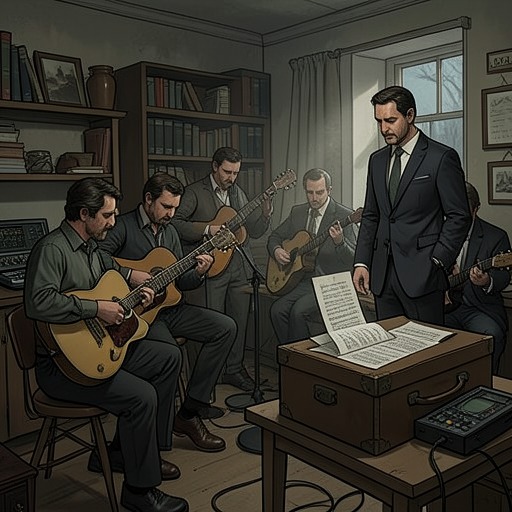
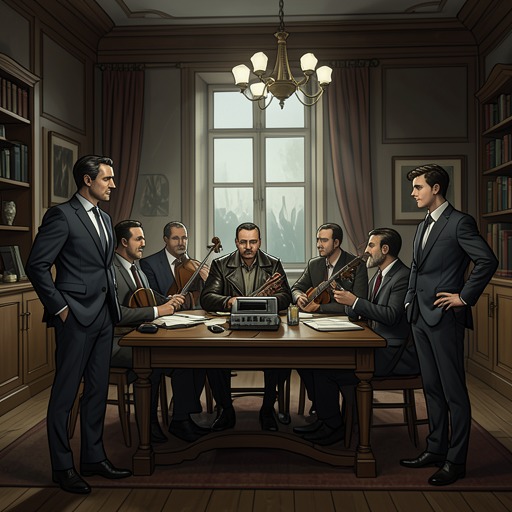
The dispute takes place in the studio, upstairs from the band room where the musicians wait and gather their belongings. The two spaces are joined by a door, but their functions are unequal: the band room contains the piano, benches, lockers, and forgotten paraphernalia, while the studio has the recording equipment and a control booth reached by a spiral staircase. A horn lets the people in the control room communicate with performers. This arrangement gives the conflict a physical shape: Levee can bring songs and musicians to the studio, but Sturdyvant is positioned to decide whether the studio will record them.
The session has already shown how vulnerable recording is to both human decisions and equipment. Sturdyvant interrupts the attempt to move on to another song because, as he reports over the speaker, the previous song has not been recorded. Irvin identifies a chewed-up cord as the problem. Ma Rainey, frustrated with the disorganization, leaves with Dussie Mae. The malfunction is not the stated reason for rejecting Levee’s compositions, but it forms part of the troubled recording day in which access to the studio, the sound it captures, and the session’s continuation are all contested.
The Refusal and the Offer
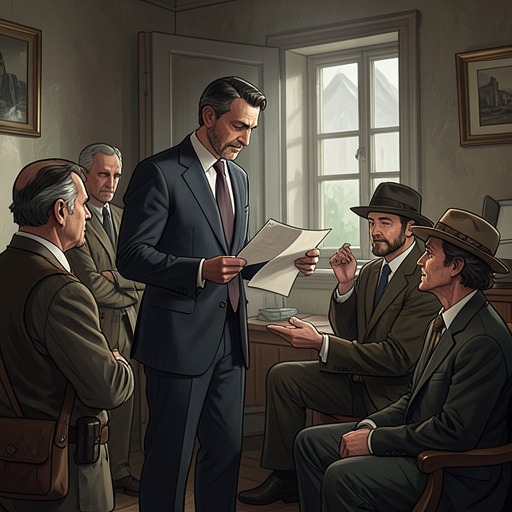
As Sturdyvant is about to leave, Levee addresses him respectfully and asks about the songs he had given him. Sturdyvant acknowledges the material but says he has decided that the public will not buy it and that the songs are not the kind the company wants. His explanation treats commercial appeal as the decisive test; it does not rest on hearing Levee perform the songs with the musicians he has chosen.
Levee answers that his band is good and argues that listeners want something more exciting than jug-band music, with fire in it. He emphasizes that Sturdyvant has not heard him play the songs in the way he intends them to sound. The disagreement is therefore not simply over whether the songs exist or whether Levee can assemble performers. Levee claims that the music’s force depends on its performance, while Sturdyvant assesses it without granting the recording opportunity Levee says had been promised.
Sturdyvant offers five dollars for each song, presenting the payment as the best he can do and later as a favor. Levee refuses that substitute: he wants to record the songs, not sell them off for a small payment. When Sturdyvant tries to hand over the money, he finally shoves it into Levee’s coat pocket and hurries away. Levee follows him to the door, which slams in his face. He pulls out the bills, crushes them into a ball, and throws them on the floor. The physical handling of the money makes the failed negotiation unmistakable: payment has been imposed where consent to the proposed sale has not been secured.
Promises, Payment, and Unequal Leverage
Levee directly reminds Sturdyvant that he had asked him to write the songs and had said he would let him record them. Sturdyvant does not resolve that contradiction; he returns instead to his judgment that the songs will not sell and to the five-dollar-per-song offer. The scene thus records a change in the terms as Levee understands them, from a promised chance to record to a proposal to purchase the writing without recording it. The play does not specify a contract or establish the legal status of the promise, so the conflict rests on the spoken commitment and the unequal power to carry it out.
The surrounding negotiations sharpen that imbalance without making the two transactions identical. Earlier, Irvin tells Ma Rainey that Sturdyvant proposes taking twenty-five dollars from her money to pay Sylvester Brown. Ma rejects the idea that Sylvester should be paid out of her share and orders Irvin to insist on the boy’s own pay. Sturdyvant then agrees to pay Ma two hundred dollars and Sylvester twenty-five dollars. Ma later signs the forms, but warns that another mistake could lead her to make records elsewhere. In her case, her established authority as a recording artist gives her leverage to challenge the arrangement; Levee’s appeal for a recording opportunity is met with a fixed price and no comparable promise of access.
Aftermath and Significance
After Sturdyvant leaves, the other musicians silently collect their belongings. Toledo walks past Levee and steps on his shoe; Levee objects, and Toledo apologizes. The small encounter follows immediately on the larger rejection, as the band’s departure and the crushed money remain in the same room. The scene does not show Levee reaching an agreement, getting the songs recorded, or accepting Sturdyvant’s offer. It ends with the rejected money on the floor and the recording opportunity denied.
The refusal distinguishes the value Levee assigns to his work from the value Sturdyvant is willing to recognize. For Levee, the songs are meant to be heard, and their sound depends on his own performance and chosen band. For Sturdyvant, the question is whether the songs fit the company’s commercial expectations; when he decides they do not, he offers to take them off Levee’s hands at a low price. The scene’s decisive reversal is that the earlier promise of recording gives way to a purchase proposal, while the person who wrote the songs has no power to make the studio record them. The shut door and discarded bills leave that refusal as both a business decision and a rupture of trust.