Sturdyvant rejects Levee’s songs
Ma Rainey's Black BottomSturdyvant rejects Levee Green’s songs at the end of the recording session, denying him the chance to record the compositions and offering only five dollars apiece to take them off his hands. Levee insists the songs need to be heard with him playing them; Sturdyvant treats their prospects as a decision already made. The exchange turns a dispute over musical style into a struggle over who gets to judge, record, and profit from Levee’s work.
Setting and Context
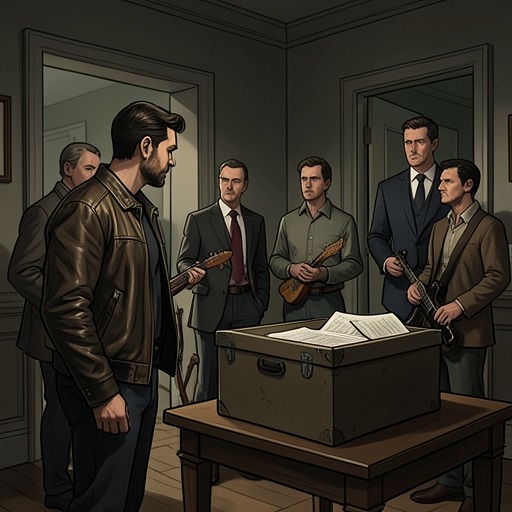
The refusal takes place in the upstairs recording studio, separated by the play’s staging from the basement band room where the musicians wait and gather their belongings. Sturdyvant has access to the control booth and can address the performers over the studio speaker; Levee’s appeal, by contrast, has to be made face to face as Sturdyvant is preparing to leave. The rooms give the business arrangement a physical shape: the music is made by the band, but the means of recording and evaluating it are controlled elsewhere.
The dispute follows a difficult session. Sturdyvant has complained that the recording is not right, and Irvin identifies a chewed-up microphone cord as the technical problem. Earlier, Sturdyvant had also tried to tell Ma Rainey not to wait so long before entering the song. Ma rejects his direction about how to sing, insists that he attend to the equipment while she attends to the performance, and asks for her Coca-Cola. These moments establish a working environment in which musical decisions and recording conditions are contested, not neutral.
There is also an immediate contrast in how Ma Rainey has dealt with the company over payment. When Irvin reports that Sturdyvant would use twenty-five dollars of Ma’s money to pay Sylvester Brown, Ma insists Sylvester should receive his own pay and orders Irvin to press the matter. She threatens that Sturdyvant will not make another one of her records if he does not pay him. Sturdyvant ultimately provides two hundred dollars for Ma and twenty-five for Sylvester. Ma signs the forms, but warns that another mistake could lead her to record elsewhere. The sequence shows her using the value of her established recordings to bargain, while Levee approaches Sturdyvant without the same demonstrated leverage.
The Dispute Over the Songs
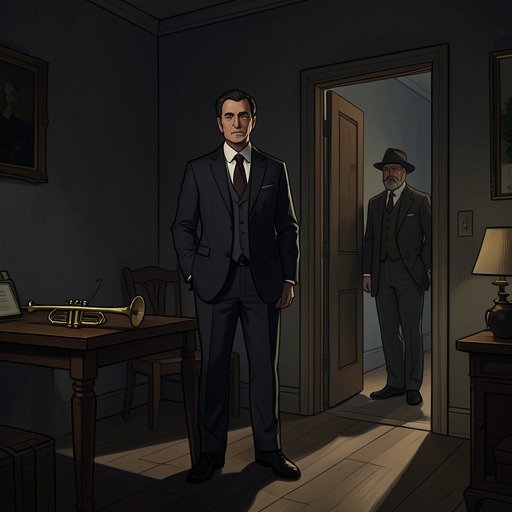
As Sturdyvant starts to leave, Levee addresses him about the songs he has submitted. Sturdyvant says he has considered them and does not think people will buy them; they are not the kind the company is looking for. Levee answers that he has chosen a band of capable musicians and believes listeners will buy the music if they hear it. His confidence rests not only on the compositions but on the people and performance he has assembled around them.
Levee describes the songs as a response to audiences he believes are tired of jug-band music and want something exciting, with fire. Sturdyvant, however, says he had his own musicians play the songs and decided they did not sound like what he wants at present. Levee objects that Sturdyvant has not heard him play them. To Levee, the songs cannot be judged apart from his way of performing them; to Sturdyvant, the company’s test has already settled the question. Their disagreement is therefore about more than taste: it is also about who has authority to define how the songs should sound and what evidence counts as proof of their appeal.
Levee reminds Sturdyvant that he had asked him to write the songs and had said he would let him record them. He asks what has changed. Sturdyvant does not explain the earlier promise; he repeats that the songs are not the kind he is looking for and says they probably would not sell like Ma Rainey’s records. He offers to take them off Levee’s hands instead. Levee refuses payment as a substitute for recording and again argues that his own playing would make the songs work. Sturdyvant’s judgment remains based on the version played by other musicians, while Levee maintains that the decisive performance has not yet been heard.
Offer and Immediate Aftermath
Sturdyvant makes the offer concrete: five dollars for each song. Levee rejects it, returning to the promise he says Sturdyvant made and arguing that the songs should be recorded rather than bought outright. Sturdyvant says there is nothing more he can do and presents the price as a favor. He adds that he will take any future songs off Levee’s hands at the same five-dollar rate. The offer thus looks forward as well as closing the present negotiation: it proposes a continuing arrangement in which Levee may write more, but Sturdyvant will set the price and retain control over whether the songs are recorded.
Sturdyvant attempts to hand over the money, then shoves it into Levee’s coat pocket and leaves quickly. The door slams in Levee’s face. Levee takes the money out, balls it up, and throws it on the floor. That gesture makes his refusal visible: he will not treat a small payment as an acceptable replacement for the recording opportunity he sought. The other musicians silently gather their belongings. When Toledo walks past and steps on Levee’s shoe, Levee protests; Toledo apologizes. The scene ends not with a musical demonstration or a change of mind, but with the band dispersing and Levee left with the rejected songs and the discarded offer.
Significance
The exchange places artistic ambition against the company’s commercial judgment without allowing Levee to test his case on the terms he requests. Sturdyvant invokes what people will buy, what the company is looking for, and the comparison with Ma Rainey’s records; Levee invokes the audience he believes wants a different sound and the performance he says would make that sound convincing. The record company’s control over the session gives Sturdyvant the final say, while Levee’s musical confidence cannot compel him to listen to the songs as Levee intends them to be played.
The contrast with Ma’s successful demand for Sylvester’s pay sharpens the unequal outcomes. She presses Irvin to return to Sturdyvant, threatens to take her recording work elsewhere, and receives the money she demanded. Levee also challenges Sturdyvant directly, but his insistence that a promise was made produces neither a recording nor a higher payment. The five-dollar offer reduces the songs to a price, and Levee’s rejection exposes the difference between being paid for compositions and being given the chance to make them audible on his own terms.