
Ma Rainey's Black Bottom
Overview
August Wilson’s Ma Rainey’s Black Bottom is a drama written in 1982 and published as a play text in 1985. Set in a Chicago recording studio in 1927, it follows a blues recording session that brings a celebrated Black singer, her band, and the white men who run the studio into tense negotiations. The work draws on the historical blues singer Ma Rainey, but its studio episode and dramatic conflicts are fictional rather than a straightforward account of her life. It belongs to Wilson’s American Century Cycle, a sequence of ten plays that explores African American experience in successive decades of the twentieth century. This installment places that broad historical project in the 1920s, outside the Pittsburgh neighborhood that provides the setting for nearly all the other cycle plays.
Story
Before Ma arrives, her band waits and rehearses in the studio’s basement. The group includes Levee, an ambitious young trumpet player; Cutler, who leads the musicians; Slow Drag, the bassist; and Toledo, the pianist. Their conversations move between practical matters, jokes, memories, and arguments about Black identity and history. Levee wants to break from the older blues tradition with his own songs and arrangements, while Toledo reflects on cultural inheritance and the changing conditions of Black life. Their exchanges give the musicians individual voices and establish tensions that will intensify as the day goes on.
The white executives Irvin and Sturdyvant are responsible for the recording and want the session to proceed on their terms. Ma, however, insists on directing the conditions under which her music is made. Her arrival and demands disrupt the executives’ timetable, and disputes over the recording reveal how much control they expect to exercise over the artists whose work they need. The session’s title song brings together Ma’s authority as performer and the band’s labor, while the musicians also contend with the limits imposed on their own ambitions. Levee hopes Sturdyvant will accept his compositions and help him establish a career of his own. His frustration grows amid personal conflict and the racial and economic barriers surrounding the session. A dispute over Levee’s new shoes ends in violence: he stabs Toledo. The recording work concludes, but Levee does not receive the opportunity he sought, leaving the final tragedy connected to both individual choices and a larger system of exploitation.
Themes and composition
Music in the play is never merely entertainment. The blues carries communal memory, grief, resilience, and cultural knowledge, even as the recording business turns musical expression into a commodity. Ma understands that her voice has commercial value, but she also understands that the people controlling the studio can profit from Black creativity while limiting Black artists’ authority and compensation. Her insistence on setting terms is therefore both a personal assertion and a struggle over who can shape and benefit from Black music.
The play also explores generational conflict, competing ideas of artistic change, religious doubt, racism, and the effects of historical trauma. Levee’s desire for a new sound is bound up with his desire for recognition, but ambition does not protect him from exploitation or erase the injuries that shape his outlook. Toledo’s reflective speeches place the band’s immediate disagreements against a much longer history. Wilson builds the drama through richly patterned dialogue, combining vernacular speech, humor, storytelling, argument, and philosophical reflection. Although the action is concentrated in one studio over a limited period, the characters’ talk opens onto a much wider world beyond its walls.
Stage history and legacy
The play premiered at Yale Repertory Theatre in April 1984 and reached Broadway later that year, becoming Wilson’s first Broadway production. In 1985 it received the New York Drama Critics’ Circle Award for Best American Play and earned nominations for major theater awards, including the Tony Awards. Its continuing revivals have shown how sharply its questions about artistic ownership and commercial power still resonate; a 2016 London revival won the Olivier Award for Best Revival of a Play. The work remains one of Wilson’s defining dramas and a frequently recognized achievement of American theater. A later film adaptation brought its characters and conflicts to a wider audience, while the play itself endures for its forceful ensemble, blues-inflected language, and clear-eyed account of the costs attached to Black artistic achievement.
About the Author
Early life and education
August Wilson was born Frederick August Kittel Jr. on April 27, 1945, in Pittsburgh, Pennsylvania, and grew up in the city’s Hill District. His mother, Daisy Wilson, was African American; his father was a German immigrant baker. Wilson’s childhood in a working-class neighborhood gave him close knowledge of the people, speech, and everyday life that later informed his theater. He left school as a teenager after a teacher accused him of plagiarism. He did not attend college or receive formal theater training. Instead, he educated himself through extensive reading, including time spent at the Carnegie Library. Wilson described his artistic formation through what he called the four Bs: the blues, painter Romare Bearden, poet Amiri Baraka, and writer Jorge Luis Borges. The blend of music, visual art, literature, and neighborhood observation became central to his distinctive dramatic voice.
Theater and major works
Wilson began as a poet and turned increasingly to playwriting. In 1968 he and poet Rob Penny cofounded the Black Horizons Theater in Pittsburgh, an effort to foster Black theater and performance. He developed his craft by listening closely to people in the Hill District and by building plays around the cadence and expressive force of spoken language. He later described dialogue as the starting point of his creative process: character and plot emerge through the voices of the people onstage.
His best-known achievement is the American Century Cycle, also called the Pittsburgh Cycle, a sequence of ten plays that collectively examines African American life in each decade of the twentieth century. The plays are not a single continuous plot, but together form a broad historical portrait shaped by work, family, community, art, and the struggle for self-determination. Among Wilson’s major works are Jitney (written in 1979), Ma Rainey’s Black Bottom (written in 1982), Joe Turner’s Come and Gone (1984 stage premiere), Fences (1985 stage premiere), The Piano Lesson (1987 stage premiere), Two Trains Running (1990 stage premiere), Seven Guitars (1995 stage premiere), King Hedley II (1999 stage premiere), Gem of the Ocean (2003 stage premiere), and Radio Golf (2005 stage premiere). These dates refer to commonly cited writing or production milestones, which are not identical for every play. Nearly all the cycle’s plays are set in Pittsburgh’s Hill District; Ma Rainey’s Black Bottom, set in a Chicago studio in 1927, is the exception.
Recognition and legacy
Ma Rainey’s Black Bottom premiered at Yale Repertory Theatre in April 1984 and opened on Broadway later that year, the first of Wilson’s plays to reach Broadway. Its 1985 New York Drama Critics’ Circle Award for Best American Play helped establish his national reputation. Wilson won the Pulitzer Prize for Drama twice, for Fences and The Piano Lesson. His plays have received major productions on Broadway and in theaters across the United States and abroad, and the cycle remains a landmark achievement in American drama.
Wilson died of liver cancer in Seattle on October 2, 2005, at the age of sixty. His reputation rests not only on his honors but on the scale and humanity of his dramatic project. He made Black communities, histories, and speech central to the American stage, while giving individual characters room for humor, conflict, memory, and imagination. His plays continue to be produced and studied, and the archive of his work is preserved at the University of Pittsburgh. The American Century Cycle remains an unusually ambitious body of theater: ten distinct plays that, taken together, make a sustained account of a century of African American experience.
StoryFlow
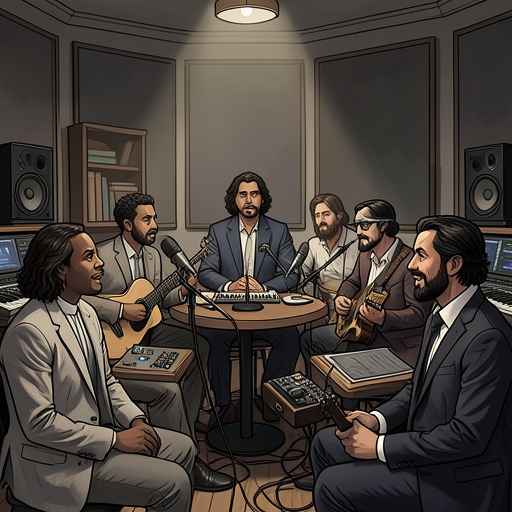
Ma Rainey’s Chicago Recording Session
This thread follows the delayed, contested recording session from the band’s arrival through its eventual completion and the negotiations that follow.
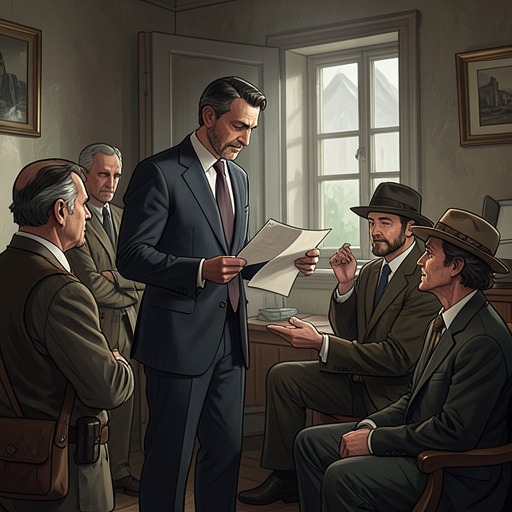
Levee’s Bid for Independence
This thread traces Levee’s hope of becoming a recording artist in his own right, from his confidence in his musical ideas to the rejection that precedes his violence.
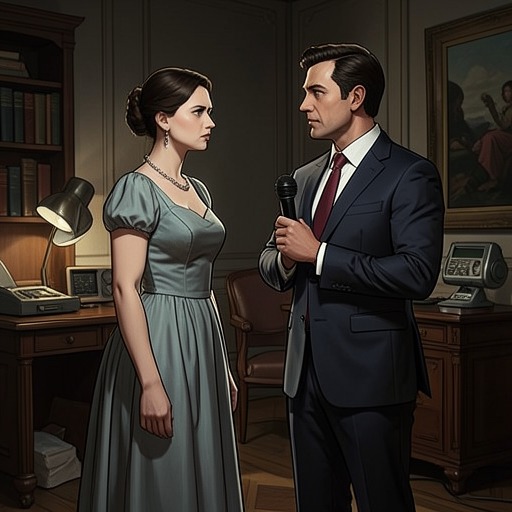
Ma Rainey’s Authority Over the Session
This thread follows Ma Rainey as she repeatedly contests the company’s attempts to manage her performance, her people, and the terms of the recording.
