
The Leftovers and the Work of Identity
Ma Rainey's Black BottomThis thread follows the play’s competing accounts of inherited history, showing how the band’s arguments about pleasure, assimilation, and racial violence shape their sense of collective identity.
increasing Bearing strength in each event
 decreasing
Bearing strength in each eventdecreasingThe Stew of History
The Stew of History
A metaphor for inheritance
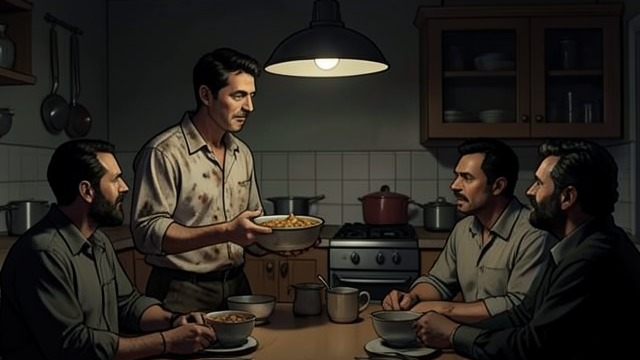
When Levee takes extra sandwiches, Toledo calls the musicians leftovers from history. He describes African peoples and cultures as ingredients mixed into a stew, then imagines what remains after that history has been consumed and a new one begins.
Toledo uses the image to describe Black people as survivors of a history that has been made by others and then treated as disposable. His metaphor shifts the argument away from individual manners and toward the collective consequences of displacement and exploitation.
Understanding the metaphor
Slow Drag questions what eating has to do with how white people treat Black people. Levee, meanwhile, jokes that he has lost the point. Their responses show Toledo’s difficulty in making a shared historical account persuasive to listeners who do not immediately recognize themselves in it.
The metaphor matters because it asks the group to recognize its relation to the past before deciding what to do next. Toledo suggests that a community cannot choose a future with clarity if it does not understand what history has left behind.
Pleasure and Responsibility
Pleasure and Responsibility
A defense of enjoyment
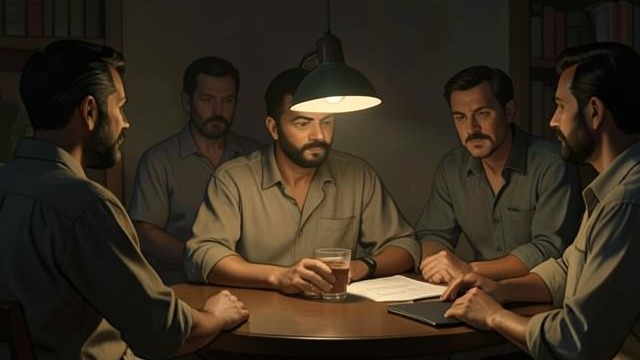
Toledo argues that Black people should think beyond having a good time and consider what kind of world they will leave their children. His concern is that pleasure can become an escape from the shared work of changing unjust conditions.
Slow Drag answers that good times are what make life worth living. He points to Black survival through enslavement and other hardship, arguing that laughter and enjoyment are not trivial but essential forms of resilience.
Two forms of survival
Levee ridicules Toledo’s political seriousness and asks what he himself is doing to improve the world. Toledo responds that the task belongs to everyone together, not to one person acting alone.
The disagreement resists an easy choice between pleasure and responsibility. The men’s recreation helps them endure daily life, while Toledo’s insistence on collective action asks whether endurance alone can alter the conditions that make endurance necessary.
Imitation and Self-Definition

Imitation and Self-Definition
Toledo’s charge
Toledo argues that Black people have tried to become like white people and, in the process, sold part of their cultural identity. He points to the musicians’ clothes as one visible sign of imitation, but he also says the question involves how people act and see the world.
Cutler asks what else they can be while living in America. His question gives Toledo’s broad claim a practical weight: identity develops under conditions in which access, safety, and social acceptance are shaped by white authority.
Levee’s answer
Levee rejects the label of imitation. He insists that he is simply himself and imagines that success with his own band will let him command the respect Ma receives from the recording company.
His answer reveals both independence and dependence on external recognition. He does not want to imitate anyone, yet he measures the hoped-for success of his music by whether white businesspeople will respect him and grant him access to the recording world.
The Reverend’s Forced Performance
The Reverend’s Forced Performance
Humiliation in a segregated town
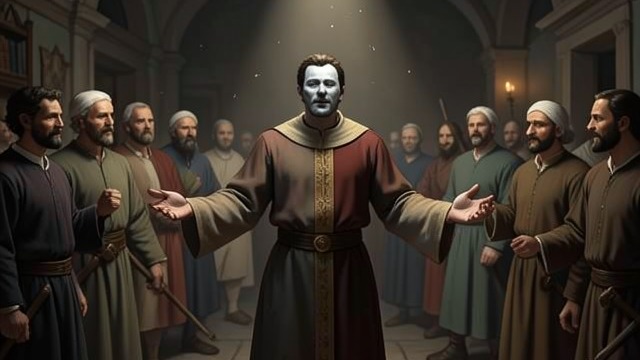
Cutler recounts how Reverend Gates, stranded after a train stop, encounters a white mob. The men demand to know whether he can dance, tear away his cross, destroy his Bible, and force him to perform until they are satisfied.
The story places racist violence inside an apparently ordinary journey. Gates’s position as a minister does not protect him; the mob turns him into entertainment and uses danger to dictate what his body must do.
The demand to perform
Cutler connects the story to the recording company’s treatment of Ma. The situations are not identical, but both reveal an expectation that Black people perform for white audiences and make money for others without receiving corresponding respect.
Levee challenges the religious meaning Cutler draws from the story, asking where God was when Gates was being humiliated. The story thus deepens the play’s account of imposed performance while opening a crisis over whether spiritual faith can answer racial violence.
History Repeats as Rupture
History Repeats as Rupture
A conflict made physical
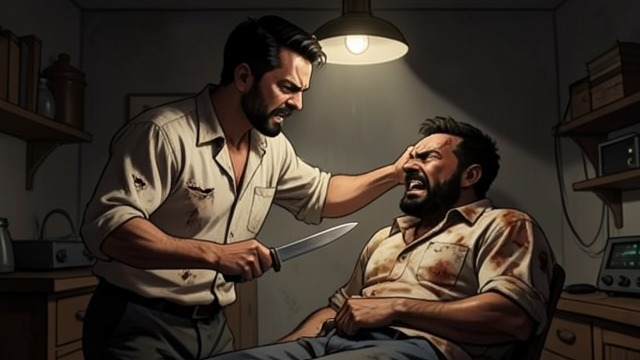
After Sturdyvant rejects his songs, Levee’s anger focuses on Toledo’s accidental step on his shoe. Toledo apologizes, but Levee turns the damage into an accusation and stabs him before he can regain control of the moment.
The murder gives the band’s earlier arguments about history and identity an immediate human cost. The men’s shared work and talk about collective understanding cannot protect Toledo once Levee’s grievance becomes violence.
A fractured inheritance
Levee’s fixation on the shoe follows repeated humiliations and rejected ambitions, but those pressures do not erase his responsibility for the killing. The scene shows how oppression can shape a person’s world without making violence a form of liberation.
Toledo had asked what the community might do with the history it had inherited. His death leaves that question unresolved and turns the image of the leftovers into a bleak reality: the band disperses, while the shared future Toledo had argued for remains unbuilt.
After lunch arrives, during Toledo’s account in the band room
During the argument about the band’s good times
After Levee argues that he can command respect by becoming a bandleader
During Cutler’s story about Reverend Gates
At the ending, when Levee kills Toledo in the band room
