
Cutler’s Stewardship of the Band
Ma Rainey's Black BottomThis thread follows Cutler’s efforts to keep the musicians working together and his confrontation with Levee’s escalating challenges to his authority and faith.
increasing Bearing strength in each event
 decreasing
Bearing strength in each eventdecreasingThe Practical Leader
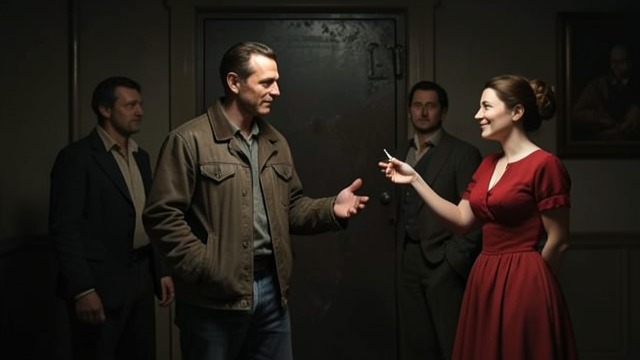
Holding the working group together
A leader by steadiness
Cutler is the band’s leader largely because he is sensible and experienced. When the musicians arrive, he checks the song list, notices that it differs from what Ma told him, and tries to keep the group ready without turning uncertainty into a larger dispute.
He is concerned with practical matters: rehearsing the songs, finishing the session, and getting paid. His leadership is not built on a claim to superior artistry but on knowing how to move a working band through its obligations.
A long partnership
Cutler’s relationship with Slow Drag reflects years of shared travel and work. Slow Drag invokes their long association to persuade Cutler to share a reefer, and Cutler eventually gives in while joking about the extravagant story used to get it.
The exchange establishes a familiar trust beneath the teasing. Cutler’s authority depends partly on these ordinary bonds, which help him keep the musicians together even when their personalities and ambitions pull in different directions.
Resisting Levee’s Challenge

Authority without ownership
Enforcing the band’s limits
Cutler repeatedly tells Levee that the younger trumpeter must play what the bandleader directs. Even after Irvin confirms that the session will use Levee’s arrangement, Cutler remains focused on the larger question of who has the right to decide what Ma’s band plays.
He recognizes that Levee treats Irvin’s approval as a personal victory. Cutler insists instead that Ma is the ultimate authority over her music and that a recording company’s temporary preference does not make Levee the band’s leader.
A working compromise
After Ma rejects Levee’s version, Cutler does not try to claim credit for the reversal. He directs the group toward the version Ma wants and prepares to teach Sylvester the spoken introduction.
His approach is conservative, but it is also a way of preserving the band’s function under pressure. Cutler understands that the musicians are hired to accompany Ma, and he tries to keep Levee’s ambitions from disrupting the work that supports them all.
Faith Under Attack
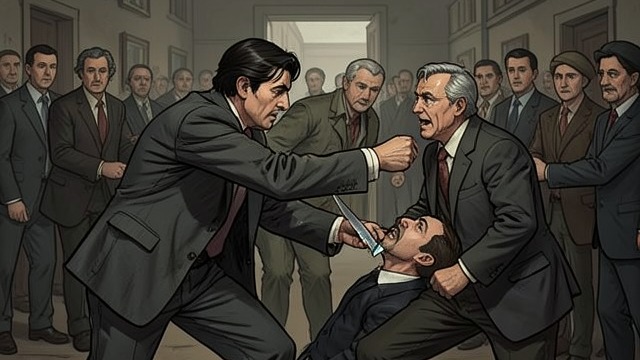
Belief becomes personal
A story of humiliation
Cutler tells the band about Reverend Gates, a Black minister who is allegedly forced by white men to dance after being stranded in a segregated town. The story illustrates how racist power can turn even a religious figure into a spectacle for white entertainment.
Levee challenges the story by asking why God did not protect the minister. His attack on the idea of a just God quickly turns into a direct insult to the faith Cutler holds sacred.
The argument becomes physical
Cutler can no longer tolerate the blasphemy and punches Levee in the mouth, knocking him down. The other musicians pull Cutler away, but Levee draws a knife and dares God to save Cutler from being killed.
The confrontation reveals the limits of Cutler’s restraint. His faith is not an abstract position in a philosophical debate; it is something bound to his identity and to a history of Black survival that Levee is furious cannot be reconciled with divine protection.
The Working Band Endures
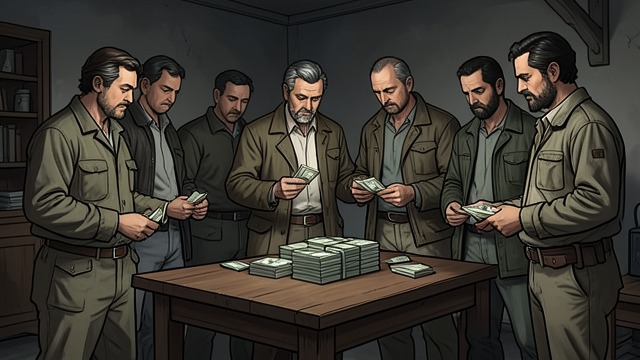
Getting through the session
Frustration without surrender
Cutler is frustrated when the recording goes wrong and blames Levee for not paying attention. He nevertheless returns to the practical business of rehearsing and finishing the session, since the musicians have already invested time and expect to be paid.
When Ma fires Levee after the session, Cutler does not celebrate the dismissal. He has already acknowledged that Levee can play well and write music, even while objecting to his conduct and refusal to follow the band’s direction.
Protecting the wages
As the men wait for payment, Cutler insists that the musicians be paid in cash rather than by check. He remembers the difficulty of cashing a previous check and the suspicion that can fall on a Black man trying to exchange one.
Sturdyvant eventually distributes cash, and Cutler prepares to leave with the others. His attention to wages and payment reflects the material basis of his leadership: the band’s music matters, but so does making sure its members receive the money they have earned.
The Band Falls Apart
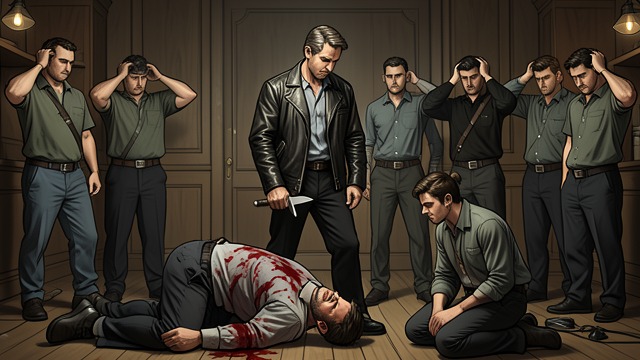
A leader left with the aftermath
One more attempt to stop the quarrel
After Sturdyvant refuses Levee’s songs, Toledo steps on Levee’s shoe and apologizes. Levee continues to demand an explanation, while Cutler tells him that Toledo has already said he is sorry.
Cutler and Slow Drag avoid looking at Levee, hoping the argument will cool without an audience. Cutler’s effort to de-escalate is modest, but it reflects the same practical care that has kept the band functioning during earlier disagreements.
Catastrophe beyond his control
Levee suddenly rushes Toledo with a knife and stabs him in the back. Cutler freezes, then tells Slow Drag to get Irvin rather than trying to worsen the danger.
The violence ends the work of a band whose members had traveled and performed together for years. Cutler’s leadership cannot contain the final rupture: he is left to face Toledo’s collapse, Levee’s shock, and the destruction of the cooperative group he had tried to preserve.
Early in the session, when the musicians enter the band room
During rehearsal, after Irvin confirms Levee’s arrangement
During the second act, after Cutler tells the story of Reverend Gates
After the lost take, as the musicians wait for their money
At the very end, after Levee rejects Sturdyvant’s offer
