Cutler
Ma Rainey's Black BottomCutler is the guitarist and trombonist who leads Ma Rainey’s band, not through showmanship but through steadiness and practical authority. His solid, nearly unembellished playing and his instinct to take responsibility set him apart from the conflicts around the recording session, even as those conflicts draw him into a violent clash with Levee Green.
Identity and Musical Character
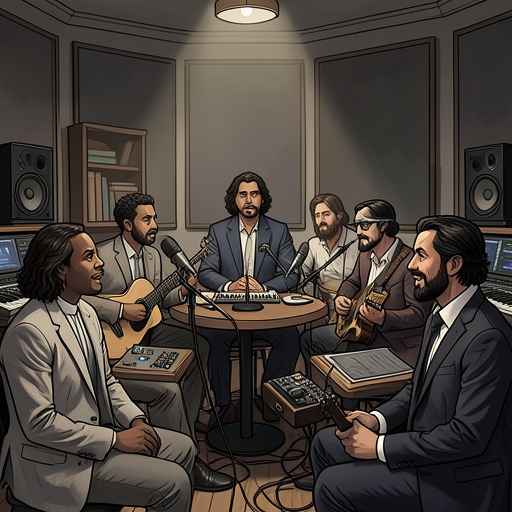
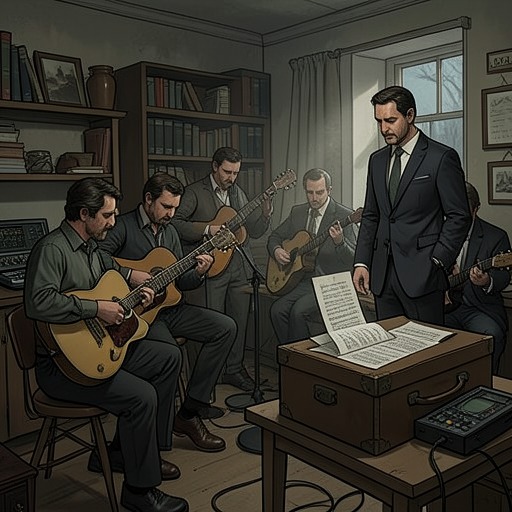
Cutler is in his mid-fifties, like most of the other musicians, and enters with Slow Drag and Toledo as the band gathers to rehearse. The stage description suggests that his leadership may come from being the most sensible of the group. His playing is solid and almost entirely without embellishment: he concentrates on the chord he is playing at that moment rather than treating the music as an occasion for display or broad interpretation.
That musical restraint is part of a more general portrait of a man who does not turn inward. Cutler has the qualities of a loner, but not introspection; the description presents him as self-contained without suggesting that he is given to private reflection. His authority is consequently practical. He keeps the group moving, asks direct questions, and takes on tasks rather than explaining himself at length.
The Session and His Responsibilities
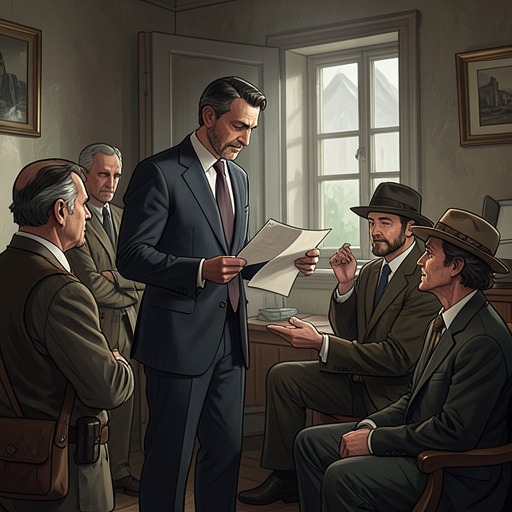
When the musicians are told to rehearse, Cutler hands Toledo the song list and asks him to read it. The titles include “Prove It on Me,” “Hear Me Talking to You,” “Ma Rainey’s Black Bottom,” and “Moonshine Blues.” Cutler immediately notices the discrepancy: these are not the songs Ma Rainey had told him to expect. His question about where Irvin has gone registers both a logistical problem and the musicians’ limited control over arrangements being made around them. Cutler identifies the mismatch but does not resolve it himself; the episode shows him alert to the work’s practical conditions without giving him power over the session’s management.
Ma Rainey later tells Cutler to teach Sylvester Brown his part. After she leaves, Cutler welcomes Sylvester and introduces the musicians present: Slow Drag, Levee Green, and Toledo. The exchange establishes Cutler as a point of orientation within the band, able to bring a newcomer into its working circle. When Levee protests that Ma Rainey has rejected his version of the song, Cutler is present as the person responsible for helping Sylvester learn the part Ma Rainey wants performed. The disagreement places Cutler between the singer’s authority over the arrangement and Levee’s insistence on his own musical conception.
Conflict with Levee Green
The tension between Cutler and Levee becomes physical during their argument about God. Levee denounces the idea of divine justice, asking why God did not strike down the white men who had harmed Black people and insisting that God is the white man’s God, indifferent or hostile to Black people. Cutler can no longer tolerate the blasphemy as he hears it: he punches Levee in the mouth, knocks him down, and jumps on him. Toledo and Slow Drag intervene and try to pull Cutler away.
Cutler’s response is not a considered debate but a defense of something sacred to him. As he attacks Levee, he repeats that this is his God and accuses Levee of blaspheming. The scene exposes the limit of his usual steadiness: the man characterized as sensible and restrained becomes physically forceful when his faith is insulted. It also makes the conflict personal. Levee speaks from anger at racial violence and religious abandonment; Cutler hears an assault on his own God. Neither can make the other’s claim disappear, and the argument breaks out of speech into a struggle that the other musicians must stop.
Final Response and Narrative Role
Near the blackout, Levee turns to Cutler and asks him to tell the others to close their eyes and not look at him. Cutler does not answer with an explanation or confrontation. He tells Slow Drag to get Irvin, a short instruction that returns him to the practical role he has occupied throughout the session: responding to what must be done next. The sound that follows is Levee’s muted trumpet, struggling toward its highest possibilities and carrying pain and warning before the stage goes dark.
Cutler’s arc is not a transformation so much as a series of tests of his characteristic function. He notices when the song list is wrong, welcomes Sylvester and takes responsibility for teaching him, then crosses into violence when Levee attacks his faith. At the final crisis, he again acts through an immediate instruction. His grounded, unornamented presence provides a counterpoint to Levee’s insistence on musical innovation and his increasingly charged confrontations, while Cutler’s own eruption shows that steadiness does not make him untouched by the pressures in the room.