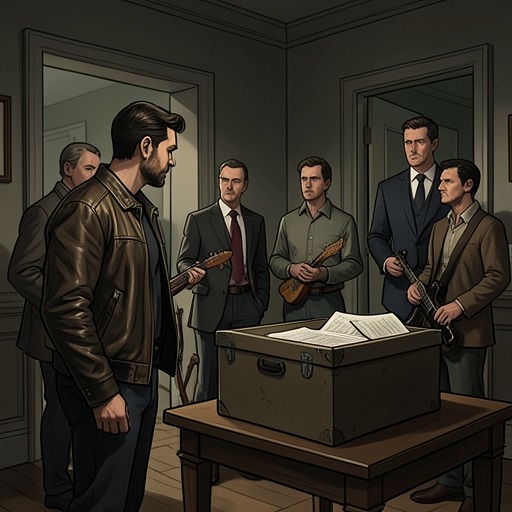
The attack on Levee’s mother and his father’s revenge
Ma Rainey's Black BottomThe attack on Levee Green’s mother and his father’s revenge is a childhood memory that links racial violence to a lasting family loss. Recounted by Levee Green as an adult, the episode begins with an assault in his parents’ home and ends with his father’s death after retaliating against the attackers.
Background and Attack
Levee Green recalls being eight when a group of white men entered his father’s house and assaulted his mother. She had been frying chicken; he estimates that eight or nine men were involved. He did not understand what they were doing, but recognized that she was in danger and feared that he might also be targeted. His response was to retrieve a hunting and work knife kept by his father and try to intervene. One of the men turned the weapon against him. The memory thus joins his mother’s victimization to his own childhood exposure to the attack, establishing the violence that shapes the family’s subsequent actions.
Retreat, Revenge, and Loss
Afterward, Levee Green’s father appeared to accept what had happened, but learned the attackers’ identities from his wife. He announced that the family would leave the county, said goodbye to their neighbors, and sold their land to one of the men involved, smiling to his face. He took the family to live with relatives in Caldwell and got them settled before disappearing one day. Levee Green never saw him again: his father had secretly returned to the woods to seek revenge on the attackers. He killed four before the others tracked him down and killed him. The family’s move therefore became both an attempted escape and the prelude to a second devastating loss; the violence that had entered their home followed them into the life that came after.
The Meaning of the Recollection
The account gives Levee’s adult testimony a double perspective: it preserves what he could understand as a child while also tracing the consequences he learned only afterward. His attempt to defend his mother belongs to the immediate crisis; his father’s concealed return and death belong to the history that unfolded beyond the child’s grasp. That gap makes the memory more than an explanation of family loss. It shows how racial violence can continue through decisions made in its aftermath, turning apparent departure into a delayed act of retaliation and leaving Levee with a past in which neither escape nor revenge restores the family that was broken.
The Limits of What Is Named
The recollection gives no individual names or separate portraits of the attackers, even though Levee Green says his father learned who they were. Its focus remains on what the child could grasp and what the family endured, rather than on the attackers’ identities or the details of the father’s pursuit. That imbalance shapes the episode as inherited knowledge: Levee can recount the consequences, but his father’s final actions took place beyond his sight.