The first recording of “Ma Rainey’s Black Bottom” is lost
Ma Rainey's Black BottomThe loss of the first recording of Ma Rainey’s Black Bottom turns an apparent musical success into a technical failure, exposing how fragile the session is and how firmly Ma Rainey insists on controlling its terms. The band performs the song, Sylvester Brown gets through his spoken introduction, and Ma receives praise—then Sturdyvant announces from the control booth that no recording exists. The damaged microphone cord, rather than the performance itself, has erased the take; Ma’s threatened departure makes clear that another attempt depends on her consent.
Setting and Preparation
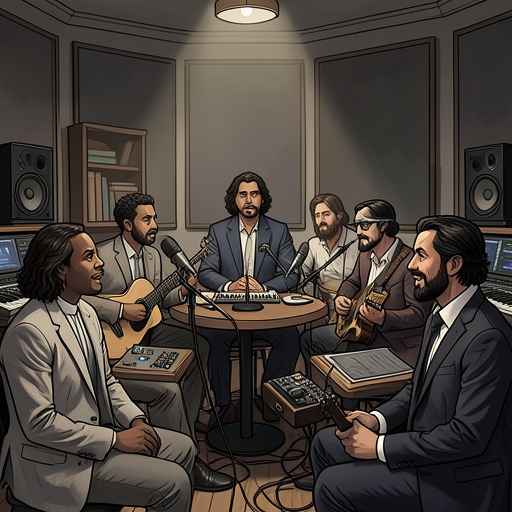
The failure unfolds across two connected playing spaces. The band room sits in the basement, with benches, chairs, a piano, lockers, forgotten equipment, a mirror, and posters. Upstairs, the studio has the equipment and control booth that determine whether the musicians’ performance will be captured. A horn connects the booth to the performers, while a door at the rear links the studio to the band room. The separation is practical and consequential: musicians play below the listening and recording apparatus, while Sturdyvant monitors from above.
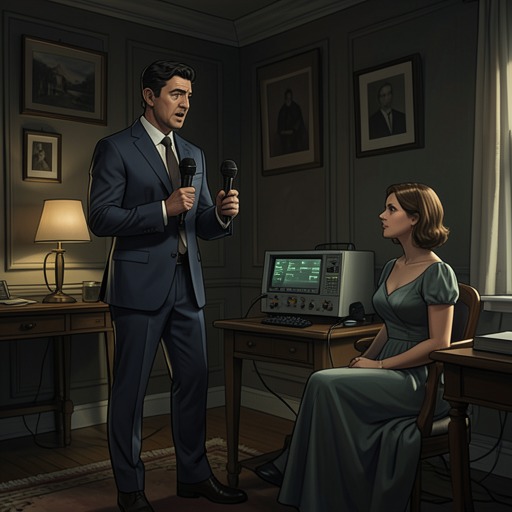
Irvin prepares the studio by carrying in and connecting a microphone, testing it, and checking the piano. Sturdyvant, visible in the control booth with headphones, directs the equipment check over the speaker. The arrangement places the recording’s technical oversight at a distance from the people performing. When the session reaches Ma’s song, that distance will matter: Sturdyvant can hear and judge the take from the booth, but the fault is ultimately traced to a cord running through the setup.
Before the take, Sturdyvant tells Ma not to wait so long before coming in and to shorten the introduction. Ma rejects his attempt to direct her singing, telling him to handle the equipment upstairs and leave the performance to her downstairs. Her question about where her Coca-Cola is underscores that she expects the session to accommodate her, not simply to hurry her into a commercially useful recording. The exchange establishes a division of authority: Sturdyvant can intervene in the technical process, but Ma claims control over how the song is performed.
The Take and Its Apparent Success
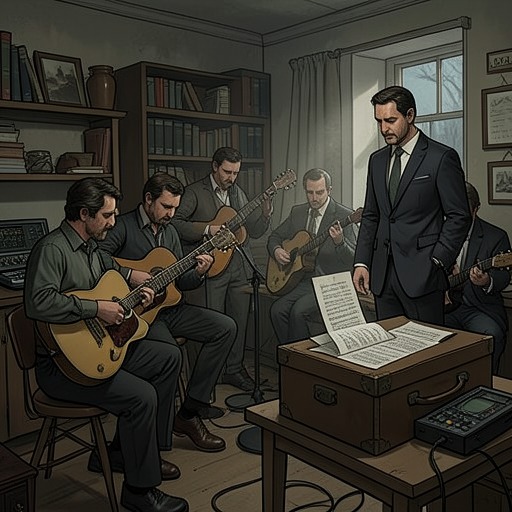
Ma prepares Sylvester Brown for his spoken introduction by telling him where to stand, how to hold his hands, and to remember the words. She reassures him that a mistake can be done again, then asks Cutler to play for him. As the band begins, Sylvester clasps his hands in front of his chest and pulls them in opposite directions while speaking. Sturdyvant has already objected to the length of the introduction; Ma’s patient coaching instead makes room for Sylvester to deliver it at his own pace.
The recording attempt does not go smoothly at first. During one start, Sylvester stutters through the opening, and Irvin stops the take. The band begins again. This time Sylvester completes the introduction, announcing that Ma will show her black bottom, and Ma sings the song with the band. The performance reaches its ending, and Irvin says it sounded great. Ma turns to Sylvester, tells him she knew he could do it, and asks Cutler whether he did well. Cutler agrees, adding that Sylvester did better than he expected. The moment seems to resolve the immediate performance challenge: Ma’s encouragement has helped Sylvester through the spoken part, and the assembled musicians have finished the song.
The Technical Failure
That apparent success collapses when Sturdyvant interrupts from the booth. He says something has gone wrong and that the song has not been recorded. Irvin initially asks whether the microphone is at fault, then follows its wire and suspects that Levee kicked out the plug. Levee denies doing anything. The accusation is not the diagnosis: Irvin finds that the cord is chewed up and tells Sturdyvant that they need another one. The evidence therefore identifies a concrete equipment failure while leaving the initial suspicion against Levee unsupported.
The interruption separates what the performers have accomplished from what the studio has preserved. The band has played the song; Ma has sung it; Sylvester has delivered the introduction successfully on the second attempt. Yet none of that has produced a recording. The performance can be heard and praised in the room, but the damaged connection prevents it from becoming the take the session was meant to make. Sturdyvant’s realization arrives only after the song is over, turning the control booth’s monitoring function into a belated report of failure rather than a safeguard that caught the problem in time.
Ma Rainey Sets the Limit
Ma responds by calling the session disorganized and announcing that she is going home. She walks past Sturdyvant as he enters from the booth and exits to get her coat. Sturdyvant asks where she is going; Irvin follows her and argues that the records will be hits and that even Sylvester could become a star. Those assurances do not erase the lost take or repair the equipment. Irvin’s appeal instead asks Ma to accept one more delay on the promise of future success.
Ma sits down with her coat on and grants fifteen minutes. She makes the limit explicit: after that, she will take her black bottom back down to Georgia and leave. Irvin kisses her and promises the extra time. Her decision is neither an unqualified return to work nor proof that the session has recovered; it is a brief, conditional reprieve after a failure she did not cause. The scene closes its immediate crisis on a negotiation over time, with Ma retaining the power to end the session.
The lost take brings the play’s performance and recording spaces into sharp contrast. Ma and the band can judge the song as performed, while Sturdyvant’s concern is whether the equipment has captured it. A technical defect nullifies the musicians’ completed work, and the company’s desire to keep the session moving runs up against Ma’s insistence that her time and interpretation are not simply at its disposal. The cord’s failure thus has both a material consequence—the song is not recorded—and a dramatic one: it forces the people in the room to confront who can decide whether the work continues.