
Diane as a Mirror for Hazel
Made for LoveHazel’s changing encounters with Diane reveal her unease with artificial intimacy and her ability to make meaning through care and imagination.
increasing Bearing strength in each event
 decreasing
Bearing strength in each eventdecreasingThe First Refusal
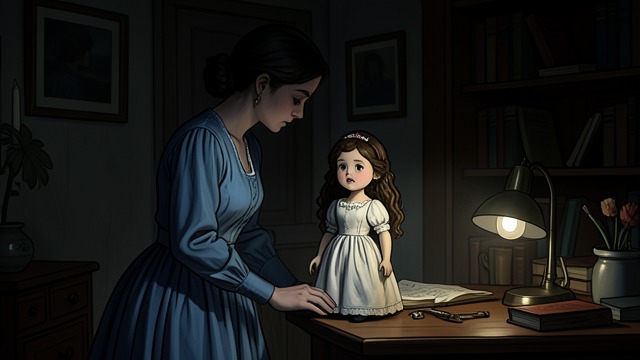
The First Refusal
Personhood demanded
Hazel’s father insists that she acknowledge Diane as a person. Hazel rejects the demand, especially because the doll wears her dead mother’s robe.
A boundary exposed
Her refusal is partly disgust and partly a reaction to a household where objects are treated as companions. Diane makes Hazel confront the difference between recognizing someone and pretending that an object can answer her.
The Doll Put to Bed
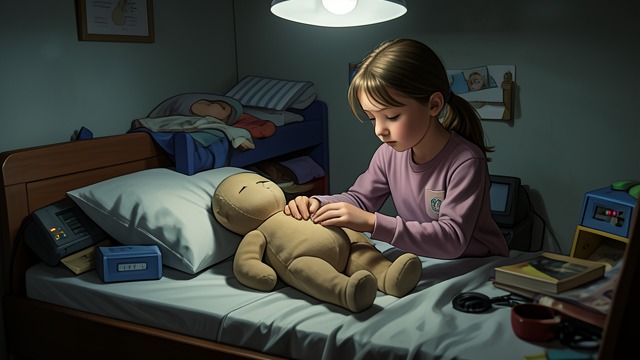
The Doll Put to Bed
A practical role
Hazel’s father asks her to take Diane to the bedroom. Hazel imagines the doll as a drunk friend or a coma patient, making the task emotionally manageable.
Care without reciprocity
She handles Diane gently despite knowing that the doll cannot wake. The act reveals Hazel’s capacity to care, even when the relationship is one-sided and partly invented.
The Trapped Arm
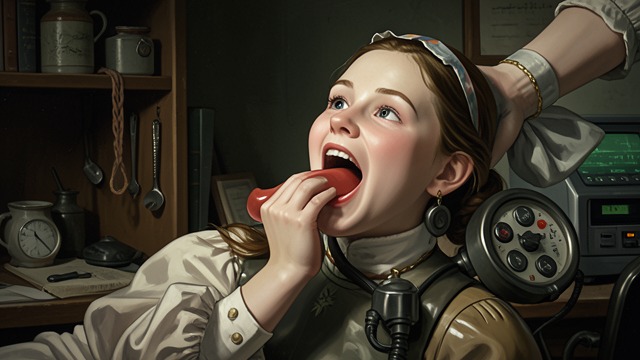
The Trapped Arm
Curiosity becomes danger
Hazel puts her hand into Diane’s throat and finds the pressure calming at first. The doll’s rubber mouth then clamps around her arm, leaving her stuck and frightened.
A new form of intimacy
The episode is physically painful and absurd, but it also reverses their earlier roles: the artificial companion now determines Hazel’s movement. Her father must dismantle part of Diane to release her.
The Shared Bed
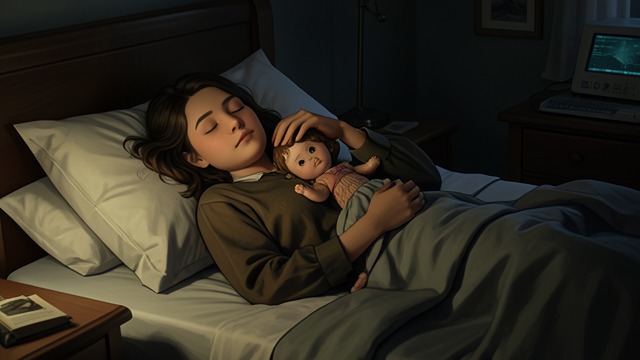
The Shared Bed
An imagined embrace
After taking her father’s medication, Hazel climbs into bed and believes she is cuddling with her father. Drugs and exhaustion make the warmth feel like a long-delayed experience of being loved.
The mistaken companion
She later realizes that she has been holding Diane. The discovery does not make the tenderness entirely unreal; Hazel has felt comfort, but the comfort came from a presence that cannot reciprocate.
A Doll’s Last Journey
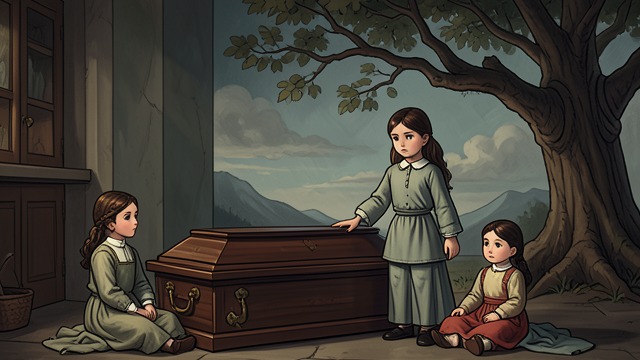
A Doll’s Last Journey
A place beside the dead
Hazel initially thinks her father’s dolls should accompany him in death, then asks whether they might instead remain with Liver. The choice is part funeral, part effort to protect the companions her father valued.
Imagination carried forward
Liver agrees to show them a good time. Hazel leaves knowing that the dolls are not alive, yet their role in her father’s final days continues to shape what she does for them.
August 2019, when Hazel first meets Diane
The morning after Hazel’s first night at her father’s home
The morning Hazel attempts to inspect Diane
The night Hazel attempts suicide
During the secret funeral journey
