Hazel Green
Made for LoveHazel Green is Byron Gogol’s estranged wife, and her departure from his wealthy, technology-centered life exposes how little she feels she can claim as her own. Arriving at Hazel's Father's Home without funds or identification, she confronts homelessness, fears for her safety, and tentatively recognizes that a life beyond Byron Gogol’s influence may still be possible.
Identity and Circumstances
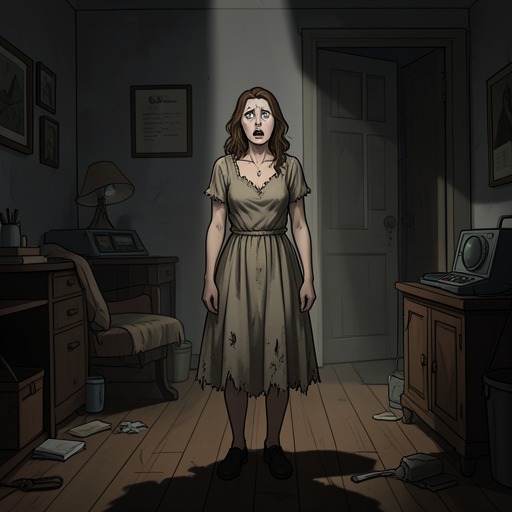
In August 2019, Hazel Green is staying with Hazel's Father (Herbert), who is seventy-six. His living room holds a life-size woman doll he has bought, still surrounded by the tools used to open its large shipping crate. For Hazel, the crate’s size turns it into a possible bed: newly homeless, she scans her surroundings for anywhere she might sleep. The immediate practical question sits beside the emotional residue of her marriage; after years of sharing a bed with Byron Gogol while trying to preserve distance, the crate’s confined space seems to promise the simplicity of having only one possible sleeping position.
Leaving Byron Gogol
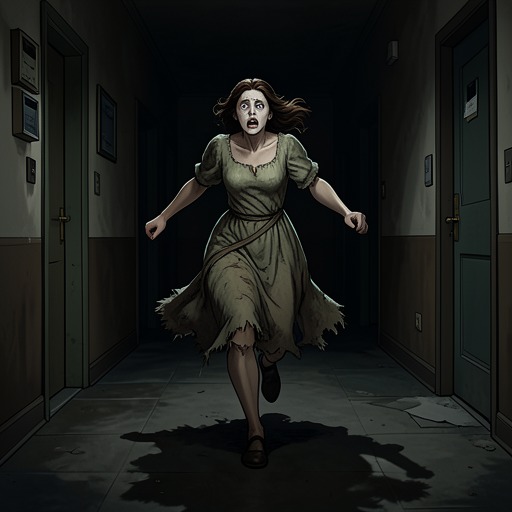
Hazel Green has left Byron Gogol that morning, intending to be gone for good, but has taken no available funds or identification. She understands that the situation is unlikely to end well and worries that seeking shelter may put Hazel's Father (Herbert) at risk. The danger feels inseparable from the imbalance in their marriage: Byron Gogol founded and built a technology empire, and Hazel describes life as his wife as isolating. She has come to depend on the prospect of refuge while recognizing that asking for it is not harmless.
Her departure also follows an earlier attempt to raise the possibility of moving out. Byron Gogol responded with a frightening look and declared the idea unacceptable; Hazel read his reaction as implying that leaving would force him into something terrible. She nevertheless left, though she remains afraid he may kill her. Her imagining of how he might do so is darkly ironic: a man associated with technology and mediated action seems at odds with the directness of physical violence. The irony does not relieve her fear; it sharpens her sense of how dangerous his response could be.
Possessions, Refuge, and Autonomy
Hazel Green’s uncertainty about where to sleep reflects a broader uncertainty about what belongs to her. Before marrying Byron Gogol, she owned little of value; when she left, she took nothing, because the things around her seemed to belong to him, whether he had invented or purchased them. Even the comforts of his world therefore remain entangled with his power rather than serving as resources she can carry into a new life.
After a moment in which she suspects that Byron Gogol may be recording her, Hazel reminds herself that she existed before she knew him and could exist without him. The thought marks a tentative shift: separation is no longer only an escape from danger but a possibility of recovering a self that she had come to believe could not continue apart from him. Yet she does not simply long to return to her former life, either. Her position is precarious and unresolved, held between a past she does not want back and a future for which she has almost no material means.