Hazel Learns Her Father Has Cancer and Agrees to Return to Byron
Made for LoveHazel Learns Her Father Has Cancer and Agrees to Return to Byron marks the moment Hazel’s flight from Byron collides with her father Herbert’s impending death. The revelation changes the meaning of her choice: returning to The Hub is at once a response to a possible chance of treatment and a concession to Byron, whose offer turns her family’s crisis into leverage. Hazel accepts, but frames the decision not as forgiveness or surrender without protest, but as the closest thing to a draw she can secure against him.
The Diagnosis and Its Credibility
The news arrives while Hazel is already wary of Byron’s account. Before asking about her father, she asks whether Liver is clean; Byron answers that he has no operative venereal infections, though his body is not in good condition and he would not qualify as an organ donor. Hazel then braces herself for what Byron will say about Herbert, expecting a lie or a half-truth that distorts the whole picture. His disclosure is stark: the cancer is widespread, and Herbert does not have long.
Hazel’s first response is disbelief sharpened by the family history of cancer. Her mother also died of the disease, and Hazel cannot readily accept that her father is now dying of it too. She argues that he had only gone to the doctor the day before and wonders whether something might have produced a faulty reading. Surely, she reasons, he would have symptoms, or his doctors would have found an abnormality in the tests he regularly underwent. Even as she challenges the diagnosis, she catches on a more basic question: why had he gone to the doctor at all?
Byron insists that Herbert knows. He explains that the helmet was not designed primarily as a medical scanner, so its results lack the specificity of a HealthSweep imager, and acknowledges that he is not a doctor. But he says that he has spoken with several doctors on Herbert’s behalf, and that they agree with the assessment. Their available information also indicates that Herbert has already undergone chemotherapy and radiation, then stopped everything except pain-management medication a few months earlier. Byron says he would have checked electronic hospital records as well if doing so were legal, and presents the combination of the scan and medical consultations as enough to speak with certainty.
The History Behind Hazel’s Shock
The disclosure forces Hazel to confront not only what Herbert concealed but how familiar his concealment has been. She says aloud that he never told her he had cancer or received treatment, and that he then made the decision to die without sharing it. Putting the thought into words is her way of acknowledging its reality. Her doubt about whether Herbert would tell her is also undercut by her own knowledge of him: when he felt worse, he tended to minimize his pain.
She remembers an earlier instance from her high-school years. Before a doctor-ordered stress test, Herbert mowed the lawn despite chest pain, suffered a micro heart attack, and underwent surgery that same day. He left the mower partway through an unfinished strip; it remained in the yard for a week, until an obsessive-compulsive neighbor finished the job. Herbert and Hazel’s mother argued about his decision, but the episode had not changed the pattern Hazel now recognizes: he could play down danger even when it was immediate. The old story makes his silence about cancer more plausible, while also exposing how long Hazel has lived with unanswered questions.
After learning what Byron says the scan and consultations indicate, Hazel reviews other clues she had let pass. She wonders why the hundreds of pills beneath the sink did not prompt her to ask questions, why her father’s urgency about the first and second sex dolls did not strike her as a warning, and why she had not questioned his willingness to spend the rest of his life without a car. She concludes that she had stopped trying to understand his logic so long ago that she no longer questioned either what he wanted or why he wanted it. The diagnosis thus uncovers a second loss: her awareness that habit had made her complicit in not knowing.
Byron’s Offer and Its Price
Byron presents treatment as a possibility unavailable to Herbert under his current financial circumstances. He says further tests would be needed, but that he could give Herbert access to cutting-edge treatments not available to the general public. He also characterizes his intervention as justified by Hazel’s right to know and by the possibility of helping her father. Hazel immediately sees the leverage beneath the offer. To her, Byron is using Herbert’s health to blackmail her.
Yet the pressure does not produce simple anger. Hazel waits for the offer to sting, but in the moment feels a twisted gratitude: she wants Herbert to receive help, and she can accept Byron winning by a technicality rather than by an achievement of his own. Her response holds together two judgments she does not reconcile. The offer is coercive, but the treatment it might secure matters more than preserving a clean victory over Byron.
The Return as a Compromised Choice
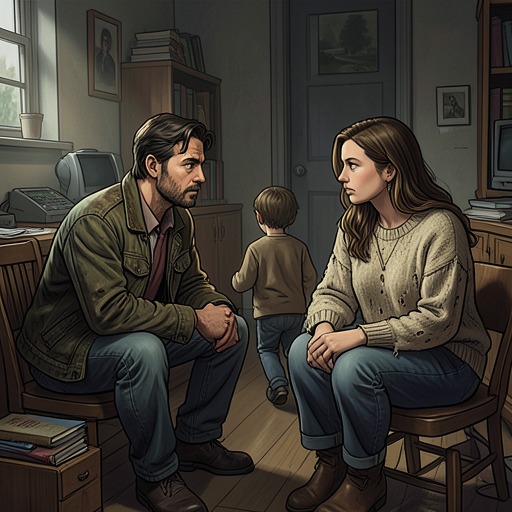
Hazel understands that accepting the offer means moving back to The Hub. When she asks whether that is what Byron wants, he says it makes the most sense and argues that, if they are together, Herbert is his family and he would do anything possible to help him. Hazel challenges the logic by recalling that Byron is speaking about the father of his estranged wife, whose brain he microchipped. Byron replies that under those circumstances Herbert would sound like an elderly man he was not obliged to help. His answer makes the condition of the offer plain: the assistance is attached to Hazel’s return and to their relationship.
Hazel agrees to come home, but asks to speak with Herbert first and says she will call Byron that night. Her agreement does not erase the conflict she has just named; it is a decision made with that conflict fully in view. She weighs the alternatives in terms of what she could live with afterward. If she refused, she would remember valuing freedom over her father’s life, though she doubts that freedom is complete when Byron can still see and hear what she does. If she returns, Byron will know she has done so out of loyalty to her father, not uncomplicated devotion to him. She considers that imbalance closer to breaking even than a victory for Byron.
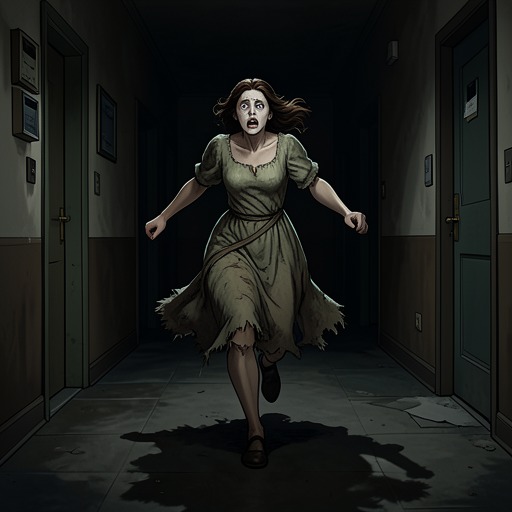
As she turns away, Hazel is crying, but cannot attribute the tears to a single cause. She is grieving the news about Herbert and also thinking about petty, specific parts of life at The Hub that she hates, including the purified air in their house, which smells like pencil lead. That detail keeps her return from becoming a clean homecoming: the choice is made under mortal pressure, while her resistance remains present in the ordinary discomforts she already associates with Byron’s world. The scene’s decisive reversal is therefore practical rather than reconciliatory. Hazel goes back because the possibility of helping her father outweighs the compromised freedom of staying away, not because the breach between her and Byron has healed.