Hazel Leaves Byron and Seeks Refuge with Her Father
Made for LoveHazel Green’s departure from Byron Gogol is an act of escape made without a financial or practical safety net. She leaves with no available funds or identification and turns to her father for shelter, while fearing that Byron’s power and reach make the separation dangerous. The event shifts her immediate aim from enduring the marriage to trying to build a life independent of it, but the refuge she seeks remains uncertain and costly.
Departure and Immediate Stakes
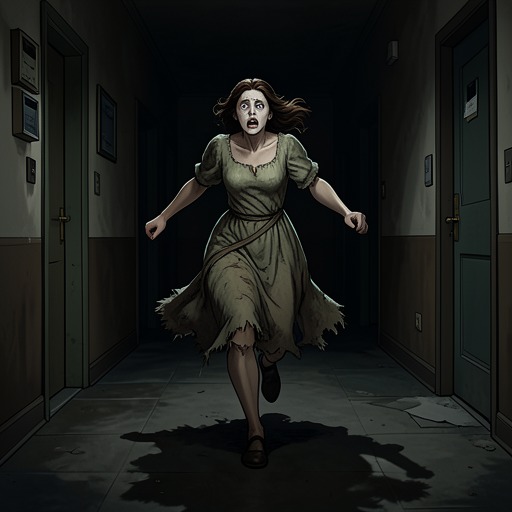
Hazel leaves Byron on the morning she arrives at her father’s home, taking none of the money or identification available to her. The choice is not presented as a prepared transition: she admits that she has not planned far ahead, and explains that leaving without taking anything had seemed necessary. She had become frightened that morning, and a troubling incident involving blood had helped make the decision immediate. Her exit therefore begins not with a secure plan for independence, but with the urgent need to get away.
The loss of ordinary resources makes the request for shelter consequential. Hazel asks her father to let her stay until she can support herself, initially imagining a year as a reasonable period in which to begin a new life. She is aware that this request may place a burden on him. At the same time, she believes Byron poses a real danger, so returning to the life she has left is not a simple alternative. The separation is both a bid for protection and a predicament: Hazel must seek help from family precisely because she has left without the means to establish herself alone.
Her disorientation appears even in how she looks at the objects around her father’s living room. A crate prompts her to wonder whether sleeping inside it might be easier than sleeping in a bed with room to move. She imagines the fixed limits of the box as a way to stop searching for the right position and simply switch off, like one of Byron’s devices. The thought connects her exhaustion to the technological household she has left, while making her wish for rest seem as immediate as her wish for freedom.
The Reason for Leaving
In explaining herself to her father, Hazel identifies the proposed brain-chip connection as a decisive reason for her fear. Byron had wanted them to connect a chip in his brain with one in hers, creating a shared neural network. Hazel describes the arrangement as a first-of-its-kind union, but the idea of technological intimacy does not reassure her: it intensifies her sense that her body and mind could become subject to Byron’s control. The escape is thus not simply a departure from a wealthy, eccentric husband. It is a refusal of a marriage in which closeness could be engineered as a form of access.
The danger she associates with Byron is also tied to the imbalance between them. He founded and built a technology empire, and Hazel understands his wealth and power as immense. Her father initially responds as if the proposed chip were a tracking device; Hazel clarifies that the intended connection was more extensive, a shared system between their brains. That exchange shows how difficult it is for her to make the threat legible to someone outside the marriage. The plan is not an ordinary marital disagreement, and she has no straightforward language for the degree of access it would entail.
Seeking Her Father’s Protection
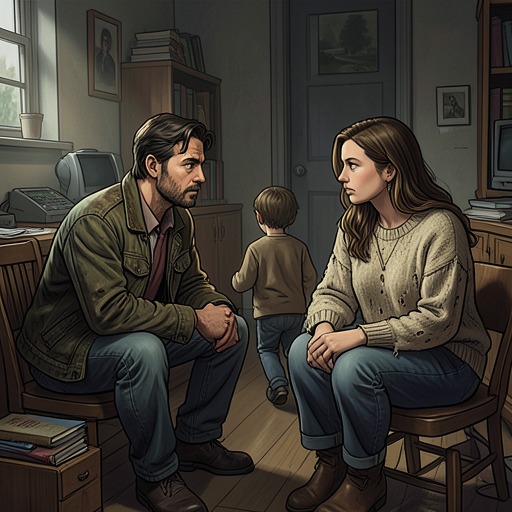
Hazel’s appeal to her father combines fear with the admission that she has no complete plan. She says she expects to stay only until she can make it on her own, then tries to put a boundary around the uncertainty by asking for a year. Her father answers that he might die before that time is up. His response brings the fragility of the refuge into the conversation: Hazel is asking for a substantial stretch of support from someone whose own future she cannot take for granted. The exchange does not establish that he agrees to the proposed year, so the request remains a plea rather than a settled arrangement.
The conversation also exposes the strain of asking for help. Hazel worries that her father thinks she is spoiled and recognizes that he has reason to see her as cowardly in some respects. But she rejects the implication that leaving Byron is an overreaction, pointing to the brain-chip proposal as the fact her father has not yet understood. Her flush and her effort to explain herself mark the personal cost of having to justify an escape that she regards as necessary. The immediate question is not whether she has made a perfect plan, but whether her father will recognize why she cannot safely continue as before.
Fear and the Unsettled Break
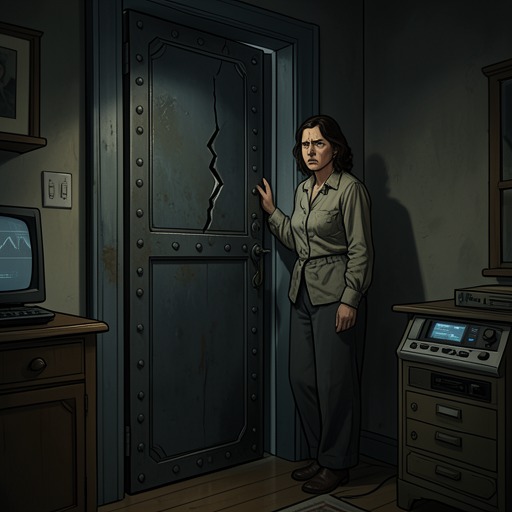
Even after leaving, Hazel does not experience herself as secure. When she later shuts her father’s door, she imagines searching around its perimeter for somewhere to hide and worries that Byron may retaliate through technology rather than direct confrontation. These fears are presented as Hazel’s expectations, not as proof that Byron has acted against her. Their force comes from the history she associates with him: she has spent years as his audience and test subject, living under internal and external surveillance and growing to hate and fear him.
Yet the departure is not only an attempt to avoid harm. Hazel says she wants to live long enough to discover what independence might feel like, including its pleasures as well as its problems. She recognizes that marrying Byron had offered an escape route, but now wonders what life might have been if she had not taken it. Her hope is tentative rather than triumphant: she does not know whether life without him will become contentment, or whether she and her father can sustain the refuge she has requested. The event’s decisive change lies in that uncertainty. Hazel has left the relationship and begun to imagine a self beyond it, but safety, shelter, and a viable future remain unresolved.