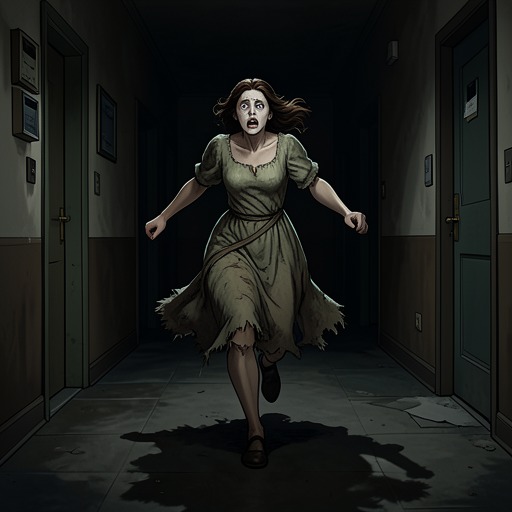
Hazel Tries to Stop Brain Downloads with a Sleep Helmet
Made for LoveHazel Tries to Stop Brain Downloads with a Sleep Helmet is Hazel’s attempt to use Byron’s own Sleep Helmet as a barrier against the brain download scheduled for noon. The effort fails: after the helmet’s calming induction, images of Byron arrive with punishing force, and Hazel climbs out of the box shaken. The scene makes the threat of the download tangible while showing Hazel trying to regain some control over when and how it reaches her.
The Deadline and the Idea
The next morning, Hazel wakes without knowing the time. Liver does not know either, and the uncertainty matters: Hazel needs to get home before the next download at noon. The deadline gives her idea its urgency. Rather than waiting for the download to arrive without resistance, she decides to test whether the Sleep Helmet can interfere with it.
Her plan is improvised, not assured. Hazel asks Liver to help lift something, and he wonders whether it is a body, eyeing a shovel in the shed as if preparing for a very different task. On the way to Hazel’s house, he retrieves a full flask from between the truck’s seat cushions and calls it necessary equipment. The exchange gives the plan a grimly comic edge, but Hazel’s request is practical: she needs another person to move the box, even as she does not want him to witness what the download might do to her.
Setting Up the Test
At home, Hazel’s father and Diane are playing cards in the kitchen breakfast nook. Hazel tells her father that a friend is coming to bring Diane’s box to the porch, and warns him not to judge Liver by his appearance or consider him dangerous. The domestic scene continues around the attempt: her father calls out that Diane has won at rummy again while Hazel prepares for the approaching download.
Hazel fetches the Sleep Helmet Byron had put in the safe. She doubts that he would have included it if wearing it during the downloads could prevent them, but she treats that doubt as a reason to test the possibility, not to abandon it. She wonders whether sleep might make her mind less susceptible to having memories ripped out, and wants to try every roadblock she can muster. The helmet’s presence in the safe ties the experiment to Byron, while Hazel’s reasoning remains focused on finding any practical means of resistance.
She tells Liver that she intends to put on the helmet and climb into the box for a few minutes. She cannot predict exactly what will happen and asks him to wait in another room. Liver asks whether she will shut the lid; his question makes the physical arrangement plain. Hazel confirms that she will and asks him to help. Before she climbs in, he says he will poke airholes for her health. The brief exchange offers a small measure of care, but it does not make the test less isolating: Hazel wants help with the box, yet does not want Liver beside her when the download comes.
The Helmet and the Download
Hazel puts on the helmet, climbs into the box, and lies back. Liver makes the airholes as promised. The helmet blocks out all light; Hazel hears a series of terrifying stabs in near-mechanical succession, followed by silence. She presses the activation button and starts the helmet’s beta-wave sequence.
The induction feels pleasurable, and its ease frightens her. Hazel’s recurring image is not a peaceful landscape but a zookeeper cleaning the cement floor of a cage: a large push broom moves over soapy ground, its rasping polymer bristles traveling from the room’s center toward its edges. As that motion recedes, her worries seem to go with it. The image thins into the liquid sheen of industrial disinfectant, and then into nothing. The sequence gives her a temporary experience of clearing her mind, but it does not protect her from what follows.
When images of Byron arrive, they feel like paintballs striking her between the eyes. They come one after another: Byron accepting an award, delivering a speech, and standing among children in a rural African village. The images rush at her like billboards she is being flung against. Even after they stop, her head feels hammered. The contrast is stark: the helmet’s induction had seemed to wash worry away, but the download overwhelms that apparent calm with an involuntary series of memories centered on Byron.
Failure and Immediate Aftermath
Hazel takes a moment to understand that she is still inside the box, wearing the helmet, and has been trying to sit up without opening the lid. The download has not been thwarted. She releases the helmet’s visor so its eyepiece turns transparent, presses against the lid, and climbs out. Shaking, she sees no vomit. She uses the crate to help herself stand and teeters into the living room.
There, her father is having a beer with Liver and trying to determine whether Liver is ex-military. Liver answers that he is not big on government. Hazel appears with the visor raised but forgets to take the helmet off. The overlooked detail leaves the failed experiment visible in the family room: she has escaped the box, but the device she hoped would shield her remains on her head. The attempt produces no evidence that the helmet can stop the downloads; instead, it establishes the limits of this particular defense and leaves Hazel shaken by the memories that broke through it.