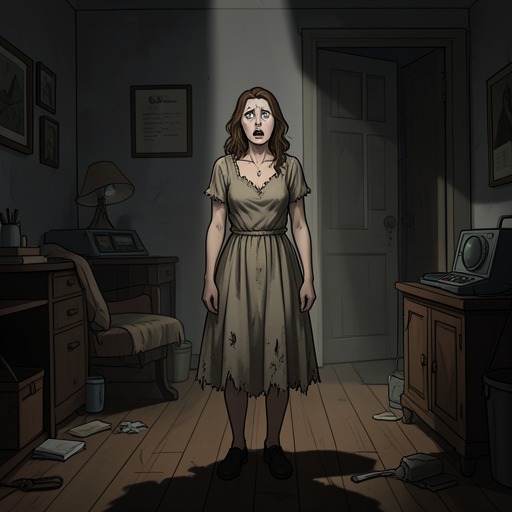
Hazel and Byron's First Meeting
Made for LoveHazel and Byron's First Meeting, in May 2008, begins as an improvised campus-newspaper interview and ends with Byron Gogol naming a private grief Hazel had never disclosed. The encounter’s decisive turn is not simply that Byron notices her: he makes Hazel feel newly legible to someone else, then reveals that he knows more about her than she believes she has shared.
The Accidental Interview
A college friend had been assigned to interview Byron for the campus newspaper, and Byron was coming to graduation to deliver what he called a digital commencement speech. Hazel had not attended the ceremony, but heard about it through the news and friends who had stayed on course creditwise. Byron, in a suit and sunglasses, invited the graduates to build the speech together: they shouted words for their college experience, their hopes for the future, and their greatest fear about life after graduation. He later recounted the surprising answers to Hazel in an almost flirtatious confidence, including how often graduates chose bawdy terms for those categories.
The planned interview became an accident when Hazel arrived under the name Jenny Roberts. Scanners read the cards in her wallet and checked online information, identifying her as Hazel Green instead. She explained her friend’s predicament and was asked to wait; Byron nevertheless agreed to see her. The false name did not end the encounter. It became part of what made Hazel, to him, difficult to categorize.
The Interview Turns Around
Byron later explained that Hazel confused him in a fascinating way. He noticed that she was wearing another person’s clothes, but could not tell why, who she was, or what she wanted. The meeting departed from its assigned purpose: although Hazel was supposed to interview him, Byron kept asking her questions until the exchange felt more like his interview of her.
For Hazel, the encounter carried an unfamiliar force. She had never felt that she delighted her parents or herself, but when Byron said her name, Hazel Green seemed newly precise to her—almost upgraded. His attention made her feel intriguing rather than overlooked, and her effort to win his favor was intensified by the impression that he possessed calming existential knowledge she lacked.
Recognition and Its Unease
At the end of the interview, Byron took Hazel’s right hand and clasped it between both of his. She registered the gesture as evidence that this superrich person liked her; adrenaline surged, followed by a wave of accomplishment and goose bumps. In retrospect, she considered whether his cold skin had contributed to that physical response, as well as the intimacy of his parting words.
Byron apologized that Hazel’s mother was dying. Hazel had not told a single person. The knowledge abruptly changed the meaning of his attention: the man who had seemed delighted by her had also reached a fact she had kept private. The first meeting thus joins attraction and recognition to an unsettling asymmetry, with Byron’s perceptiveness appearing at once intimate and inexplicable.