Hazel and Byron’s Wedding
Made for LoveHazel and Byron’s Wedding grows out of a courtship organized like a business agreement and becomes a marriage Hazel tries, unsuccessfully, to make emotionally real. The robot officiant, the carefully delimited dating period, and Byron’s promise of material security all give the relationship a structure; none can supply the love Hazel hoped might eventually develop within it.
Courtship as an agreement
Byron proposed an initial six-month commitment after showing Hazel supersize projections of photographs from across her life, from yearbook pictures to images taken on a roller coaster. He described traditional dating as incompatible with his schedule and lifestyle and framed the arrangement as an efficient way to pursue a connection he considered undeniable. Hazel, who regarded commitment as a word belonging more to books and advertisements than to her own experience, had little practical sense of what she was being asked to enter.
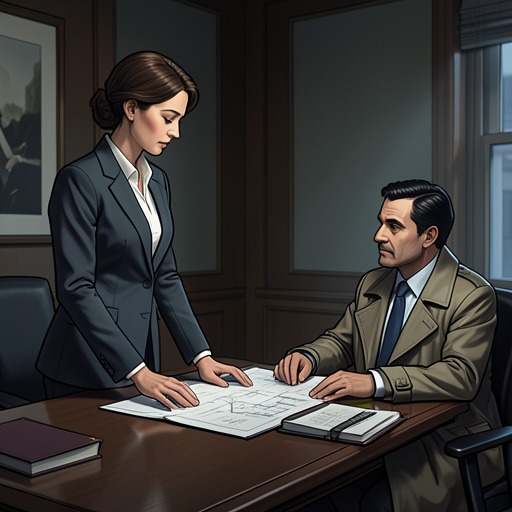
The terms were explicit. The commitment was not legally binding, Byron said, but Hazel was to take him at his word: they would date exclusively for six months, then evaluate whether to advance, maintain, or dissolve the relationship. The language made intimacy sound provisional and measurable, with a review date built in. Yet the agreement also gave Hazel a defined path into a kind of life she had previously regarded as abstract.
Six months later to the day, Byron proposed. Hazel’s mother had died by then, and the example of her parents had already unsettled Hazel’s ideas about marriage. Her parents had been opposites who fought, but stayed married; Hazel later recalled that she had taken their endurance as evidence that compatibility might not matter if people committed and continued. Their example would help her rationalize her own decision, even though it offered little assurance that commitment could produce affection.
The wedding and its performance
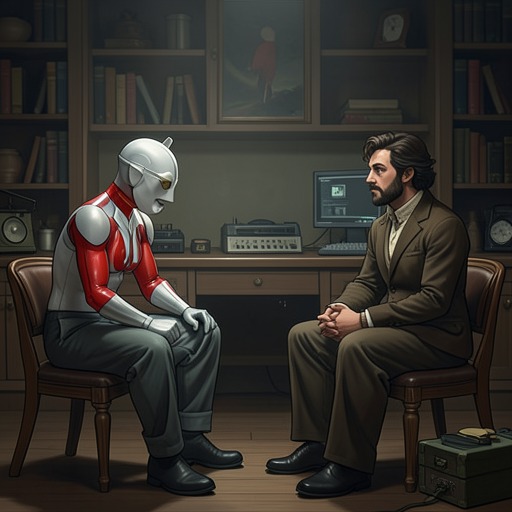
The wedding’s technology-forward form was Byron’s choice: he insisted that a robot officiate. Hazel later told Liver that fact first when asked how long she had been married, making the officiant a concise emblem of the ceremony and of Byron’s preferences. For Hazel, the robot also had a practical advantage. The wedding would showcase Byron’s programming, and photographers from technology and industry magazines would be interested in that achievement rather than in her dress.
The dress itself became a small but revealing struggle. Hazel had hoped to find something beautiful, but, after sharing her insecurities about the process with Byron, found that he recruited Fiffany to go shopping with her. Medical problems arose during the process, including hives. They helped determine the choice: Hazel picked the least itchy dress without trying it on, then took enough antihistamine to ensure she would pass out on the ride home. The resulting decision was less a confident bridal selection than an accommodation to discomfort. The ceremony’s public showcase and Hazel’s private experience thus pulled in different directions: the event promoted Byron’s technical accomplishment, while she negotiated the bodily irritation of taking part in it.
Life inside The Hub
During the marriage, The Hub became the couple’s principal home, but Hazel found the word residence increasingly inadequate. The sprawling building was sleek, spotless, and clinical; its walls were equipped with touch and recognition technology. She hardly ever left. Byron spent most of his days at the nearby central office, limited trips away because he equated travel with risk, and returned to sleep at around ten each night with machine-like regularity.
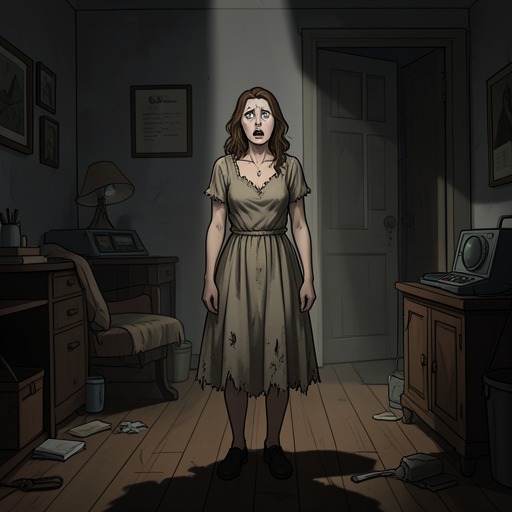
Hazel’s response to the house mixed fascination with estrangement. One of her few hobbies was walking through it with her eyes wide and mouth slightly open, taking in its scale and technological surfaces. She privately imagined it as a holding tank for the dead, a place where departed souls might wait for the afterlife to adjust to a new temperature. That image turns the marriage’s impressive material surroundings into something cold and suspended: a home equipped to recognize its occupants, yet one that Hazel could not experience as fully alive. She never mailed a physical letter during the marriage, but imagined that, if she had, its return address would describe a place where the deceased went to cool down.
Hazel’s account of why she married
After leaving Byron, Hazel described the marriage to Jasper as something she had not originally planned, but had found difficult to refuse once a multimillionaire proposed. Byron had not seemed horrible at first, she acknowledged; he seemed strange, as other people could be. She also admitted that she had not tried hard to look for what might be wrong. The offer of marriage promised that she would no longer have to worry about most material consequences of life, and that security proved an easy sell.
Hazel did not understand herself as having entered the marriage with no hope of love. She thought she could train herself to love Byron, much as a person might learn to ride a bicycle with initial support and then continue alone. Because she had never been in love, she assumed the task might be manageable, even if she could not imagine its full difficulty. At minimum, she hoped to reach a tolerable stasis: a life that was good enough and free of acute suffering. Her retrospective account therefore describes not simply a marriage of convenience, but an attempt to turn an advantageous decision into an emotional attachment through effort.
She later judged that attempt against the early reality of their relationship. She had realized while they had not been married long that she was not going to love Byron, but did not tell him. People around her considered her lucky, and she expected that she would eventually feel lucky too. She believed Byron deserved a partner genuinely impressed by his genius, rather than someone pretending to be. Her apology, rehearsed for a possible encounter with him, acknowledges both the mismatch and her own concealment: she had tried to love him, but had not been honest when she understood that she could not.
Separation and the marriage’s public aftermath
The contrast between Hazel’s private account and Byron’s public account becomes sharp after her disappearance. In a television interview, Byron reported her missing and troubled, attributing her condition to grief over her terminally ill father, who had also disappeared. He offered an enormous reward for information and said he feared she had been kidnapped because of his wealth and fame. He described finding Hazel and learning what had happened to her as his highest priority alongside his responsibilities to Gogol’s shareholders.
The interview also disclosed that Byron had filed for an abandonment divorce. He said he believed Hazel would be found, though he had given up hope that she would be found alive, and connected his confidence in eventually discovering answers to the speed of technological breakthroughs. Hazel watched from a modest efficiency motel room and stared at the door bolt; his public performance did not reassure her that he had accepted the separation. His talk of fearless employees was accompanied by a brief glance toward Fiffany, who appeared beside him as a project manager, but the scene establishes no further explanation of their relationship.
The marriage ends, in Hazel’s understanding, without the emotional resolution its formal beginning seemed to promise. Its exclusivity agreement, robot officiant, material security, and highly controlled home had given the relationship clear structures, but Hazel’s later reflections expose the distance between structure and intimacy. Her account neither claims that she loved Byron nor reduces her choice to money alone: she had hoped to make love possible, and regrets that she concealed her failure to do so. That regret accompanies her escape, even as Byron’s public search and divorce filing show that the separation remains contested in practice.