Hazel and Herbert’s father-daughter relationship
Made for LoveHazel and Herbert’s father-daughter relationship is defined by an uneasy bargain: they keep their distance, yet neither is free of the need for the other. Herbert’s reserve and Hazel’s long habit of not questioning him leave essential truths unspoken, including his cancer and his decision to stop treatment. When his decline makes that silence impossible to maintain, Hazel tries to care for him on his own terms, but their late closeness cannot undo the years of estrangement.
Identity and Background
Herbert is Hazel Green’s father, a blunt and self-contained man whose affection rarely takes the form she hopes for. Their relationship is not presented as openly intimate in her childhood: Hazel remembers her parents as aloof, and she says that her father winced when she came through the door. She also acknowledges that she did not particularly like him, while admitting that she never stopped wanting him to like her. The distinction matters: emotional distance did not erase her longing for recognition.
Herbert’s way of dealing with difficulty helps establish their pattern. He tends to minimize his own vulnerability and to make his decisions without inviting Hazel into them. As a teenager, she had seen him suffer a heart problem after mowing the lawn despite chest pain; even then, he deflected concern rather than treating his health as a shared family matter. Later, Hazel recognizes that she has stopped trying to understand his reasoning. Because she no longer expects an explanation, she also stops asking what his choices mean.
Distance, Dependence, and Conflict
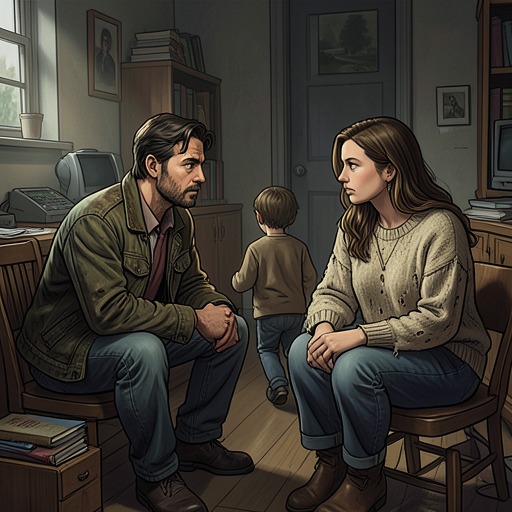
After leaving Byron Gogol, Hazel seeks shelter at her father’s home. Their reunion offers refuge, but not an uncomplicated return to family closeness. Herbert tells her he needs to rent the room where she is staying and says that, if she cannot pay, he will not throw her out. He presents the arrangement plainly: he needs money, not a moral lesson about independence. Hazel, who had hoped to rely on being his daughter while she worked out how to disappear, is forced to confront both her dependence and the limits of the welcome.
The conversation also marks a shift in Hazel’s sense of responsibility. She tells Herbert that her marriage to Byron and the prospect of connecting their minds through implanted technology have made her understand the importance of principles and consent. She hopes this new ethical seriousness might make her father proud. The hope is telling: even while speaking about her own changed convictions, she is still reaching for his approval. Herbert does not answer by offering the reassurance she wants. His practical need for rent, and his refusal to soften it, keep the exchange grounded in their accustomed bluntness.
Their domestic life remains awkward and, at moments, callous. When Hazel is injured in an accident involving Diane, a doll in Herbert’s home, he arranges for help but says he has asked the arriving chiropractor to wait because he wants Hazel to feel more pain and to clean herself up before visitors arrive. The episode shows how little tenderness their familiar manner guarantees. Yet Herbert does notice what has happened and takes steps toward resolving it; his attention arrives entangled with mockery and punishment rather than comfort.
Illness and the Attempt to Care
The decisive rupture in their distance comes when Hazel learns that Herbert has advanced cancer. Byron Gogol tells her that Herbert has undergone chemotherapy and radiation, but appears to have stopped treatment months earlier and continued only with pain medication. Hazel realizes that her father has withheld both the diagnosis and his decision to stop trying to extend his life. His secrecy is consistent with her long experience of his minimizing pain, but its consequences are now irreversible: she has been excluded from the most consequential fact about his life.
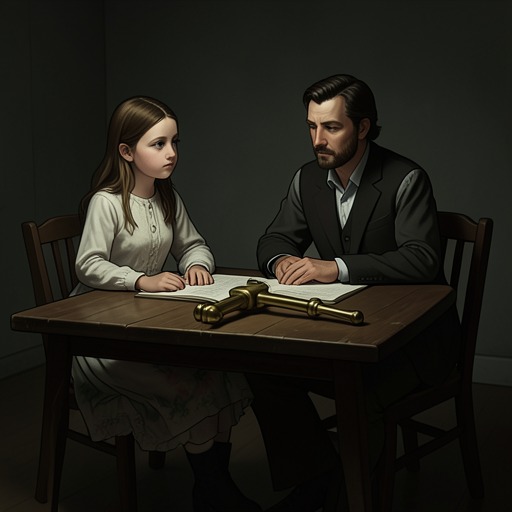
Hazel answers by offering him a choice rather than insisting on a single form of help. She brings cash for about a year’s rent and proposes taking him to Gogol’s medical facilities. She tells him he can choose whether to talk about the cancer, whether she visits, and what happens next. Herbert insists that it is his life and that he is done with treatment. He explains that he wants to spend the short time remaining at home, surrounded by beautiful women or their replicas. Hazel presses him not to give up, but his refusal makes clear that her care cannot simply become control over his decision.
Their exchange briefly softens. Herbert uses an old affectionate name for Hazel and explains that he had wanted to spare her the hardest part of his decline. He also tells her that too much of anything becomes torture and that he does not need to repeat an experience whose ending he already knows. Hazel is moved by this rare approach across their usual distance, even as she rejects his choice. She tells him she will stay until the end; he warns her that trouble follows her and that she should not remain. His concern and his refusal of closeness coexist, just as her wish to help coexists with her need for shelter.
Final Days and Aftermath
Herbert continues to refuse hospitalization as his condition worsens. Hazel urges him to go to a medical center, but he insists on remaining at home and does not ask her to stay. She wants him to ask. Instead, he has her place Diane and Roxy, another doll, in bed with him. Hazel understands that he wants to move toward death without an audience, particularly one that might bring its own embarrassment or demands. She stays nevertheless, postponing difficult conversations because she recognizes that this is not the moment to force them.
When a message from Byron Gogol urges her to put on a helmet and have Herbert’s condition checked, Hazel refuses the premise that medical intervention is automatically humane. She argues that Herbert has chosen how to face his death and condemns the company’s disregard for privacy, including its claim on access to her mind. Her response links her defense of her father’s choice to her own resistance to Byron’s control: care, in this moment, means staying with Herbert’s decision rather than treating his body as a problem to be solved at any cost.
Herbert dies at home, with the dolls beside him. Hazel finds him in bed and recognizes that he is gone. Afterward, overwhelmed by grief and unwilling to return to Byron, she takes her father’s medication and alcohol in a suicide attempt. She then gets into bed beside Herbert and Diane, placing eye masks over herself and her father. Hazel understands the contradiction in the arrangement: her father had wanted to die alone but not entirely alone, and now she is surrounded by presences that are either dead or never alive. The scene gives their relationship its final, painful form. The closeness Hazel had wanted arrives only when Herbert can no longer respond, and her attempt to remain with him becomes inseparable from her own crisis.
Narrative Significance
The relationship’s central conflict is not a lack of feeling so much as the difficulty of expressing it without retreating into habit. Herbert’s reserve and Hazel’s unspoken hunger for approval reinforce one another: he keeps his choices private, while she learns not to ask what they mean. Her eventual care is real but belated, shaped by his wish to refuse treatment and her need to respect that refusal even while she grieves it.
Their story also contrasts two meanings of care. Byron Gogol presents medical technology and neurological connection as a future Hazel should embrace, while Herbert chooses to remain at home and face death without further treatment. Hazel’s response to her father’s illness makes bodily autonomy personal: she can offer company and practical help, but cannot make his life hers to direct. The reconciliation remains incomplete, and Herbert’s death does not resolve Hazel’s old need to be liked. Instead, it exposes how much of that need had survived beneath their distance.