Hazel’s fugitive state after leaving Byron
Made for LoveHazel’s fugitive state after leaving Byron is a precarious interval between escape and safety. She has left her husband for good, but has no available funds or identification and believes that the power he commands through his technology empire could still reach her. The separation forces her to confront what she knows about Byron and what she can do with that knowledge: she wants an independent life, yet cannot be certain that she will survive long enough to begin one.
Departure and Immediate Conditions
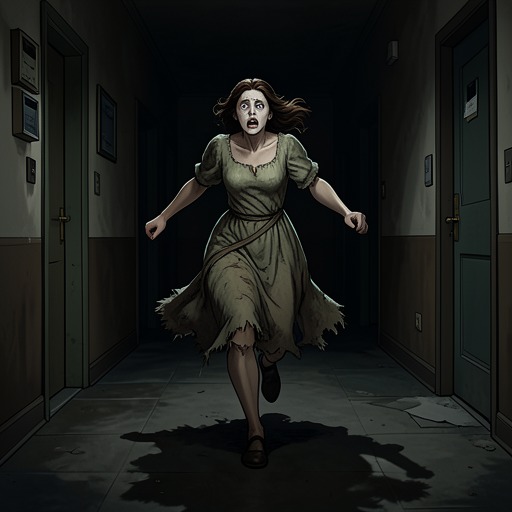
Hazel leaves Byron on the morning she seeks refuge with Herbert. Her departure is not an orderly transition: she has taken no available money or identification, and has no mobile phone or internet device with which to contact others or navigate. She understands that the separation may end badly, but has reached a point where remaining with Byron is no longer tolerable. Her marriage to a wealthy technology entrepreneur had isolated her, and the resources that might ordinarily make escape easier are entangled with the world he controls.
Even before she leaves, Hazel frames the decision as one with no harmless option. Asking Herbert for shelter may place him at risk because Byron is dangerous, but she finds it easier to believe she has no alternative than to dwell on what her flight could expose her father to. This mixture of necessity and guilt follows her into refuge: escape is a choice she has made, but not one that immediately feels like freedom.
What She Reveals About the Marriage
When Herbert questions her decision, Hazel explains that Byron wanted a chip in her brain, linking their brains wirelessly so they could share information through a neural connection. She describes the proposed meld as something unprecedented and, in effect, a research-and-development use of her living brain. She had not consented. Her account makes clear why she rejects Herbert’s initial assumption that the plan was merely a tracking device: the proposed connection would reach far beyond locating her.
Hazel also suspects that Byron has been making her ill so that she will enter their private medical facility voluntarily. Over recent weeks, she has experienced increasingly severe headaches; on the morning she fled, a nosebleed triggered an alert from the household SmartFilter. The system identified the blood as hers, and Byron’s face appeared on the bathroom screen to urge her to see a doctor. The sequence leaves Hazel interpreting technological care as a possible means of drawing her back into his control. Her fear is presented as her conviction, not as proof that Byron caused the symptoms.
Fear, Uncertainty, and the Wish to Live
After leaving Herbert’s home, Hazel imagines that Byron may come after her, but she does not know what form a threat would take. She considers direct violence unlikely to fit his manner and instead fears a remote technological attack, including a microdrone. These are Hazel’s predictions, shaped by her knowledge of Byron’s wealth and his corporation’s involvement in armaments and surveillance technology; they are not events that have happened in this account.
Her fear coexists with a desire to survive. Years spent as Byron’s audience and test subject have made death seem, at times, no worse than continued misery. Yet now Hazel wants to find out what independence might feel like, with pleasures and problems that are her own rather than organized around Byron. That wish does not erase her apprehension. She has known for years that something in the marriage was wrong, but recognizes that knowing a situation is wrong and knowing how to leave it are different things.
A Fugitive Without Devices
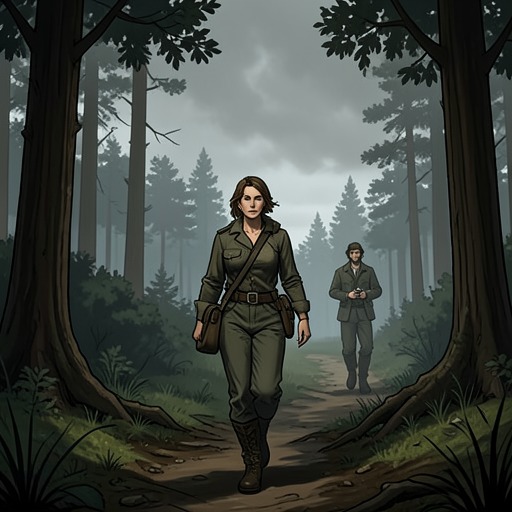
On an unfamiliar street, Hazel has no phone, internet access, or navigation system. She is looking for a bar and has to orient herself without the electronic aids that would ordinarily make the search simpler. She notices the sign for The Spotted Rose and regards it as a possible place to go even while imagining that Byron might find her there. The setting captures the limited, improvised nature of her escape: she is moving through ordinary public space, but without the tools, information, or confidence that might make it feel secure.
Her vulnerability is sharpened by the contrast between her circumstances and Byron’s reach. She has left behind the resources associated with him, while his corporation includes surveillance and weapons technologies. Hazel cannot tell whether he is acting against her, but his capacity to observe and intervene has become part of how she understands every uncertainty. The result is a fugitive state defined as much by anticipation as by movement: she is outside the marriage, yet still measures places and choices against the possibility of being found.
Contact from Byron and Hazel’s Refusal
Byron later contacts Hazel at Herbert’s home through a projected image. He points out that she left her mobile device behind and says he has placed basic electronics in a weatherproof safe in the backyard; the code is their anniversary. Hazel refuses to open it or resume using electronics. She tells him she wants to disappear from his life and does not want his money. The refusal is small beside the power she fears, but it gives her a limited decision she can still make for herself.
During the exchange, Byron says that he needs to give her facts before taking an irreversible step. Hazel interprets his warnings as evidence that he may have her killed and asks him to specify when, while also saying she will not try to stop it. She briefly thinks she sees Fiffany in the office behind him, but the glimpse is uncertain. When a ringing phone interrupts Byron, he ends the contact and predicts that Hazel will want to call him just after noon, presenting the time as significant rather than arbitrary. He also warns that he tried to caution her and that she is leaving him no choice.
Hazel responds by promising herself she will not call, even if she is left alone in an empty yard with only the safe around her. Her resolve does not establish that she is safe or that she has escaped Byron’s influence; it marks a boundary she can assert amid that uncertainty. The electronics in the backyard embody the conflict: they are offered as a route to communication, but come from the person whose systems have made communication and observation feel inseparable from control.