Impostor Rises to Fame as "Dolphin Savior"
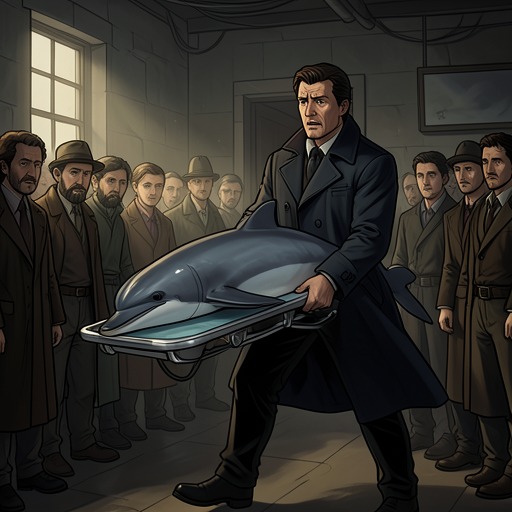
Made for LoveThe rise of Dolphin Savior (Impostor Singer) begins with a real rescue and an image that quickly escapes its subject. Jasper carries a dolphin to shore and runs off, but a crowd records him on Gogol cell phones; a photograph and a short video of him saying “No big deal” spread widely. News outlets report that the dolphin is healthy and had become separated from its pod, while the unidentified rescuer is given the name Dolphin Savior. The fame that follows belongs first to Jasper’s recorded image, then to a stranger who claims it as his own.
The Rescue Becomes a Media Story
The initial footage makes the rescue legible as a compact public story: a man helps a dolphin, declines attention, and disappears. Jasper’s departure helps the image circulate rather than ending the story. Viewers and reporters fill the gap left by his unknown identity, and the nickname Dolphin Savior supplies a name that can travel before anyone knows who the man actually is. Within hours, the clip has millions of views and the photograph bearing the words “NO BIG DEAL” has become a widely shared meme.
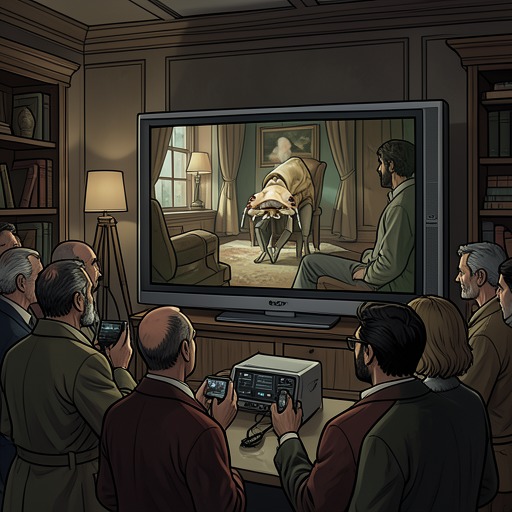
The media attention also turns Jasper’s appearance into part of the story. A news anchor comments on his looks, and commentators speculate about staging a false emergency to attract him. Their banter treats the recorded rescuer as both a news subject and a possible object of fantasy. Jasper, watching from his motel room, finds the public response baffling. He has not chosen to become famous, and the footage’s circulation makes his anonymity harder to protect even before his name is known.
A Search and a Borrowed Identity
When Jasper later sees the coverage, several men have come forward claiming to be the rescuer. Some resemble him more than others; one is notably older and missing many teeth. The broadcast checks the claims against the available images, including the absence of tattoos on the man who actually carried the dolphin. This succession of impostures underscores how little is needed to enter the story: the viral clip has made the role recognizable, while the person inside it remains unidentified.
The eventual claimant offers a more elaborate account. As Jasper learns from Tiny at the Oceanarium, the man says that he suffered a concussion on the day of the rescue, temporarily lost his memory, and only later remembered what had happened. He presents himself as a singer-songwriter who had written a personal song about the experience without originally planning to release it. The explanation supplies a ready-made bridge between the mystery of the disappearing rescuer and the singer’s sudden emergence. Jasper, who knows the rescue was his, sees the tale not as an inspirational coincidence but as a fabrication.
The Song and Its Image
The impostor’s music video makes the transformation explicit. It opens with a computer-generated dolphin in a hospital operating theater, then shows the singer in surgical clothing approaching the animal. A crystal heart inside the dolphin contains an image of Jasper holding it. The video borrows the rescue’s recognizable subject while replacing the actual rescuer with its own performer; the real footage has become raw material for a more polished and commercially useful fiction.
The song, titled “Saving You Saved Me,” becomes a hit. Jasper recognizes its melody from music that had played in the Oceanarium food court, though he had not previously attended to its lyrics. The impostor’s success reaches Jasper directly when he learns that Bella is expected to perform a new routine for the singer’s concert. He imagines that the event may reproduce the aquatic-show photo opportunity, this time giving the false rescuer access to the dolphin at the center of his manufactured fame. The deception therefore does more than rewrite the past: it begins to shape plans in Jasper’s present.
Followers, Celebrity, and Consequences
The singer’s public identity extends beyond the song. His fans call themselves melon heads, and he refers to them as followers. Tiny describes a movement with religious overtones, whose members travel along the coast to attend concerts and organize around finding things to save. Their examples range from collecting discarded objects to capturing insects for release elsewhere. Tiny regards the impulse to help as potentially worthwhile but questions the group’s methods and the celebrity culture built around them. Jasper, meanwhile, sees the movement as evidence that a false story can become a persuasive public identity once it is repeated and given an audience.
The episode also places the impostor within a larger entertainment circuit. A prominent interviewer who has made celebrities emotional—including the pop star known as Dolphin Savior—later interviews Byron about Hazel’s disappearance. That connection shows the rescued dolphin story’s continuing presence in celebrity news, even as the identity at its center has been appropriated. Jasper remains absent from the public account, relieved that no one is searching for him while also angered by the success of the fraud. The event’s central reversal is not that the rescue proves false, but that its genuine rescuer disappears while another man receives the name, song, audience, and career built from it.