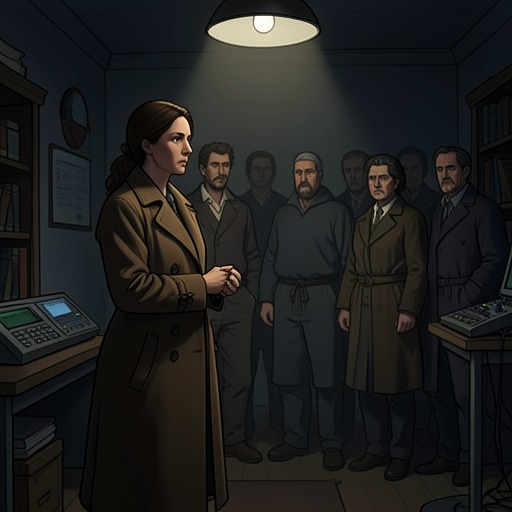
Ms. Cheese's Restaurant
Made for LoveMs. Cheese's Restaurant is a diner in a small southern town off the interstate where Hazel turns a stop during an all-night drive into a temporary home and workplace. Its significance lies in the modest, precarious independence it offers her: she can stay out of public view, avoid formal paperwork, and build a life at a distance from the people she has left behind. The diner also becomes the place where fear about Byron gives way to the surprise of Jasper’s return.
Setting and Arrival
Hazel and Jasper reach the diner’s parking lot after driving through the night. Across the street stands a run-down efficiency motel, making the diner and motel a practical pair of stopping places: Hazel tells Jasper to continue without her, saying she will eat at the diner and sleep at the motel. Her decision separates their immediate journeys without requiring her to leave the town. A joke about how she might have slept in the cooler they should have brought for her father’s body gives the conversation a bleak, offhand tone, but her plan is concrete: food, a room, and a place to stay for the night.
The diner soon becomes more than a stop. Hazel decides to remain in town and seek work there because its manager-owner, Ms. Cheese, is mean and bossy in a way that reminds Hazel of her mother. That resemblance offers a carefully bounded form of familiarity. Hazel can tolerate, and even welcome, the likeness at work precisely because it is not her actual mother. She reflects that she could not work for her mother if she returned, even if her mother’s second life depended on it. The restaurant therefore gives Hazel proximity without the obligations or intimacy of the relationship it evokes.
Hazel's Work and Chosen Distance
Hazel’s condition for taking the job is that she not have to work out front among customers. She attributes this preference to an anxiety disorder, and Ms. Cheese offers her a back-of-house position while warning that it will be hotter and pay less. The arrangement matches Hazel’s immediate need to keep away from public attention, but it is not presented as comfortable or generous. Ms. Cheese is candid that the business will pay cash at a substantially lower rate if Hazel is desperate enough to accept.
Hazel agrees. Cash payment means she does not have to complete paperwork or invent a formal name, a practical relief while she is trying to live under a changed identity. Her new employment is thus deliberately informal: she gives up pay and works in the less desirable part of the restaurant in exchange for privacy from customers and forms. The choice does not resolve her larger vulnerability, but it lets her establish a daily routine without first making herself legible to an employer through official documents.
The work itself is described as an unpolished, demanding environment. Ms. Cheese warns Hazel that the kitchen is hotter, its staff are often hungover, and arriving through the back door allows employees to show up without the presentability expected in front. Her warning about the job is both an attempt to set expectations and an expression of the restaurant’s brusque working culture. It makes the back room a place of practical accommodation rather than comfort: Hazel is spared customer contact, but accepts lower pay and the conditions that come with the role.
The Restaurant's Routine
When Hazel returns the next morning, her apron is where she left it the previous night. The small continuity of the object marks how quickly the diner has become part of her new routine. Ms. Cheese recognizes Hazel by the quiet way she shuts the door and walks in, teasing her as if she might be volunteering in exchange for food before assigning her to help clean the fryer’s heating coils. The exchange establishes the manager’s dry, bossy manner through ordinary work rather than through a formal welcome.
Hazel’s first day at the restaurant also overlaps with the emotional shock of news she has heard elsewhere. She describes having felt euphoria coated in panic; during the afternoon, the line cook Benny notices that she is trembling. The diner is not the source of the news, but its working hours give that reaction a public setting, where Hazel has to continue on the job while her expectations shift. Her private crisis is briefly visible to a coworker even as she tries to keep her life contained.
A Visitor and a Reversal
At lunchtime, Ms. Cheese tells Hazel that a man came asking for her. She had challenged his assumption that the diner was an office, noting that he had no appointment or email reminder. Before leaving without ordering, he wrote a note on a napkin. The distinction matters: Ms. Cheese does not simply pass along a message from an expected visitor but recounts an encounter that Hazel, already on edge, immediately interprets through her fear of Byron.
Hazel assumes the news that had briefly given her hope must have been an elaborate trick and that Byron is coming to retrieve her. Her body trembles more intensely, and she struggles to speak. When she reaches for a knife and picks up the note, she discovers that it is not from Byron. The diner has become the setting for a false alarm, but also for the collapse of Hazel’s assumption that every unexpected message must lead back to the man she fears.
After Hazel finishes her shift, Jasper is waiting outside. He celebrates loudly, climbing onto the hood of his car and raising his arms. Hazel looks back toward the restaurant, where Ms. Cheese watches through the blinds, and proposes that she and Jasper go somewhere else to celebrate at her place and watch the news. The diner has carried Hazel from a roadside pause into paid work, and from fearful anticipation into a reunion she did not expect. Her departure does not make the restaurant a permanent home; it makes the place a brief, concrete interval in which she can work, conceal her identity, and choose what comes next.