Sleep Helmet X7
Made for LoveSleep Helmet X7 is a medical and neurotechnology device whose importance lies in its double function: Hazel turns to it as a possible defense against Byron’s brain download, but its diagnostic capacities also make it a channel through which intimate bodily information becomes available to him. The helmet briefly offers Hazel quiet and a sense of control; it does not prevent the download, and its revelations ultimately entangle her more deeply in the crises surrounding her family and Byron’s monitoring.
Design and Capabilities
Byron had included the helmet in the High-Tech Safe, and Hazel retrieves it when she learns that a download is imminent. Its visor can block out light and become transparent when released, while an activation button starts a beta-wave sequence. During that sequence Hazel feels her mind clear with unnerving ease. The experience is not simply a matter of putting on protective equipment: the helmet acts on her state of consciousness, offering a route into sleep or mental quiet even as Hazel hopes it might interfere with the brain process she fears.
The helmet also performs physical diagnostics. Byron tells Hazel that it can assess her shoulder and recommends that she begin physical therapy. He separately raises her poor nutrient intake since leaving the compound and says he will have a drone deliver Vitapax to her father’s backyard. The device’s reach is not limited to its wearer: Byron says it can give readings on other people within a five-hundred-foot radius. He recommends using it to check potential sexual partners for sexually transmitted infections, while warning that infections still in their incubation period might not register and that protection remains necessary. The helmet therefore presents bodily knowledge as both a practical resource and a form of exposure, extending scrutiny beyond Hazel to people around her.
Hazel’s Attempt to Stop the Download
Hazel retrieves the helmet from the backyard at her father’s house shortly before noon. She doubts that Byron would have put it in the safe if wearing it during a download could prevent the process, but decides that every possible obstacle is worth trying. She wonders whether the timing of the downloads—noon rather than midnight—might make sleep less conducive to the process. Her decision is urgent and experimental: the helmet has no established power to block the download, but it is the only device she can test before it begins.
Hazel does not want to face the episode alone, yet does not want Liver to witness it. She asks him to carry a large wooden box shaped like a coffin to the porch, tells him she plans to climb inside wearing the helmet, and warns him that she is uncertain what will happen. As her father and Diane play cards in the kitchen, Liver helps prepare the box; before Hazel closes herself inside, he says he will poke airholes for her health. The improvised setting makes the helmet’s promise of protection feel precarious: the device is enclosed with Hazel in a coffin-like crate, while another person must make sure she can breathe.
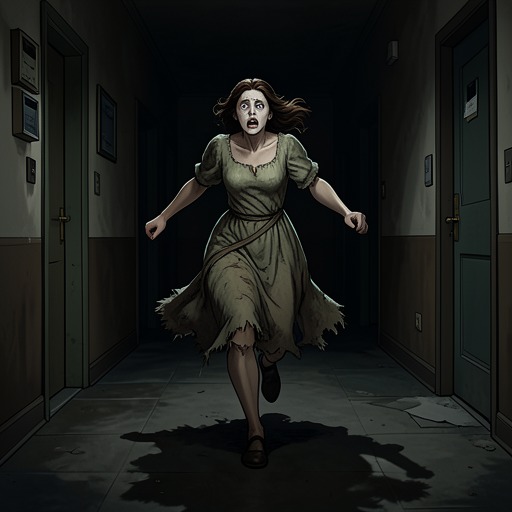
With the helmet on, Hazel activates its beta-wave sequence. Its darkness and the image that accompanies its induction—a zookeeper sweeping a soapy cage floor until the scene seems to dissolve—give way to a sensation of her worries thinning and spreading into nothing. The calm does not last. Images of Byron, including him accepting an award, giving a speech, and standing with children in a rural African village, strike her in rapid succession with the force of repeated impacts. The helmet has not stopped the download. Hazel tries to sit up while still inside the box, then releases the visor, pushes against the lid, and climbs out shaking.
Diagnosis, Disclosure, and Bodily Autonomy
The device’s failure as a shield is followed by an unexpected consequence. Byron tells Hazel that the Sleep Helmet X7 supplied information about her father and says that, by putting it on, she may inadvertently have saved his life. The episode thus shifts the helmet from an attempted barrier against brain intrusion into a source of diagnostic knowledge about someone Hazel cares about. It does not establish that the helmet cures or treats her father; rather, it connects its diagnostic function to the discovery of his condition and to the possibility of medical intervention.
Hazel later explains to her father how she learned of his illness: she says the helmet diagnoses illnesses in people around its wearer. When Byron uses the screen to urge Hazel to put on the helmet so that they can check her father’s condition and have him hospitalized, she refuses his framing of the matter as a question of humane care. She insists that he is dying of cancer and objects to the idea that medical intervention can make his chosen approach to death humane. Her response places the helmet’s diagnostic promise inside a conflict over who gets to interpret suffering and decide what should happen to a body. The information may be useful, but the authority to act on it is contested.
Surveillance and Narrative Significance
Byron’s advice about Hazel’s shoulder, nutrition, and sexual health presents the helmet as a tool of preventive care, yet the information arrives through a relationship already marked by surveillance and control. He knows about Hazel’s physical condition and her circumstances after leaving him; his recommendation that she scan nearby partners makes the device’s monitoring capacity seem at once protective and invasive. Even when it supplies actionable information, the helmet does not erase the question of who has access to that information or whose interests guide its use.
The failed attempt to prevent the download sharpens this ambiguity. Hazel uses the helmet to reclaim some agency over what will happen to her mind, but the download proceeds, and the diagnostic system instead reveals a crisis involving her father. The object’s material features—the visor, activation button, and measured scanning radius—give bodily and mental privacy a concrete technological form. Its promise is not simply that technology can know the body; it is that such knowledge can help, expose, and steer decisions at the same time. For Hazel, the Sleep Helmet X7 is never a reliable escape from Byron’s reach: it is a compromised defense whose usefulness and danger are inseparable.