The Spotted Rose
Made for LoveThe Spotted Rose is a bar that becomes a threshold between Hazel Green’s monitored life with Byron Gogol and her uncertain attempt to live independently. She first enters it while fleeing the security and comfort of her former world, then returns as her connection with Liver develops and she begins seeking work. The bar’s familiar, imperfect details—ordinary televisions, cigarette smoke, labels on bottles, and a glass left by another customer—give it significance as a place outside the carefully managed environment Hazel has known.
Setting and Contrast
Hazel first notices The Spotted Rose on an unfamiliar street. She has no phone, internet device, or navigation system, and she is looking for a bar while fearing that Byron may come after her. The name strikes her as an inelegant euphemism, but she regards the establishment as somewhere she might as well go even if he finds her. Her arrival is therefore less a confident choice of destination than a step into an unknown setting when her options seem narrow.
Inside, the bar is strikingly different from the household and corporate spaces Hazel associates with Byron. It has regular televisions rather than the Gogol TeleGlass screens she is accustomed to, and patrons smoke real cigarettes. These are ordinary features, but their ordinariness matters: The Spotted Rose is not arranged according to the polished technological conventions of her previous life. Hazel experiences relief at being among people and objects that do not seem to belong to Byron’s controlled environment.
The contrast extends to the way products appear. At home, Byron disallows most branding, and staff remove food and beverage packaging while housekeeping discards product labels. He regards logos and images as distractions. In the bar, Hazel can see labels on bottles, and some prompt distant memories. The visible brands mark a world in which commercial images have not been systematically removed. Through Hazel’s attention to this small difference, the bar becomes a counterpoint to The Hub and the domestic rules she has lived under.
Hazel’s First Visit
At the bar, Hazel deliberately orders beer in a glass left behind by a previous customer, and the bartender fills it without emptying the residue. The choice signals how readily Hazel is embracing customs that would have felt alien in her highly managed former surroundings. Her pride in asking for the used glass also makes the gesture more than an incidental detail: she is trying to claim the freedom to decide what risks and discomforts to accept for herself.
The bar is also where Hazel meets Liver. After she tells him that she has left her husband and moved in with her father, she presents herself as destitute. Liver responds with interest and introduces himself by that name; Hazel asks whether it is his legal name. Their exchange establishes an immediate, informal rapport, but Hazel’s account of her circumstances also places the encounter against her recent break with Byron. She is not simply visiting a bar; she is trying to work out how to live beyond a marriage that has left her feeling watched and constrained.
On a later visit, after several drinks, Hazel tells Liver about the failures of her marriage and Byron’s attempt to place a microchip in her head. The bar thus becomes a setting where details of the conflict she has left behind can be spoken aloud to someone outside that marriage. The disclosure connects her fear of invasive technology to her need for personal boundaries, while Liver’s presence gives the conversation a human counterpart to the surveillance and control she associates with Byron.
Refuge and Its Limits
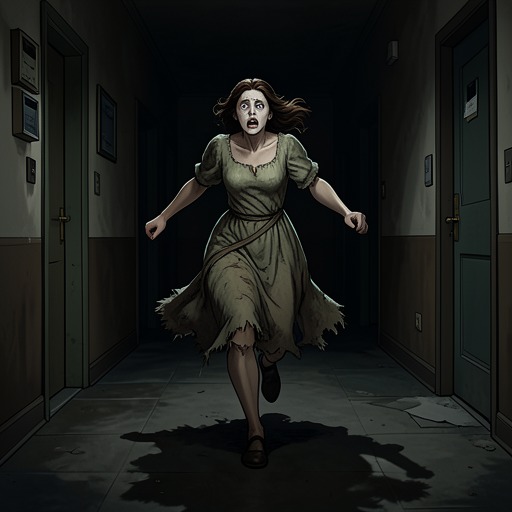
The Spotted Rose offers Hazel temporary refuge, not immediate safety or a settled new life. After drinking, she leaves the bar and makes her way back to Shady Place, where she collapses outside. In her thoughts, she asks for the chance to become a tangible person with a life of her own, free of interfaces, constant monitoring, and a talking shower. The wish places the bar within a larger transition: it is one stop in her attempt to recover autonomy, but leaving it does not resolve the danger or despair she carries with her.
The bar also remains a point of return. Later, Hazel comes back to find black smoke pouring from its entrance and emergency personnel moving in and out. With no clear information about what has happened, she sees other civilians enter and decides to go in as well. She stays low as she moves through the smoke, reaches a stool, and takes a seat. The scene reverses the apparent safety of her earlier visit: the place that had offered a temporary contrast to Byron’s world is now difficult to enter, yet Hazel still seeks it out.
Liver and the Search for Independence
When Hazel returns to the smoke-filled bar, she recognizes Liver’s voice and asks how he has been. She says she needs to start networking and asks whether he knows anyone looking for help. Liver tells her he has no phone. The exchange ties the location to Hazel’s practical effort to make a life for herself: she is no longer only seeking shelter or recounting her marriage, but asking for a route into employment. His lack of a phone is a concrete sign of the distance between Liver and the technology-dependent systems Hazel has known.
Other details reinforce that distance. Liver later appears in leather clothing and an animal-teeth necklace, and his pickup has its windows broken out. Hazel comes to see him as a possible mentor in avoiding technology. When he drives beyond a large ranch house and parks his truck in a wooded area, explaining that they must walk the rest of the way, the journey further separates him from the conveniences and protections of her former life. These details belong to the developing connection that began at the bar, where his unconventional presence first offered Hazel another way of living.
Narrative Significance
The Spotted Rose gathers together several stages of Hazel’s separation from Byron: her first uncertain refuge, her introduction to Liver, her account of the marriage and the proposed chip, and her later attempt to find work. Its ordinary features are not merely scenery. They let the narrative register the difference between a life organized around surveillance and one where Hazel must navigate without devices, support, or reliable information.
The bar’s significance remains deliberately precarious. It gives Hazel a place to speak and meet someone who lives differently, yet her collapse after the first visit and the later smoke at the entrance prevent it from becoming a guaranteed sanctuary. When Liver is absent on a subsequent evening, the bartender says that he is always there and suggests that he may be seriously impaired or dead; Hazel asks to borrow a car. The reported absence turns the bar once more into a place of uncertainty. It is a point of connection and a practical landmark in Hazel’s attempt to escape dependence, but it cannot promise that the people she finds there will always be safe or present.