AK-47
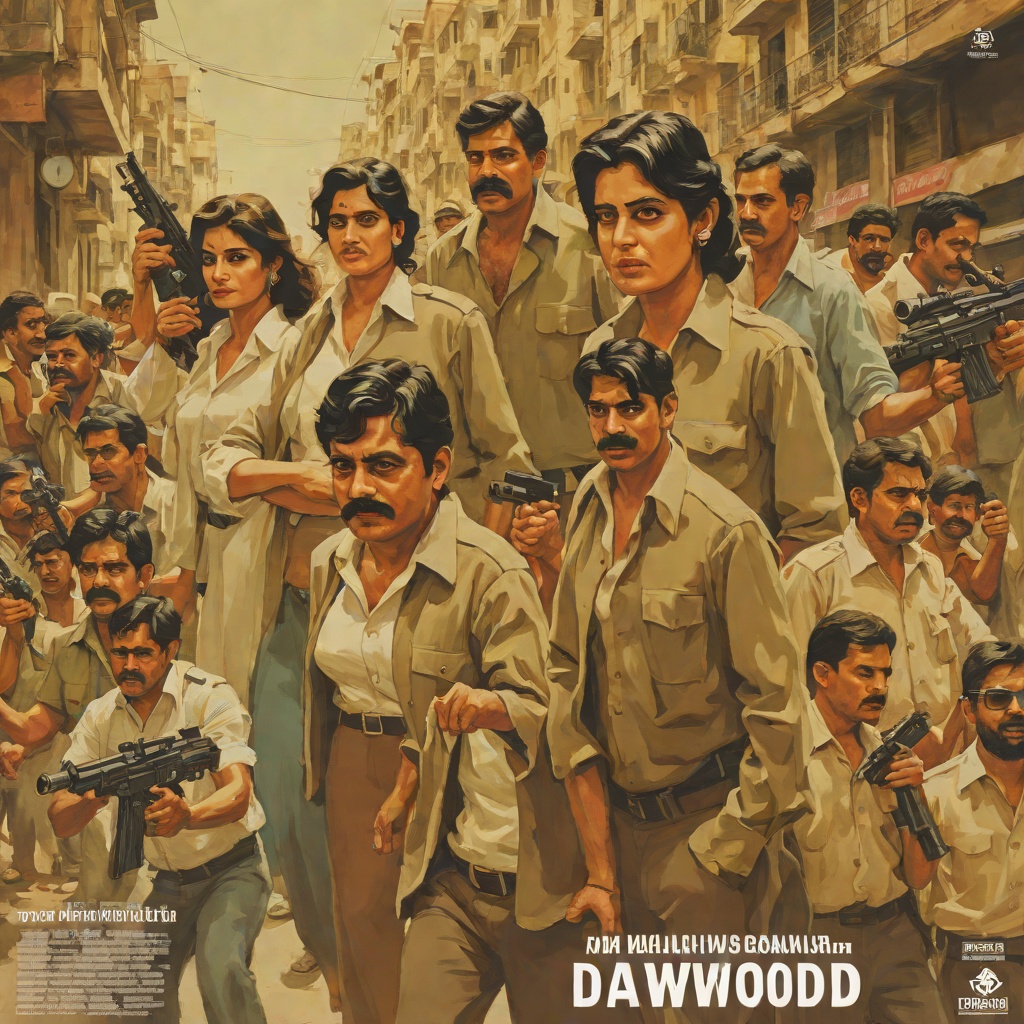
Mafia Queens of MumbaiIn the violent chronicle of the Mumbai underworld, the AK-47 stands as the ultimate emblem of lethal power, a weapon whose very presence signals a shift from the improvised violence of knives and pistols to the industrial-scale firepower of organized crime. It appears at the most extreme moments of the book's narrative: as the coveted cargo of a daring arms heist in the mountains of Birganj, as the rare and decisive instrument of a gangland assassination in Nagpada, and as the feared standard of Dawood's men. More than a tool, the AK-47 is a marker of status and intent, a weapon that transforms those who wield it and those who fall before it, its appearance in any scene a portent of maximum lethality.
The Birganj Arms Heist
The AK-47 first emerges as the object of a high-stakes criminal operation, a heist planned and executed by Sapna and her partner in the rugged terrain of Birganj. The plan is set in motion after a previous seizure proves insufficient to alarm Dawood, with Sapna's partner explaining that several more attacks would be needed before the don would feel the hole in his pocket. After two days of working out the details, the pair drives with Raamu Singh to a predetermined spot, then proceeds on foot through the rough terrain, eventually finding the route used by smugglers. They hide behind a massive nine-foot rock, armed only with dry fruits, water-bottles, a torch, a long rope, and their automatic pistols, knowing the wait would be long. At around 5.30 in the evening, the sound of hooves announces the arrival of three Nepali men with donkeys carrying heavy loads. One gunny sack, pointed at both ends, leaves no doubt that AK-47s had been rolled inside it. This had to be them.
The heist itself is a tense confrontation. Sapna, who had drifted off to sleep, is shaken awake, and her partner pulls out German Mausers from his bag, loads the magazines, and hands one to her. A heavily-built, dark man is spotted behind the Nepalis. The pair slips out from their hiding spot to face the smugglers, guns drawn. The men are taken aback, looking at each other before one fearlessly comes forward. A struggle ensues, during which Sapna's partner is caught off-guard, but Sapna fires a bullet in the air, and her partner, ignoring the pain in his body, lifts himself to pick up his gun and fires towards the man who had caught him, the bullet piercing through his forearm. With the advantage now theirs, they tie the men tight to each other with rope. Her partner wants to kill them, but Sapna pulls him away, and they leave the men to fend for themselves, taking the donkeys.
The Fate of the Weapons
In an isolated region of the dense mountains of Birganj, almost 3,000 metres above sea-level, the pair slits open the gunny sacks to discover four pistols and three AK-47s. The discovery triggers a fundamental conflict between the two criminals. Her partner, his voice still hoarse with pain, immediately proposes selling the weapons in Kolkata to the underworld there, envisioning huge profits. Sapna's response is absolute rejection: she has no intention of making money with this crap. When he protests, calling her crazy for not realizing the money they could make, she angrily declares that she wants the stuff destroyed, and she wants it done now. Her partner argues that they need to go to the city to destroy the guns with the help of an ironsmith, but Sapna will have none of it. Saying no one is going anywhere, she puts all the weaponry in one sack and throws it over the side of the cliff. The AK-47s, so carefully acquired, are destroyed in a single decisive act, their potential for profit and violence discarded by a woman who refuses to let them circulate in the world.
The Nagpada Assassination
The AK-47's next appearance is in a very different context: a state-sanctioned gangland execution. On the evening of 11 September 1998, Hussain Ustara asks his men not to follow him, takes his guns, and drives out in a grey DCM Daewoo Cielo from his den in Bapurao Pathe Marg. As he reaches his girlfriend's house near Nagpada, the message is relayed to Shakeel in Karachi, who immediately asks his men to assemble and ambush Ustara. Within an hour, the men have taken their positions. When Ustara exits the building, he doesn't look around but heads straight towards his car. Eight men whip out their guns and shower a volley of bullets on him. Over twenty rounds mow Ustara down, and the rest punch holes in his car. It is over in a matter of seconds. Ustara neither has time to see his assailants nor to draw his own favourite German Mauser, ironically proud of his ability to cock the gun and fire in three seconds. The cops later file a report that eight men were seen firing bullets at Ustara: four on two bikes, two on a scooter, and two in a Maruti van. In a rare occurrence in a gangland shootout, an AK-47 is used to kill Ustara. The men seemed armed to the teeth, indicating that even if Ustara had managed to put up a fight, he would have had no chance of surviving the attack. Ustara is rushed to J.J. Hospital where he is declared dead on admission.
The Weapon of the Underworld
The AK-47's role in the Ustara killing is notable precisely because it is rare, marking an escalation in the arms race of the Mumbai underworld. The weapon is the signature of Dawood's men, the feared standard that causes witnesses to stay silent and victims to be abandoned. When Sapna is murdered in her home in Hujjrah Mohalla, the four men who force their way in carry daggers and pistols, not AK-47s, but the brutality of their attack—over twenty-two stab wounds deliberately targeted at her breasts and vagina—is a message from Dawood and Shakeel, the same power that deploys the AK-47. The weapon's presence in the Ustara killing is a statement of overwhelming force, a declaration that the target is to be annihilated without any possibility of resistance. The AK-47 is thus not merely a firearm but a symbol of the absolute, merciless power of the gang that controls it, a power that decides who lives and who dies in the streets of Mumbai.