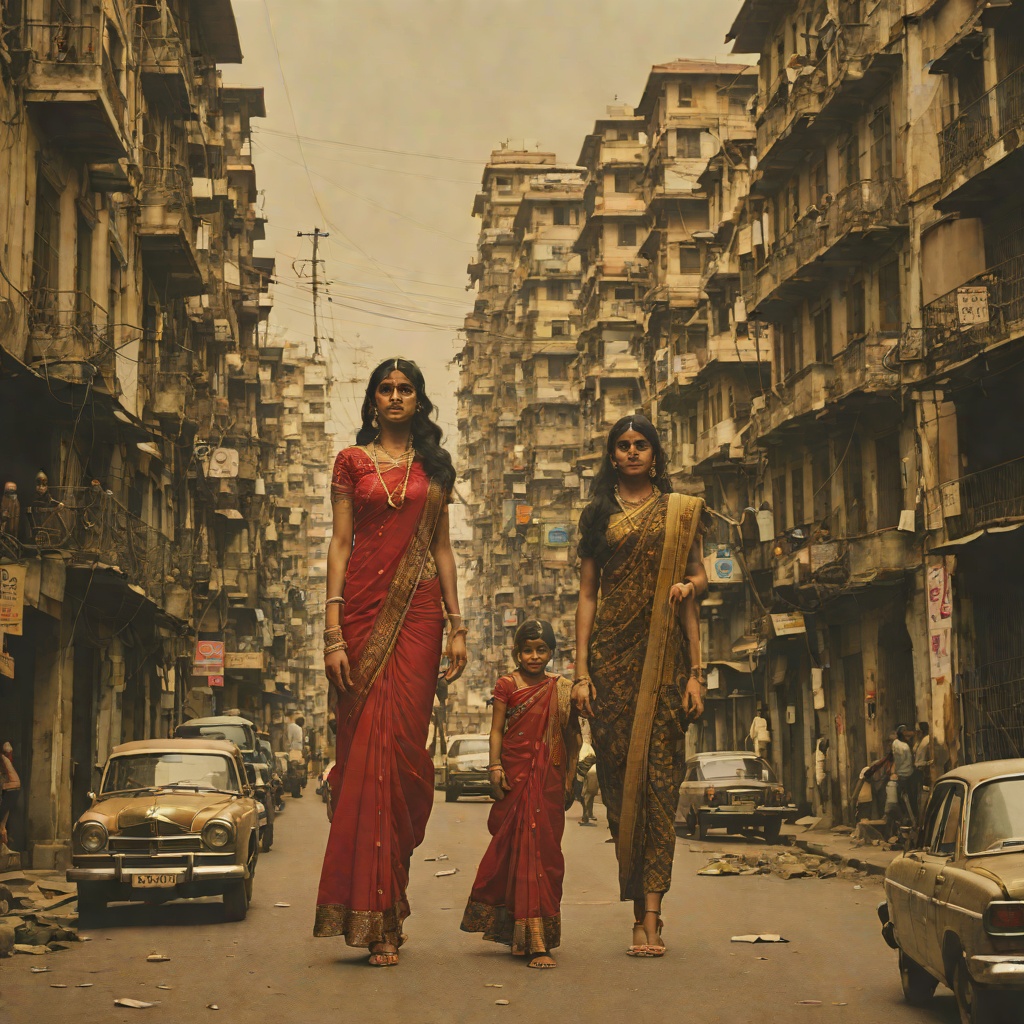
Azad Maidan
Mafia Queens of MumbaiAzad Maidan, a vast open ground in the heart of Mumbai, functions in this book as more than a geographical landmark; it is the city's principal civic and judicial stage, a place where the private struggles of its women criminals are thrust into public view. It is here that Gangubai Kathiawadi delivers her most famous oration, where the machinery of the state locks up its most feared drug lord, and where the lives of bootleggers, brothel madams, and gangsters' wives intersect with the police, the courts, and the press. The maidan is the symbolic meeting point between the underworld and the establishment, a neutral ground where power is performed, challenged, and displayed.
A Stage for Gangubai's Defiance
The most significant event associated with Azad Maidan is Gangubai Kathiawadi's speech at a women's conference held there in support of the girl child and the empowerment of women. The meeting had been called by leading political parties, NGOs, and other organisations, and Gangubai had been invited to speak on the condition of women in brothels and to help promote literacy among prostitutes. When she was called to the podium and introduced as the 'president of Kamathipura', she was greeted with suspicion. Dressed in a white cotton saree, Gangubai sensed the animosity of the crowd. She had been nervous when she ascended the stairs to the podium, having never spoken in public before, and despite rehearsing her speech several times during the day, she felt unprepared. The crowd's murmurings, however, only made her more determined, and she became less nervous.
Gangubai stunned her organisers and the audience with her opening line: 'I am a gharwali (a brothel madam) not a ghar todnewali (home wrecker).' She argued that the stigma attached to her title had 'saved the chastity, integrity and morality of several thousands of women.' She went on to claim that Mumbai's streets were safer than other Indian cities because the 'notorious women of Kamathipura' blunted 'bestial male aggression,' comparing prostitutes to the jawans who fight on the battlefield. The speech, delivered at Azad Maidan, became her defining public act, transforming her from a local power broker into a vocal advocate for her profession and cementing her reputation as the only brothel madam who did not give priority to business and money but to women.
The Seat of State Power and the Law
Azad Maidan is also the site of the Esplanade Court compound, which houses the Azad Maidan police station and the Anti-Narcotics Cell lock-up. This compound is described as a bustling space always filled with lawyers, policemen, criminals, and media persons. It was here that the journalist Ayaz Khan was taken to meet Mahalaxmi Papamani, the drug lord with immense clout over the lower echelons of Tamil society in Mumbai. The small lock-up faces the outside, allowing passersby to look in, a detail that underscores the public nature of her incarceration and the theatrical quality of her power. The location serves as a stark contrast to Gangubai's podium, yet both are arenas where the women of the underworld confront the state's authority.
The maidan's association with the law extends to the political ambitions of other figures. Asha Gawli, the wife of gangster Arun Gawli, used her political standing to protect her husband, and the maidan's proximity to the city's legal and political heart makes it a fitting backdrop for such struggles. The book notes that Arun Gawli's survival, in contrast to other dons killed in fake police encounters, was largely due to his wife's efforts, which included staging dharnas outside police stations and ministers' offices, activities that would naturally draw crowds to a space like Azad Maidan.
A Witness to the City's Turmoil
Beyond its role as a stage for individual defiance, Azad Maidan is a silent witness to the city's broader convulsions. The book's narrative of women criminals is set against the backdrop of communal riots and police violence, and the maidan, as a central public space, is implicated in these events. Jenabai Daaruwali, the bootlegger, led a peace march through the torched lanes of Dongri towards the Pydhonie junction, a demonstration of courage that echoes the maidan's function as a place for public protest. The maidan is thus not merely a location but a symbol of the public sphere, a space where the private grievances of the marginalized are aired and where the state's power is both enforced and contested.
The ground itself, a vast expanse in the city's heart, becomes a recurring motif in the lives of these women. It is where Gangubai's voice is heard, where Papamani is held, and where the city's political dramas unfold. For the women of the underworld, Azad Maidan represents the ultimate public stage, a place where they can step out of the shadows and claim a space in the city's narrative, whether through oratory, defiance, or the simple act of being seen.