Bada Qabrastan
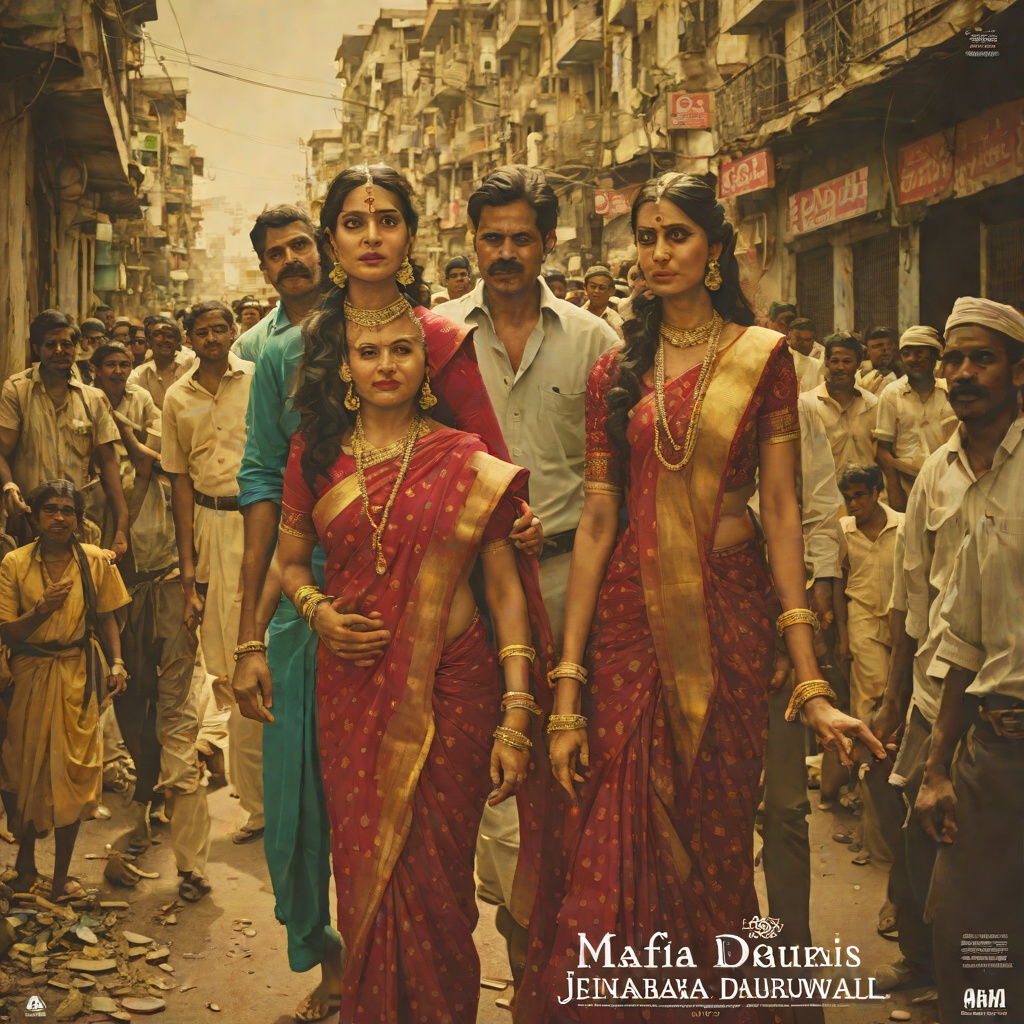
Mafia Queens of MumbaiBada Qabrastan, a sprawling 7.5-acre Muslim cemetery abutting Marine Lines station in Mumbai, is the great leveller of the city's underworld. It is the final resting place for several of the men who ruled Mumbai's underbelly with an iron fist, including the gold smuggler Haji Mastan, the Pathan gang leader Karim Lala, and Dawood Ibrahim's brother Sabir Kaskar. The cemetery, which is a hundred-and-fifty-years-old, is so close to the station that commuters cut across it before taking the stairs leading to the over-bridge at the north end. It is a place where the mighty fall, and where the city's most feared criminals are reduced to simple graves, their power and wealth ultimately meaningless against the certainty of death.
Location and Setting
Bada Qabrastan is situated in the heart of Mumbai, a stone's throw from the Arabian Sea, which flails and lashes against the giant tetra-pods on the Queen's Necklace near Marine Lines. The name Marine Lines is a British legacy, a throwback to a time when the British put Mumbai on the trade route in the mid-nineteenth century by linking the city with an amazing network of railheads. The name comes from Marine Battalion Lines, a British military establishment that was later converted to an air force residence quarters. The cemetery itself is a reminder and a testimony to man's mortality, a vast expanse of tombstones that stands in stark contrast to the bustling city life around it. The graveyard is not a neatly segregated space; rather, it is an integral part of the urban landscape, with commuters passing through it daily on their way to the station.
The cemetery's proximity to the sea and the station makes it a place of constant movement and transition. The rain, which often pelts the tombstones, adds to the gloom and reinforces the sense of mortality that pervades the space. The graves themselves are varied, from the simple, flat one chosen for Haji Mastan to the more elaborate, shrine-like edifices that dot the landscape. The choice of grave, it seems, is a final statement, a last word on how the deceased wished to be remembered, or forgotten.
The Underworld's Final Resting Place
Bada Qabrastan is not just a cemetery; it is a who's who of Mumbai's criminal history. The men who ruled the city's underbelly with an iron fist are laid to rest here, their graves serving as a testament to their power and their eventual downfall. Haji Mastan, Mumbai's most notorious gold smuggler, is remembered every year by his three daughters with a profusion of flowers and rose petals on his barsi, or death anniversary. His grave is easy to locate, with inscriptions in both Urdu and English, and fresh rose petals laid out on it. However, the rumoured huge mounds of flowers are missing, a detail that underscores the transient nature of even the most devoted remembrance.
Karim Lala, the leader of the Pathan gang, and Sabir Kaskar, Dawood Ibrahim's brother, are also buried here. The presence of these men in a single cemetery creates a strange sense of equality, a final, silent truce between rivals who spent their lives in conflict. The graveyard is a place where the hierarchies of the underworld are dissolved, where the don and the constable's son lie side by side, their earthly power reduced to a name on a stone. The apocryphal story of Dawood Ibrahim arranging for truckloads of rose petals to be showered on his father's grave for three days, so that the fragrance of roses wafted across the graveyard, speaks to the desire of the powerful to leave a lasting mark, even in death.
A Grave Without a Name
The cemetery also holds the graves of those whose identities are not immediately apparent. In the southernmost corner of the graveyard, hidden by thick overgrown bushes, lies an L-shaped grave, unkempt and decrepit. The headstone comprises a plain stone with an inscription that reads: Form No. 2544, Otta No. 601. It gives no name. This is the grave of Jenabai Daaruwali, the bootlegger and freedom fighter who became the queen of the underworld. The anonymity of her grave is a stark contrast to the power she once wielded. A local attendant, Shakoor bhai, reveals that she was also a freedom fighter who participated in the freedom struggle against the British with Mahatma Gandhi. The revelation is startling, prompting the question of how a freedom fighter became the queen of the underworld. The unmarked grave serves as a powerful symbol of how easily the stories of even the most powerful women can be erased, their legacies reduced to a form number and a plot number.
The contrast between the simple, unmarked grave of Jenabai and the more elaborate tombs of the male dons is striking. It speaks to the different ways in which men and women are remembered, and the erasure that women often face in the historical record. The cemetery, in this sense, is not just a place of death but also a place of forgetting, where the stories of the powerful are preserved and the stories of the marginalized are lost.
The Real Underworld
A man in a chequered lungi, tied up so that it ends just over his knees, and a crumpled kurta, laughs at the naive question of whether the members of the underworld are buried in a different corner of the graveyard. 'Miyan, the qabrastan is the real underworld; whoever comes here goes to the underworld. Yahan saare underworld ke raja aur rani aakar so jate hain.' (All the underworld kings and queens have to come rest here finally.) This observation captures the essential truth of Bada Qabrastan: it is the ultimate equalizer, the place where all the power, wealth, and violence of the underworld comes to an end. The cemetery is a reminder that death is the great leveler, and that no amount of power or influence can prevent the final journey.
The graveyard is a place where the living come to remember the dead, but it is also a place where the living are reminded of their own mortality. The sight of the graves of the once-powerful dons, now overgrown and forgotten, is a powerful memento mori. The cemetery is a space where the city's history is written in stone, a history that includes not just the official narratives of the state but also the hidden stories of the underworld. It is a place where the 'kings and queens' of the city's dark underbelly are finally laid to rest, their stories becoming part of the larger, more complex portrait of Mumbai itself.