Bombay prohibition
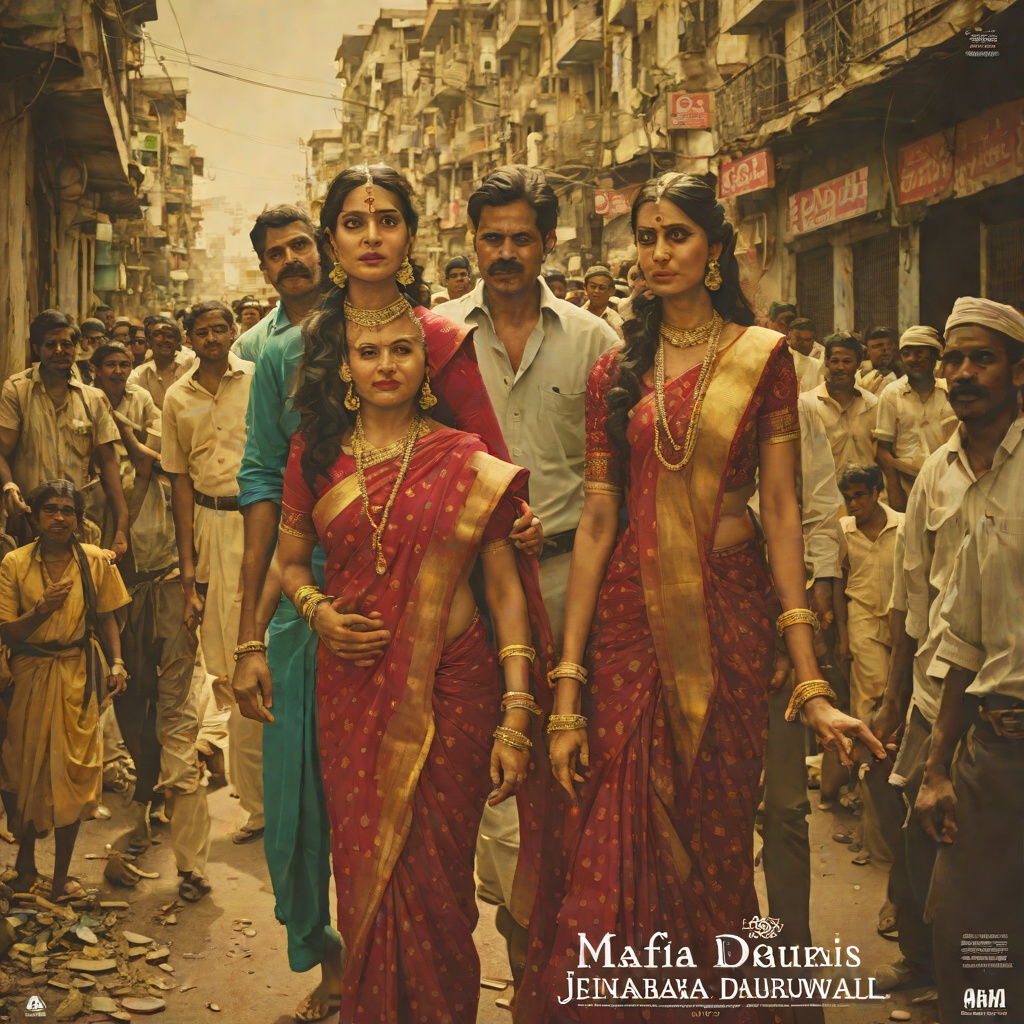
Mafia Queens of MumbaiBombay prohibition was the policy of legally banning the sale and consumption of alcohol in the city of Mumbai, a measure rooted in the moral and political agenda of Mahatma Gandhi and the Indian National Congress. First introduced on 1 August 1939, two years after the first Congress ministry was created in the Bombay province, the policy was intended as a social reform. Instead, it became the single most important catalyst for the rise of the city's bootlegging economy and, by extension, its modern underworld. The prohibition era did not merely criminalize a popular substance; it created the economic conditions under which women like Jenabai Daaruwali could amass enormous wealth, and it permanently reshaped the relationship between the state, the police, and the criminal classes of Mumbai.
Origins and Implementation
Prohibition had always been central to Mahatma Gandhi's and the Congress' agenda, and its implementation in Bombay was a direct expression of that ideological commitment. On 1 August 1939, prohibition was introduced in the city, but law-enforcers faced problems in the very first week of implementing it. For one whole week, there were clashes between groups for and against prohibition, signaling the deep social divisions the policy would engender. The home minister at the time, Barrister K.M. Munshi, carried out an intensive recruitment programme in the police force to implement the Prohibition Act effectively. An exclusive cadre called the X Division was created and was headed by a DCP, Prohibition. New sub-inspectors were also trained for special prohibition duty, and men from the Excise Department were brought into the city police department, creating a substantial bureaucratic apparatus dedicated solely to enforcing the ban.
However, when the Second World War broke out in 1939, the mammoth prohibition force was diverted for security measures to the docks and the implementation of prohibition suffered. The war effectively suspended the enforcement of the very law the state had so carefully built. In 1946, after the Nazis were defeated, the Congress government came back to power and prohibition was imposed on Mumbai again. Veteran politician and then chief minister of the Bombay province Morarji Desai, who was staunchly against the selling and consumption of alcohol, declared complete prohibition in liquor sales in Bombay from 6 April 1950, by passing the Bombay Prohibition Act of 1949. Before this order fell into place, the Christian and Koli communities distilled their own liquor, like jambul, jira, moha etc., while most of the other alcohol available was imported from the West, particularly England. The 1950 act thus represented the culmination of a long political campaign, transforming a wartime suspension into a permanent feature of Bombay's legal landscape.
The Rise of the Bootlegging Economy
Unfortunately, prohibition did nothing but sow the seeds for bigger crimes in Mumbai, opening the gateway for bootleggers and smugglers. The ban created an immediate and lucrative black market for alcohol, and a number of 'aunty joints' sprung up to quench the thirst of the alcohol-deprived population. Poor Goan Christian women brewed liquor in their backyards and kitchen, and sold it discreetly for a good price. Since their patrons found it difficult to pronounce their names, they were nicknamed according to their physical attributes like Gori Aunty, Chikni Aunty and Baidewali Aunty. Bootlegging was seen as a most lucrative businesses with profits running into thousands of rupees, and these aunty joints soon went on to become part of the Mumbai culture. The policy thus did not eliminate drinking; it merely drove it underground, creating a parallel economy that was entirely unregulated and criminal.
It was during this time that Jenabai Chaavalwali remarried an already married Iqbal Gandhi. She was still illegally dealing in grain but the profits were marginal and she was tired of making minuscule amounts. That was when she met Tamilian don Vardharajan Muniswami Mudaliar. Jenabai thrived during the prohibition. She amassed enormous wealth as a bootlegger and was quick to learn the tricks of the trade under Vardharajan, Mastan and Karim Lala. Her closeness to some of the city's most hardcore smugglers enhanced Jenabai's importance by leaps and bounds. People would often approach her for advice and help in settling disputes. This, and the increase in her wealth, gave her confidence, and she became abusive and overbearing. The prohibition economy did not just enrich individuals; it created a new social hierarchy in which criminal wealth translated directly into social power and influence.
The Transformation of Mumbai's Underworld
The prohibition era fundamentally altered the structure of Mumbai's underworld, creating the conditions for the rise of organized crime syndicates that would dominate the city for decades. Jenabai's trajectory from a grain broker to a wealthy bootlegger illustrates how the policy created opportunities for women to transcend their poverty and limitations. During this time, Jenabai also developed friendly relations with the police. Police constable Ibrahim Kaskar and his wife Aamina, Dawood Ibrahim's parents, were like family to her. Their children treated her like a second mother. This connection between the bootlegging economy and the police force would become a defining feature of Mumbai's criminal landscape, as the same families that profited from prohibition would later dominate the city's drug and arms trades.
The lifting of prohibition in the '80s had equally profound consequences, though they were felt most acutely by those who had built their fortunes on the ban. With prohibition being lifted in the '80s and the simultaneous decline of Vardharajan, Papamani's fortunes plummeted. The same people who once looked at her with awe now turned their backs on her. The end of prohibition did not end crime in Mumbai; it merely shifted its focus. The infrastructure of smuggling, distribution, and police corruption that had been built during the prohibition era was readily adapted to new enterprises, particularly the drug trade that would come to define the next generation of Mumbai's underworld.
Legacy and Significance
The legacy of Bombay prohibition extends far beyond the era of its enforcement. The policy created the economic and social conditions that gave rise to the modern Mumbai underworld, and its effects can be traced through the subsequent history of crime in the city. The prohibition era established patterns of police-criminal collusion, the use of illicit wealth to gain social standing, and the integration of criminal economies into the fabric of urban life. The same neighborhoods that flourished during prohibition—Dongri, with its one-room tenements and bustling bazaars, and the slums that would later become drug dens—remained central to Mumbai's criminal geography long after the ban was lifted. The policy also demonstrated the limits of state power to regulate personal behavior, as the massive enforcement apparatus created by K.M. Munshi and Morarji Desai ultimately proved unable to stem the tide of illegal alcohol, and instead succeeded only in criminalizing a significant portion of the city's population and creating the very underworld it sought to prevent.