Dongri
Mafia Queens of MumbaiDongri is the historic Muslim-dominated neighborhood in Mumbai that serves as the book's central geographic anchor, the birthplace and power base of Jenabai Daaruwali, and the symbolic heart of the city's underworld during the Dawood Ibrahim era. The narrative repeatedly returns to this district, treating it not merely as a setting but as a character in its own right—a place whose physical contours, demographic shifts, and criminal associations shape the lives of the women and gangsters who inhabit it. From its origins as part of the original island of Mumbai to its transformation into a byword for gang warfare, Dongri encapsulates the book's central themes of community, crime, and the precariousness of power in the city's underbelly.
Geography and Historical Origins
Dongri's physical identity is rooted in the geological and colonial history of Mumbai. The area was initially part of the original island of Mumbai, which stretched from Malabar Hill to the Dongri hills, at a time when the city was divided into seven islands, including Colaba, Old Woman Island, Mahim, Parel, Worli, and Mazgaon. In the mid-1700s, the Dongri hills were levelled as part of the plan to merge the different islands of Mumbai. After the hills were removed, the low-lying patch of uneven land between Crawford Market in the north and the reclaimed lands of Kamathipura in the south came to be called Dongri. This topographical history left the area as a distinct, low-lying pocket within the growing city, physically set apart by its geography and later by its demographics.
The neighborhood's proximity to key urban landmarks further defined its character. Dongri is a stone's throw away from the cloth market in Kalbadevi, and it abuts the sprawling Bada Qabrastan, a 7.5-acre cemetery that is a hundred-and-fifty-years-old and serves as a constant reminder of mortality. The graveyard is so close to the Marine Lines station that commuters cut across it before taking the stairs leading to the over-bridge at the north end of the station. This juxtaposition of the living and the dead, of commerce and burial, is emblematic of Dongri's role in the narrative as a place where life and death, legitimacy and crime, are inextricably intertwined.
The Heart of the Underworld
During the Dawood Ibrahim days, Dongri was to Mumbai what Palermo is to the Sicilian mafia. This comparison underscores the neighborhood's status as the epicenter of organized crime in the city, the base from which the most powerful gangs operated. The area's criminal reputation was cemented by the presence of figures like Haji Mastan, who, along with Karim Lala and Vardharajan Mudaliar, formed one of the most formidable gangs in Mumbai. Mastan's own trajectory—from a mechanic repairing cycles to a coolie at the Mumbai docks in 1944, unloading boxes from ships coming from Aden, Dubai, and Hong Kong, to a millionaire smuggler of gold, silver ingots, and electronic goods—was rooted in the economic networks that passed through Dongri and its surrounding districts.
Until the mid-1990s, Dongri was known for all the wrong reasons, serving as the venue for endless gang wars and communal bloodshed. The neighborhood's name became synonymous with the violence that plagued Mumbai's underworld, a place where rival factions fought for control of smuggling routes, extortion rackets, and political influence. This reputation was so pervasive that it defined the area in the public imagination, overshadowing its earlier history as a hub for the independence movement in the 1920s and '30s, when both men and women, regardless of religion, took to the streets for the cause of freedom.
Jenabai's Dongri
Dongri was the lifelong home and power base of Jenabai Daaruwali, the book's central matriarchal figure. Born in the early 1920s to a Muslim Memon Halai family, Jenabai was one among six siblings, and the family lived in a one-room tenement on Mohammad Ali Road in Dongri. Her father made ends meet ferrying passengers on Victoria carriages across the city. It was in Dongri that Jenabai's transformation from a young independence activist into a powerful underworld figure took place. As a young girl, she ardently supported the Gandhian movement and the cause of Independence, and her conservative Muslim background did not deter her from participating in the struggle for freedom. Since she did not go to school, she would spend most of the day in sloganeering.
When Partition took place in 1947, Jenabai's husband decided to move to Pakistan, but she refused to leave Mumbai, having spent much of her childhood and youth struggling for Independence. Left alone to fend for herself and her five children, she turned to the illegal grain trade, working as a broker for smuggled grain at Daana Bazaar at Masjid Bunder, close to Dongri. Her fluency in Gujarati, a result of her Memon heritage, allowed her to interact easily with the Gujarati wholesalers and traders, who began to refer to her as 'sister' or Jenaben. Since her dealings were mostly in rice, the title 'Chaavalwaali' (one who deals in rice) became suffixed to her name, and locals in Dongri and Daana Bazaar began calling her Jenabai Chaavalwaali. The police raided her room at Chunawala building several times but never managed to get enough evidence to book her.
Jenabai's influence in Dongri was so profound that even Dawood Ibrahim thought of her as his surrogate mother. She was held in high esteem both by the police and the mafia, and she had massive clout with all the gangs. Her grave, located in the Bada Qabrastan abutting the Marine Lines station, is a testament to her enduring legacy in the neighborhood she never left. The old man at the graveyard, when asked if it was Jenabai's grave, nodded vigorously and confirmed, 'Haan haan, this is Jenabai's grave.'
A Neighborhood Transformed
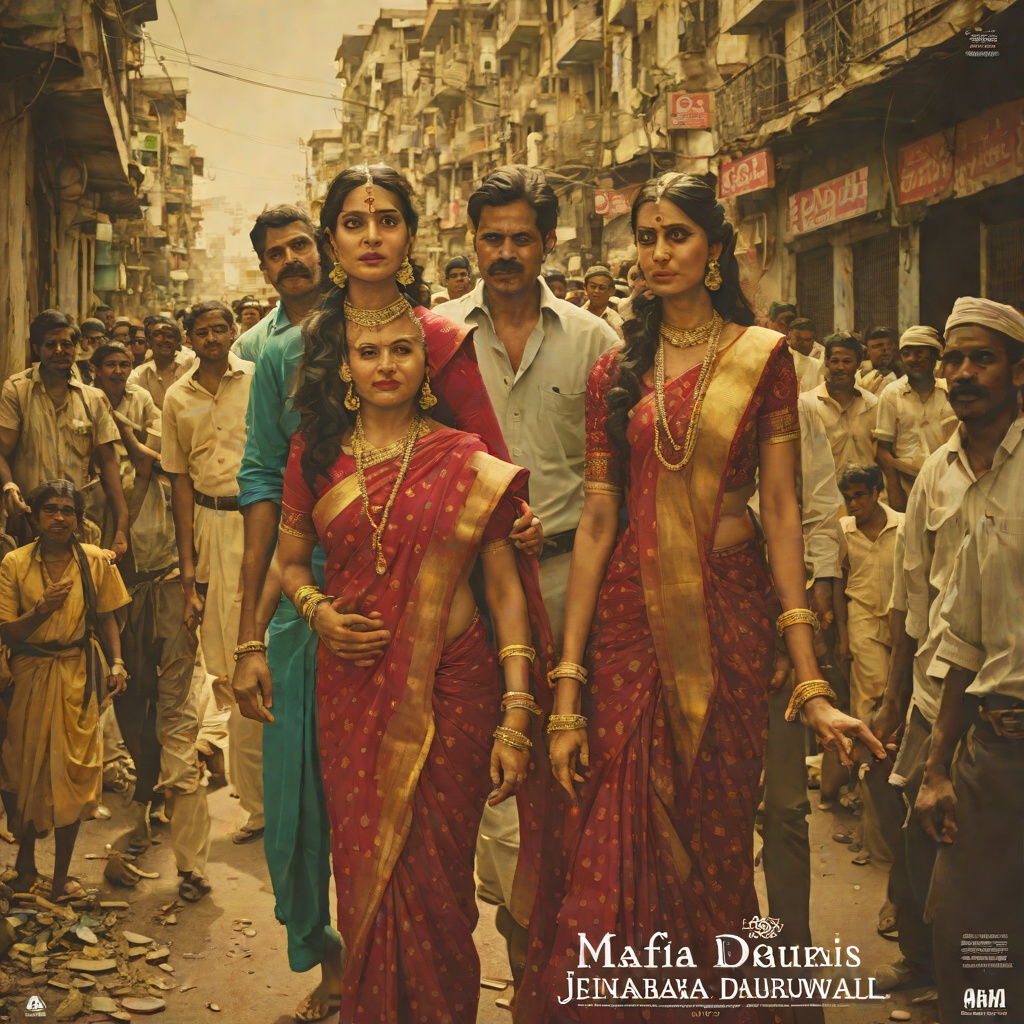
Today, Dongri presents a starkly different face from its criminal heyday. The area is choc-a-block with rickety, old buildings and falls partially below the gigantic JJ Flyover, and it is primarily dominated by Muslims. By late morning, the bazaar in Dongri spills onto the footpaths, selling audio and video tapes of Islamic teachings, attar, henna, chikan kurtas, mojris, and jewellery. The bazaar is full of Iranian and Afghani restaurants, bakeries, and sweetmeat shops that sell mawa cakes, hot jalebis, kheer, and gulab jaamuns. During the late afternoons and evenings, the aroma of hot kebabs, biryani, gosht, and kheer permeates the neighborhood. The signboards in Urdu, the number of men kneeling down in rows outside the mosques, and the women in burqas doing their vegetable shopping make Dongri seem, to an outsider, like another country in itself.
Despite its surface transformation, the neighborhood's history of violence and crime continues to shadow it. During the 1992–93 Bombay riots, specific Muslim locations like Bhendi Bazaar, Dongri, Nagpada, Dharavi, and Mumbra became epicentres for all the wrong things that occurred in the city. Labelled as 'sensitive zones,' these areas saw tremendous bloodshed and destruction. It was amidst this chaos that an old, fragile-looking, seventy-two-year-old Jenabai took the lead in bringing peace back to Dongri, even as her power centers in the underworld were fading fast. Top mafia bosses Karim Lala and Mastan were old and ailing and living a retired existence, while Vardharajan had long since died after retreating to Chennai in 1988, and Dawood had relocated to Dubai. As far as wielding power was concerned, she was left with nothing—yet it was in Dongri that she made her final stand for peace.
Narrative Significance
Dongri functions as the book's moral and geographic compass, a place where the trajectories of its many subjects converge. It is the point of origin for Jenabai's rise, the seat of Dawood's power, and the stage for the communal violence that reshaped Mumbai. The neighborhood's physical details—the one-room tenement on Mohammad Ali Road, the bustling bazaar, the nearby graveyard—ground the narrative in a specific, tangible reality. Dongri's evolution from an independence-era hub to a criminal stronghold and finally to a gentrifying but still marginalized Muslim enclave mirrors the broader arc of the book's exploration of Mumbai's underworld and the women who navigated it. The area's persistent association with both crime and community, with both violence and solidarity, makes it the indispensable backdrop against which the stories of Jenabai, Gangubai, and the other women of the Mumbai underworld unfold.