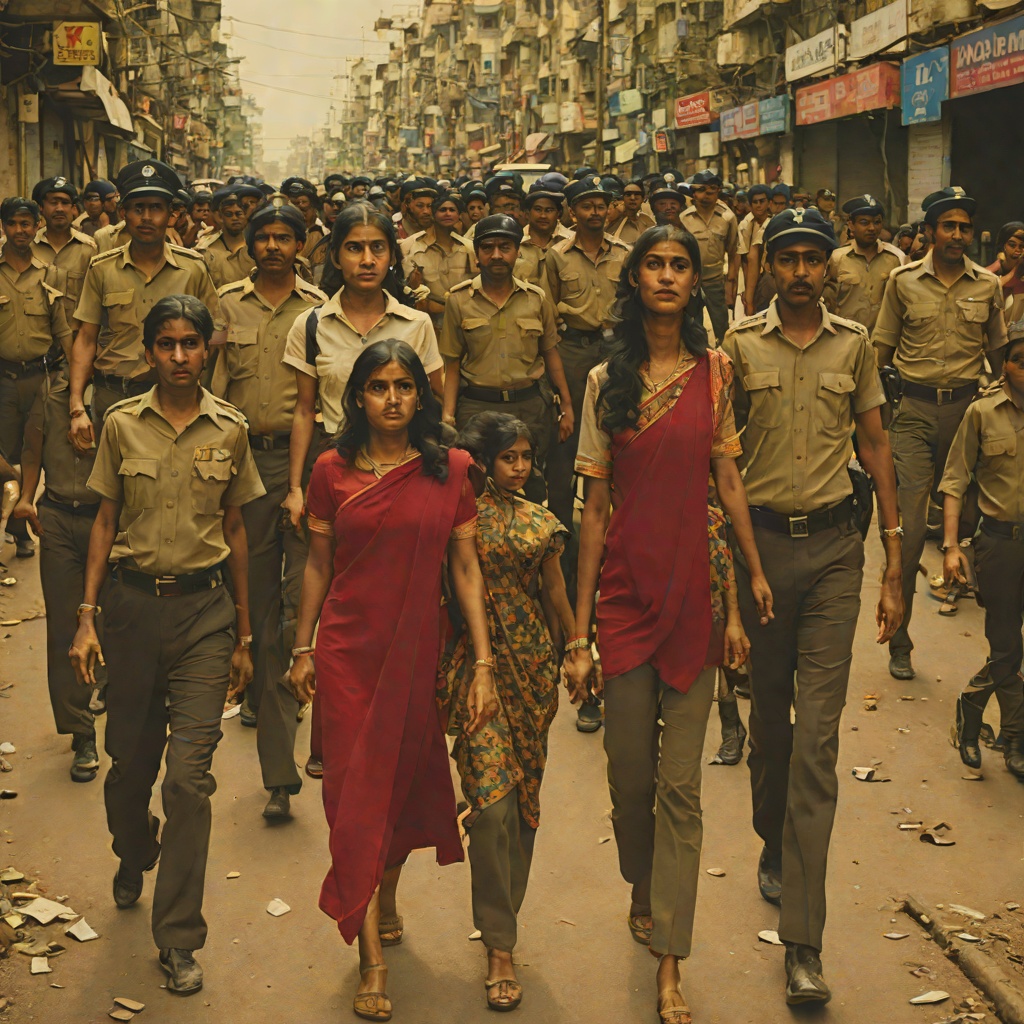
Fake encounter of Mehmood Khan
Mafia Queens of MumbaiThe fake encounter of Mehmood Khan at Santa Cruz airport stands as one of the most chilling and consequential events in the book's chronicle of Mumbai's underworld. It is a moment where the state's machinery of violence intersects with personal grief, transforming a routine airport arrival into a public execution disguised as a police action. The event is not merely a killing; it is a carefully staged lie, one that shatters the life of Ashraf Khan, Mehmood's wife, and sets her on a path of anguished inquiry. The narrative presents this not as a footnote in gangland history but as a foundational trauma, a brutal demonstration of how power operates in the city's shadows, and a stark illustration of the book's central thesis about the gendered dynamics of crime and punishment.
The Setting and the Victim
Mehmood Khan was a wanted gangster, a man whose life was already steeped in the violent currency of the Mumbai underworld. The event unfolds at the bustling Santa Cruz airport, a place of transit and hope, which is abruptly transformed into a stage for state-sanctioned murder. The airport's arrival area, typically a scene of reunions and relief, becomes a trap. The presence of two police jeeps parked behind Ashraf as she waits for her husband is an early, ominous sign, though she tries not to read too much into it, given her husband's poor track record with the cops. The setting is crucial: it is a public space, chosen not for secrecy but for spectacle, a message to the underworld that no one is beyond the reach of the police's lethal power. Mehmood, a burly, dark man with a black bag slung over his left shoulder, emerges from the arrival doors a little before five, and for a brief moment, he and Ashraf lock eyes, and she breaks into a smile. This moment of connection is brutally severed when he is abruptly swallowed by a group of men who surround him.
The Encounter and Its Immediate Aftermath
The killing itself is swift and chaotic. Ashraf witnesses one of the men who surrounded Mehmood fire two to three gunshots into the air, sending the arrival area into pandemonium. People run helter-skelter, and the group of men disappears into the crowd. In the ensuing chaos, Ashraf refuses to move, clinging to the hope that her husband will emerge from the crowd and take her away. She notices men with service revolvers accompanied by cops, and when she turns around, the police jeeps that had been parked behind her are gone. Over the noise, she thinks she hears faint gunshots from the parking lot. Running towards the sound, she finds a pool of blood near a parked taxi, with cops preoccupied with drawing white markings on the ground. The scene is one of clinical horror, the aftermath of a killing being processed as a routine procedure. She overhears a policeman say that the man who had been shot was taken to Cooper Hospital, but when she arrives, the staff are unaware of any patient with gunshot wounds. Her desperate search leads her from station to station, until a policeman directs her to J.J. Hospital, where her worst fears are realized: she is told that Mehmood Khan, a wanted gangster, had been shot dead in an encounter at Santa Cruz airport.
The Lie and the Grief
Ashraf immediately knows the official story is a lie. She understands that Mehmood could not have carried a gun past airport security, making the claim that he fired at the cops impossible. This knowledge transforms her grief into a bitter, personal confrontation with the state's deception. In the morgue, she identifies his body, the same man who had smiled at her only hours before. The intimacy of her grief is devastating: she holds his body, entwines her fingers with his lifeless ones, remembering the night before he left for Dubai when he had made love to her passionately. The report states he died of four bullets in an encounter, and the press names police inspector Emanuel Amolik as the leader of the operation. Ashraf memorizes the officer's name, a quiet act of defiance and a seed of future reckoning. The next day, Mehmood is buried at Nariawali Qabrastan. Ashraf, barred from the burial ground, waits stubbornly outside the masjid until all rites are performed. Later, when everyone has left, she slips into the graveyard, falls to her knees at the fresh grave, and digs her fingers into the mud, crying for the first time since his death. It is in this moment of raw, solitary grief that an old man approaches her, holding a glass of water, a silent witness to her pain.
The Broader Context of State Violence
The fake encounter of Mehmood Khan is not an isolated incident but a symptom of a deeper malaise within the Mumbai police and its relationship with the underworld. The event is a prime example of the 'encounter' as a colonial-style extrajudicial practice, a tool used to eliminate targets without the inconvenience of legal process. This practice disproportionately affects marginalized communities, and the targeting of Mehmood, a Muslim gangster, fits a pattern of communalized criminalization. The book's broader narrative shows that such encounters are a recurring feature of Mumbai's gang wars, a brutal currency in the struggle for power between the police, the state, and the mafia. The killing of Mehmood is a message not just to him but to all those who might challenge the established order, a warning that the state's violence can be as arbitrary and ruthless as that of the gangs it purports to fight. The event also highlights the gendered nature of this violence: it is Ashraf who is left to piece together the truth, to navigate the lies of the police, and to bear the burden of a grief that is compounded by the state's refusal to acknowledge its crime.
The Catalyst for Ashraf's Transformation
The fake encounter is the pivotal event that transforms Ashraf from a protected wife into a woman hardened by grief and determined to uncover the truth. Her journey through the city's hospitals and police stations, her confrontation with the morgue, and her solitary vigil at the grave all mark a passage from innocence to a painful, knowing awareness. The event is the catalyst for her later actions, including her involvement with Sapna Didi and the plan to avenge Mehmood's death. The narrative makes clear that the fake encounter is not just a personal tragedy but a political act that creates a new kind of adversary for the state: a woman who has seen through its lies and is willing to act on that knowledge. Ashraf's story, born from this moment of violence, becomes a testament to the resilience of those who are left behind, and a powerful indictment of a system that manufactures such tragedies. The event's significance lies not only in the death of a gangster but in the birth of a new consciousness, one that refuses to accept the official narrative and seeks a different kind of justice.