Gangubai's Azad Maidan speech
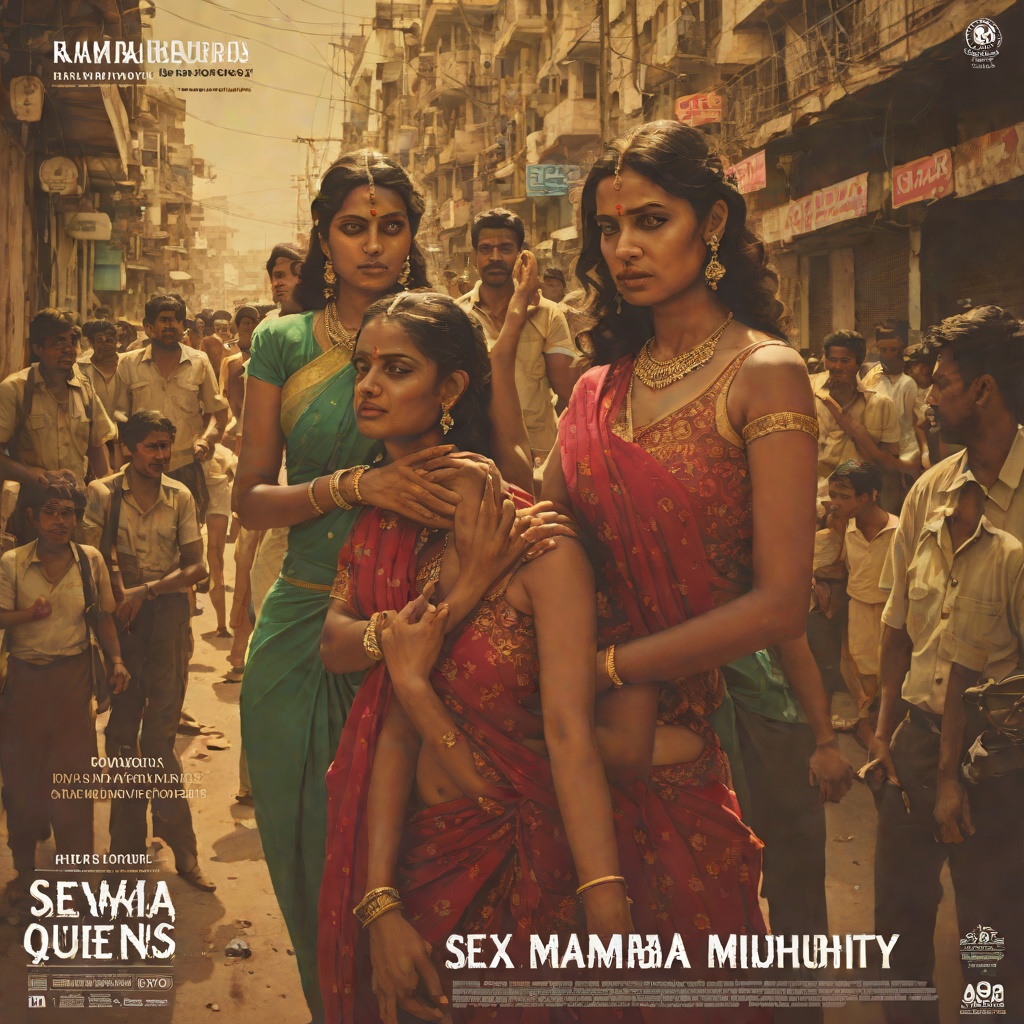
Mafia Queens of MumbaiGangubai's Azad Maidan speech stands as the defining public moment of a woman who ruled Kamathipura's brothels from behind the scenes. Delivered at a women's conference called in support of the girl child and the empowerment of women, the address transformed the brothel madam into a public advocate for sex workers, a role no one in her position had ever dared to claim. The speech was so powerful that it stunned the organisers who had invited her, silenced a suspicious crowd, and ended with thunderous applause from an audience that had begun by treating her with open animosity. It remains the clearest statement of Gangubai's conviction that prostitution was not a shame but a service, and that the women who performed it were the unsung protectors of society's chastity and safety.
The Occasion and the Hostile Crowd
The conference at Azad Maidan had been organised in support of the girl child and the empowerment of women, drawing women from several leading political parties, NGOs, and other organisations. Gangubai had been invited to extend help in promoting literacy among prostitutes, and the organisers had asked her to speak on the condition of women in brothels. When she was called to the podium and introduced as the 'president of Kamathipura', she was greeted with a great deal of suspicion. Dressed in a white cotton saree, Gangubai sensed the animosity of the crowd. She had never really spoken in public before this, and she had been nervous when she ascended the stairs to the podium. She had rehearsed her speech several times during the day, yet standing in front of such a large crowd, she felt absolutely unprepared. Even as she came closer to the microphone, she could hear murmurings among a section of the crowd. But the crowd's behaviour only made her more determined to prove her point, and all of a sudden, she became less nervous.
The Speech and Its Arguments
Gangubai stunned her organisers and the audience with the opening line of her speech: 'I am a gharwali (a brothel madam) not a ghar todnewali (home wrecker). Several people among you look at this title as a stigma on womanhood but it is this stigma that has saved the chastity, integrity and morality of several thousands of women.' The crowd grew silent. She continued by arguing that the streets of Mumbai were far safer than those of other Indian cities, and that the notorious women of Kamathipura should be partly credited for this. 'We are only second to the legitimately married gharwalis (housewives),' she said. 'By giving ourselves to the carnal pursuits of men, we are doing a big favour to all the women in society. A few handful of women who cater to the physical needs of men are actually protecting all of you from being attacked.' She drew a parallel between prostitutes and the jawans of the country, who fight endlessly in the battlefield so that others remain unharmed. 'Then why the difference? Why is a jawan rewarded and given national honours, while prostitutes are insulted and treated like pariahs? Give me an answer.'
The Rhetorical Climax and the Plea
Gangubai, seemingly in a trance and overpowered by very strong emotions, pressed her point home. 'Nobody will have an answer,' she said, 'because you all are responsible for creating this question in the first place. The only solution to the problem is by treating sex workers as equals. The day you manage to do this, I will believe that society has achieved "women empowerment".' She pointed out that an orthodox city like Hyderabad could name its red-light area Mehboob ki Mehndi (the henna of the beloved), while Kamathipura drew expressions of disgust in the so-called 'forward-looking' city of Bombay. She ended with a striking analogy: 'We all keep at least one toilet in our homes so that we do not defecate or urinate in other rooms. This is the same reason why there is a need for a prostitution belt in each and every city.' She made a humble plea to the government to allow red-light areas to co-exist in society. The crowd was immediately on its feet and applauding thunderously; nobody had ever spoken for the cause of sex workers so convincingly.
The Woman Behind the Words
The speech was the public face of a woman whose authority was built on decades of quiet power. Gangubai was a renowned brothel madam who owned several brothels and had immense influence on the women who worked in them. A five-foot-tall figure dressed in a white saree, she commanded such respect that other sex workers bowed in respect when she entered a building. She was known as the only brothel madam who did not give priority to business and money but to women, and she protected sex workers from men who abused them or took advantage of them by promising marriage or not paying for sex. These men feared her for her connections with the underworld and the police, while the sex workers revered her as a mother, calling her Ganguma. Her victory in the bade gharwali elections, which gave her an entire building under her jurisdiction, only strengthened this position, and she remained at the helm of this decentralised command structure for over sixteen years.
Legacy and Significance
The Azad Maidan speech was not an isolated act but the culmination of a life of advocacy. When anti-prostitution sentiment swelled in the early 1960s, with school authorities and locals wanting part of the red-light belt evacuated on the grounds that sex workers could negatively influence young students, sex workers sought Gangubai's help and she successfully spearheaded the movement against their evacuation. Her political connections apparently also won her an appointment with the then prime minister of India, Jawaharlal Nehru, at his residence in New Delhi, making her the only local brothel madam to secure an appointment with the head of the country. The speech at Azad Maidan, however, was her most enduring act of public defiance, a moment when she took the stigma society placed on her profession and turned it into a claim of moral service. It is this speech, more than any other single act, that secured her place in the book's account of women who pushed the boundaries of dominant moral codes, women for whom crime was not only a way of transcending poverty but also a life-saving concept.