Jenabai's peace march
Mafia Queens of MumbaiJenabai's peace march was the culminating act of a life spent defying authority, a spontaneous and unarmed demonstration that cut through the communal carnage of the 1992–93 Bombay riots. Led by Jenabai Daaruwali, an elderly bootlegger and former grain broker, the march saw her walk through the torched lanes of Dongri to the Pydhonie junction, where she stood flanked by hundreds of young men and women, waving a white flag and screaming for peace and harmony even as injured bodies lay strewn and mobs openly ransacked and set fire to shops. It was a moment of extraordinary moral courage from a woman who had spent her life on the wrong side of the law, and it cemented her legacy as a figure who could transcend her criminal past to become a symbol of communal unity in Mumbai's darkest hour.
Background and the Last Straw
The march was not a premeditated act of political theatre but the product of accumulated outrage. Jenabai had spent much of her childhood and youth struggling for Indian independence, and after the Partition of India in 1947 she had refused to leave Mumbai when her husband moved to Pakistan, choosing instead to fend for herself and her five children. In the 1940s, faced with a scarcity of grains in Mumbai and the need for quick money, she had begun working as a broker for smuggled grain at Daana Bazaar at Masjid Bunder, close to Dongri, procuring foodgrain in bulk from wholesalers on commission and selling it to dealers and to the people who lived with her in her tenement. The police raided her room at Chunawala building several times but never managed to get enough evidence to book her. This history of defying the state and surviving through illicit means gave her a particular fearlessness, but it was the Suleman Usman Bakery firing on 9 January 1993 that proved to be the last straw. The Special Operation Squad, suspecting terrorists were holed up on the terrace of the bakery, had opened fire inside it under the direction of joint commissioner of police R.D. Tyagi. Jenabai peered through her windows and heard the gunshots and helpless cries of people from inside the bakery, making her a spectator to one of the most gruesome and unwarranted killings by the police. The firing resulted in the death of nine Muslims, but the police failed to apprehend terrorists or seize firearms from the spot, the truth being that there were neither.
The March Through Dongri
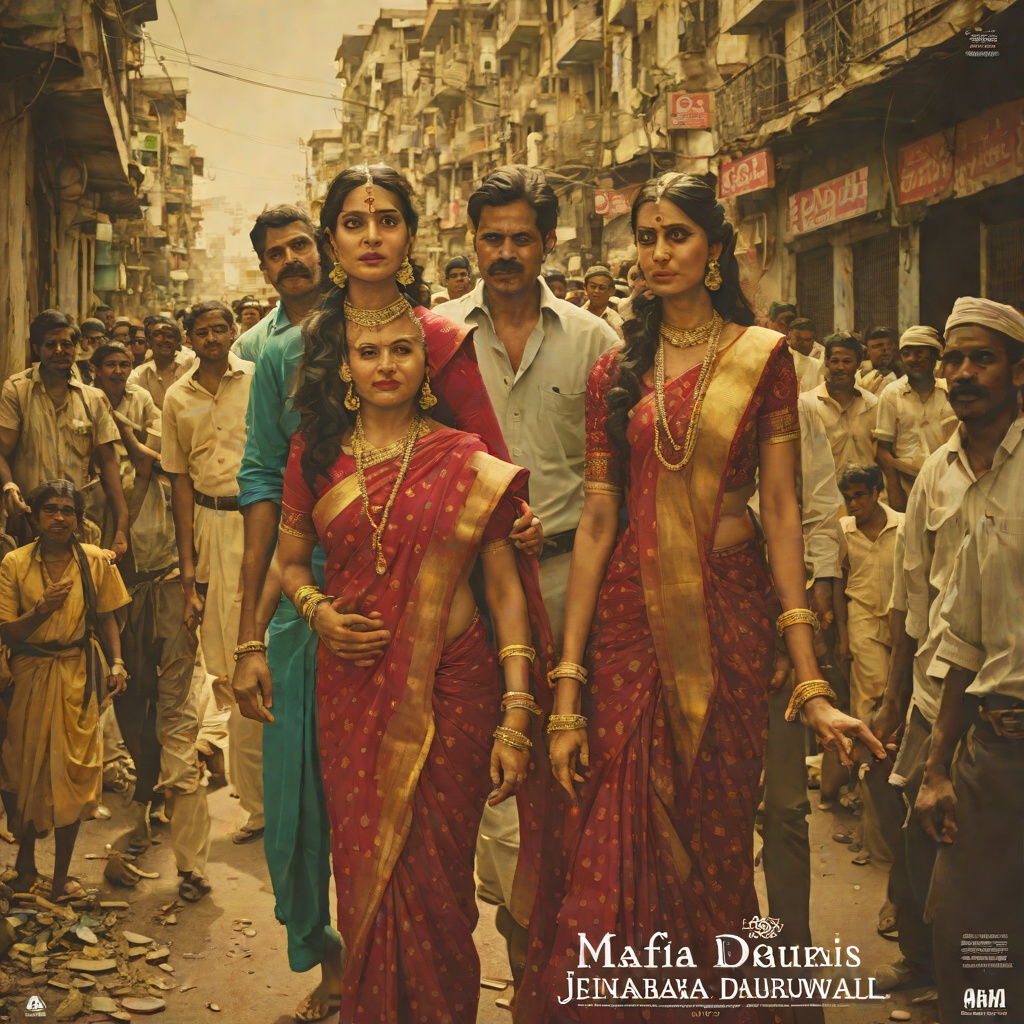
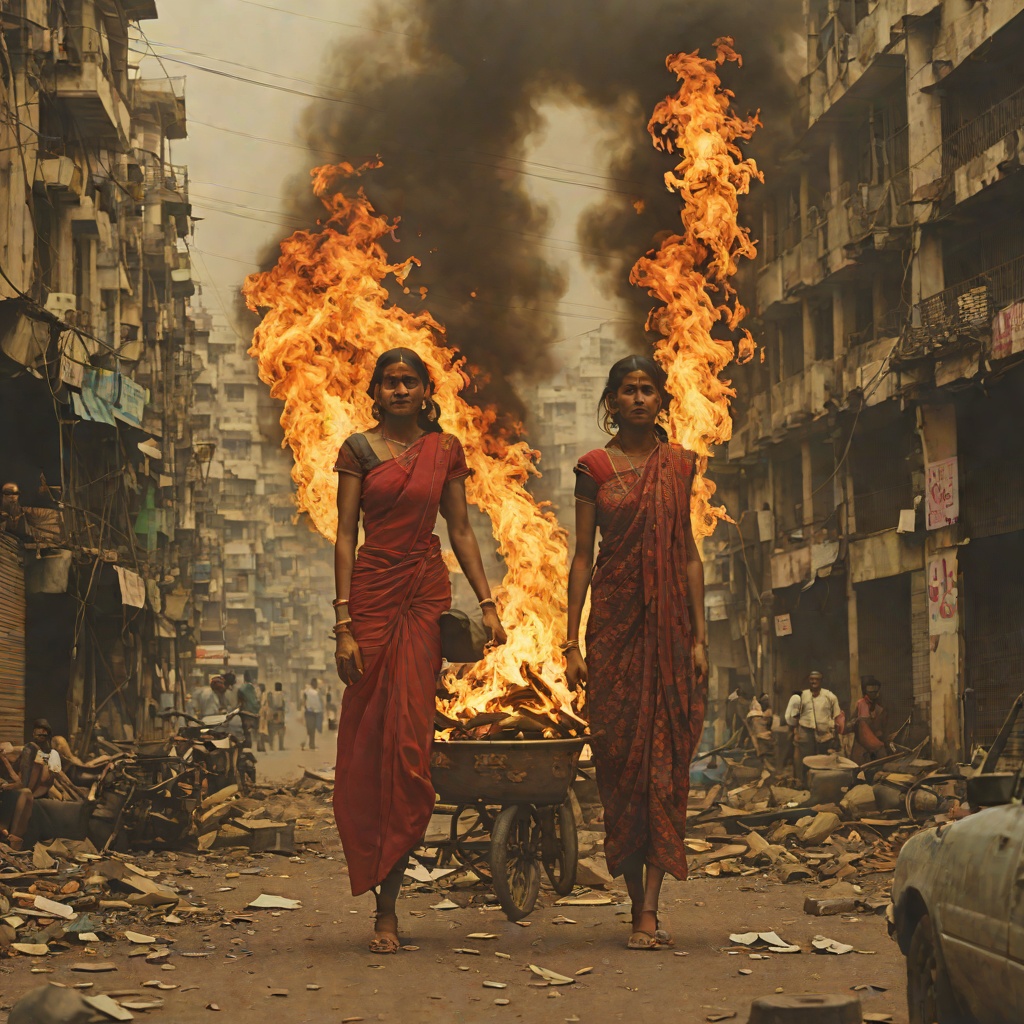
Now, even a hundred warnings by the forces would not shake her determination to step out of her home. In her long white chikan nightgown and a shawl that covered the grey in her hair, this fair and heavily jewelled lady, with a rosary in one hand and a white flag in the other, went out onto the street. In a few seconds, a group of young men had gathered behind her as she led the demonstration. She walked between the torched lanes of Dongri towards the Pydhonie junction, unconcerned about danger. The junction, with the Hamidiya Masjid on the right, Khatri Masjid on the left and three Jain Derasars, had become the dividing line for the two wounded communities. The Pydhonie police station, a gift of the British era, stood at right angles from these religious houses. When she reached the junction, she stopped. Here she stood, flanked by hundreds of young men and women, waving her flag and screaming for peace and harmony even as injured bodies lay strewn and mobs openly ransacked shops in the vicinity, setting them on fire.
Confrontation and the Crowd's Response
On seeing the demonstrating crowd, the police with their lathis and shields began closing in towards them. Her tired old legs had given in, but Jenabai stood calm, unafraid of the mob fury and the police lathis. From behind her supporters screamed loudly, 'Jenabai zindabad! Jenabai zindabad! Jenabai zindabad!' The chant transformed her from a former criminal into a living icon of resistance, a woman whose physical frailty—her tired old legs—contrasted sharply with her unshakeable moral resolve. The scene was a study in contrasts: a heavily jewelled old woman in a nightgown facing down armed police, her rosary and white flag held aloft as symbols of faith and peace against the lathis and shields of the state. The young men and women who gathered behind her in seconds and the hundreds who flanked her at the junction testified to her enduring authority in Dongri, an authority built not on violence but on a lifetime of survival and defiance.
Significance and Legacy
The peace march was the defining act of Jenabai's later life, and it resonated far beyond the immediate moment. The book in which her story appears is an attempt to understand the complex minds and the psyche of women criminals, and it insists that these women were not blank slates written upon by dangerous male mafia members. Jenabai's march exemplified this thesis: here was a woman who, in her old age, used her moral authority to challenge the state's violence and the mob's fury alike, pushing the boundaries of dominant moral codes. Her act stood in stark contrast to the other women profiled in the book, from Gangubai Kathiawadi, the brothel madam who advocated for prostitution belts and secured an appointment with Prime Minister Jawaharlal Nehru, to Tarannum Khan, the bar girl who captivated patrons with her dance to Kajra Re, to Asha Gawli, who ran her husband's gang by proxy and campaigned for him from behind bars. Where these women wielded influence through commerce, politics, or performance, Jenabai's final and most powerful act was one of pure moral witness. The chant 'Jenabai zindabad!' echoed through the riot-torn streets as a rebuke to both communal hatred and state violence, and it remains the enduring image of a woman who, having spent her life outside the law, became its most fearless critic.