Jyoti Adiramalingam
Mafia Queens of MumbaiJyoti Adiramalingam, known to her domain as Jyoti amma, is the reigning godmother of Sonapur Lane, a cramped warren of shanties just a stone's throw from the Reay Road railway station in Central Mumbai. According to the dossiers of the Narcotics Control Bureau and the Anti-Narcotics Cell, she is one of the many small yet dominant cogs in the humongous machine of the Rs 1,000-crore drug trafficking industry in Mumbai. At forty-six, she is considered one of the most feared drug baronesses in the city, a woman who lays down the rules in her territory and alone holds the authority to bend them.
Domain and Territory
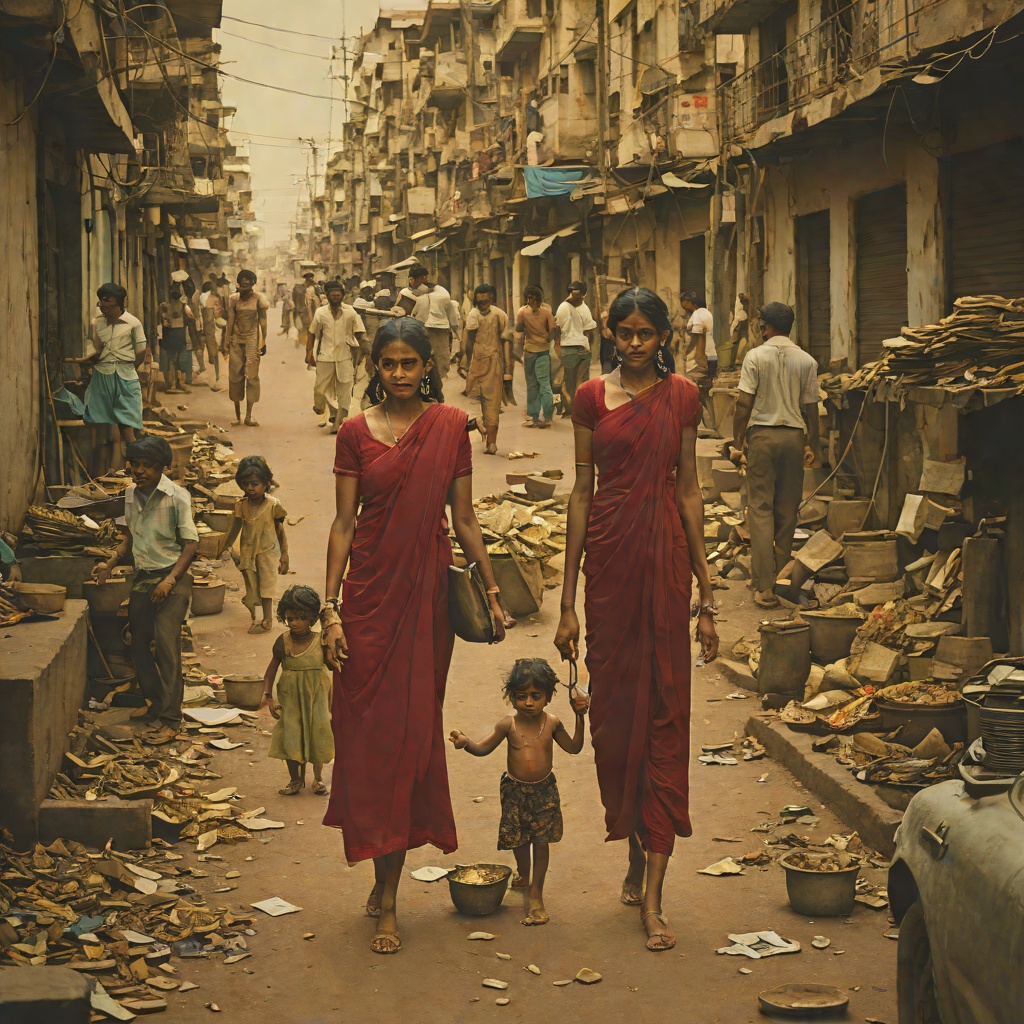
Sonapur Lane, also called Sonapur Galli, is a nesting ground for crime and disease, where some thousand shanties crowd together near the railway station. The name 'Sonapur' carries a grim irony: the 'sona' in Sonapur is in no way related to 'gold'; it, in fact, refers to 'death' or 'sleep', because of the several Muslim graveyards in the vicinity. Yet for Jyoti, this otherwise nondescript residential hub of Mumbai's underbelly brought gold and untold wealth. The area's character as a criminal enclave is part of a broader geography of Mumbai's underworld, where spaces like Dongri, once part of the original island of Mumbai stretching from Malabar Hill to the Dongri hills, and the low-lying patch of uneven land between Crawford Market and the reclaimed lands of Kamathipura, became synonymous with illicit enterprise. In the mid-1700s, the Dongri hills were levelled as part of the plan to merge the different islands of Mumbai, and the resulting terrain became a cradle for figures like Jenabai Daaruwali, who operated from a one-room tenement on Mohammad Ali Road. Jyoti's Sonapur Lane, like these other spaces, became a site where the state's reach was thin and criminal authority filled the vacuum.
Rise in the Drug Trade
Jyoti's ascent in the narcotics world came through the tutelage of Savitri, a prominent drug peddler in the Sion-Koliwada slum who sold pudis, or packets, of heroin. Savitri lured Jyoti from Reay Road to work for her, and under her mentorship, Jyoti and Mahalaxmi Papamani were given the responsibility of dividing large quantities of heroin into smaller pudis and then distributing them to interested parties. In no time, the troika of women—Savitri, Papamani, and Jyoti—began to control the pudi-selling business in Sion-Koliwada. The partnership, however, was built on shifting sands. With profits running into lakhs, it was only a matter of time before Papamani outsmarted her own mentor with her shrewd business acumen. In 1991, Papamani split from Savitri and began running the business independently, leaving Jyoti to navigate the treacherous waters of the drug trade on her own terms. Jyoti's trajectory mirrors a pattern seen across the book's subjects: women entering crime as a life-saving concept to transcend poverty and limitations, then consolidating power through ruthless business sense. The book's author notes that these women were not blank slates written upon by dangerous male mafia members, and Jyoti's rise from a small cog to a reigning godmother exemplifies this agency.
Encounter and Legacy
A Sunday cover story on the role of women in the narco-industry took the book's author to Sonapur Galli, where Jyoti was fresh out of prison at the time, having served a four-and-a-half-year sentence in Mumbai's Byculla Women's Jail. The photograph of Jyoti used in the book was procured from her family album by the Narcotics Control Bureau, a testament to the state's long surveillance of her operations. Her imprisonment, however, did not diminish her standing; upon release, she returned to a domain where she remained the undisputed authority. The author's visit to Sonapur Lane drew a comparison to the Sion-Koliwada slum, where Papamani still lived, and where residents refused to acknowledge her existence, let alone speak about her goddess-like aura. In Jyoti's case, the fear she commanded was similarly palpable. Her story, like that of the other women in the book, is presented not to glorify crime but to understand the complex minds and psyche of women criminals who pushed the boundaries of dominant moral codes. Jyoti Adiramalingam stands as a testament to how a woman could rise to dominance in the drug trade, ruling her small but significant corner of Mumbai's underworld with an iron fist, her authority unquestioned and her rules absolute.