Kamathipura
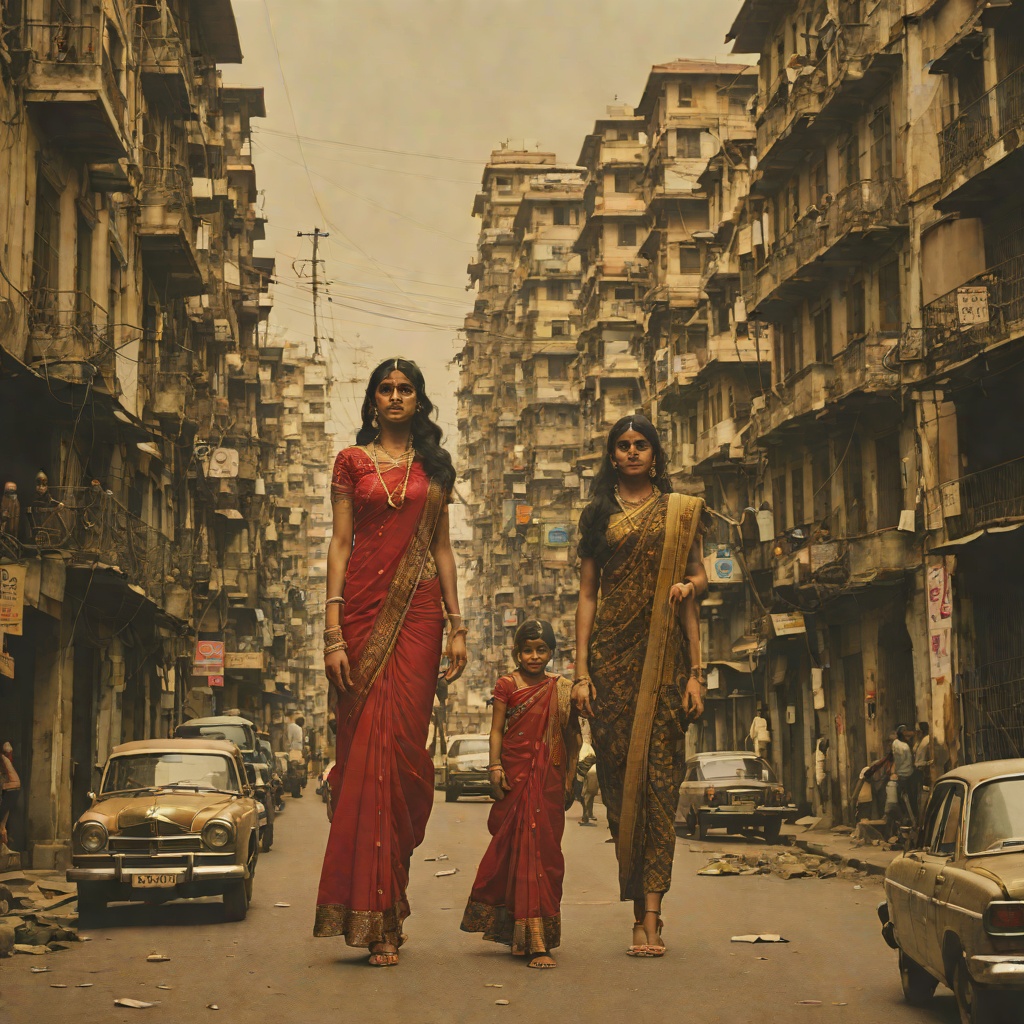
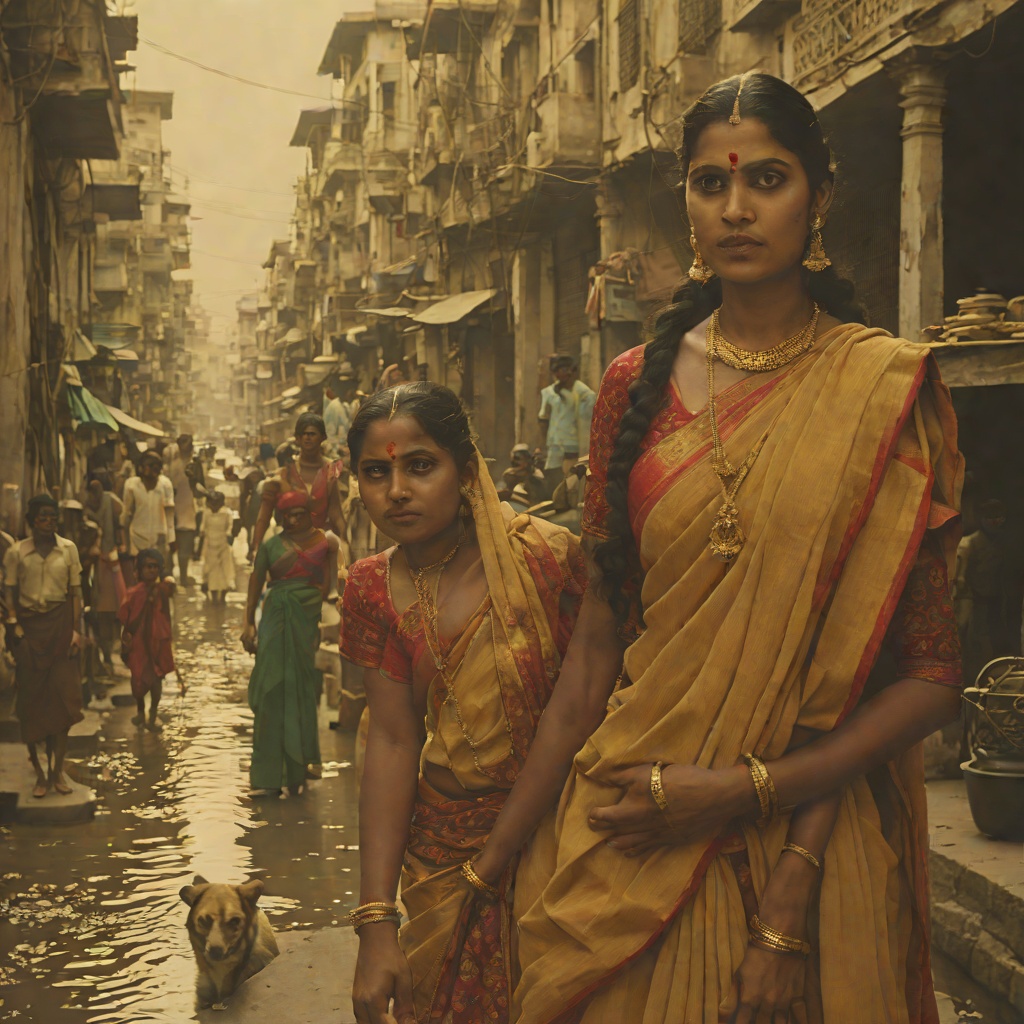
Mafia Queens of MumbaiKamathipura is the sprawling red-light district of south-central Mumbai, a place whose very name conjures the city's commercial sex trade and the criminal underworld that has long fed on it. In the book's telling, the district is not merely a backdrop but a living, breathing entity whose narrow lanes and crowded tenements have shaped the destinies of the women who worked and ruled there. It is the primary setting for the rise of Gangubai Kathiawadi, the legendary brothel madam who became known as the queen of Kamathipura, and its physical and moral geography—from its richest lane to its most squalid byways—provides the framework for understanding how power, wealth, and exploitation were distributed among the city's most marginalized women.
Geography and Origins
Kamathipura's origins lie in the physical transformation of Mumbai itself. The area was part of the low-lying, uneven land that came to be called Dongri after the Dongri hills were levelled in the mid-1700s as part of the plan to merge the seven original islands of Mumbai. This reclaimed patch, stretching between Crawford Market in the north and the reclaimed lands of Kamathipura in the south, became a distinct neighborhood, and Kamathipura grew up as its southern extension. By the time of the book's narrative, the district was a dense, choc-a-block warren of rickety old buildings, its bazaar spilling onto the footpaths with stalls selling Islamic teachings, attar, henna, and jewellery, its air thick with the aroma of kebabs, biryani, and kheer from Iranian and Afghani restaurants.
The district's function as a red-light area was well established by the mid-twentieth century. In the 1950s and '60s, commercial sex workers occupied the western strip of Kamathipura between Suklaji Street, Manaji Rauji Street, and part of Foras Road, from Alexandria Cinema up to Jairaj Bhai Lane. The sex workers did not cross Manaji Rauji Street or pass through the central and eastern areas, as the local residents did not like it. Yet the district's geography forced an uneasy coexistence: children attending the municipal school at the junction of Kamathipura 7th Street and people visiting the several temples in the west had to pass through the brothel areas, and St Anthony's Girls' High School, built in the early 1920s with its entrance on Bellasis Road, overlooked Kamathipura 14th Street from its rear, where over 250 sex workers could be seen from the upper floor of the building.
Gangubai's Domain
The district's most storied figure is Gangubai Kathiawadi, who came to control Kamathipura's brothels with an iron fist. Her rise was cemented by her victory in the bade gharwali elections, a local system of brothel madam elections that strengthened her position as the dominant power in the area. Gangubai's authority was built on a reputation for protecting sex workers from men like Shaukat Khan, who abused the women, took advantage of them by promising marriage, or simply did not pay for sex. These men feared Gangubai for her connections with the underworld and the police, while the sex workers revered her as a mother, calling her Ganguma.
Her most significant act of leadership came in 1960, when the authorities of St Anthony's Girls' High School and local residents demanded that part of the red-light belt be evacuated, citing the negative influence sex workers could have on young students and the rule that prostitution could not be carried out within two hundred yards of an educational institution. A strong movement picked up against the presence of the red-light zone, with constant agitations and meetings with civic authorities, but both parties refused to budge. When the anti-prostitution sentiment swelled, the sex workers sought Gangubai's help, and she successfully spearheaded the movement against their evacuation, cementing her status as their protector.
Gangubai lived in a small room in Kamathipura 12th Lane, which was said to be the richest lane in the area during her time. Journalists and ministers would come to meet her there, and her political connections won her an appointment with Prime Minister Jawaharlal Nehru at his residence in New Delhi, making her the only local brothel madam to secure an audience with the head of the country. She never married but adopted several children, most of them orphans or homeless, who lived with her in her small room; she took a keen interest in bringing them up and ensuring they received a good education. Of all these children, only one, Babbi, lives in Kamathipura today.
Decline and Legacy
After Gangubai's death from old age sometime between 1975 and 1978, effigies of her were placed in the brothels of the area, and busts were made in her memory and installed in brothels that were under her jurisdiction. Framed pictures of her are still seen in most homes and brothels in the red-light area, where she is revered like a goddess. A social worker from the area, initially sheltered by Gangubai, describes her as 'the queen of Kamathipura', noting that even today, framed pictures and statuettes of Gangubai are there in the brothels, and that people may not have known her but have surely heard of her.
Yet the district's decline mirrors the fading of its queen. Today, Kamathipura 12th Lane, once the richest lane in the area, is a shadow of its former self. In abysmal contrast to its former glory, there is nothing much to see except hand-carts, stray dogs, and ordinary people engaging in petty work. The lane, which used to be lined with Ambassadors, Mercedes, and Bentleys, is now filled with cycles and rusting scooters. Unlike the other by-lanes, 12th Kamathipura has only a brothel or two, a far cry from the time of the iron-willed Gangubai. The district's decline is also reflected in the darker assessment of a former restaurateur, who notes that Gangubai's goodness was just one side of the coin: 'It is not like she was all milk and honey. We mustn't forget that she was running a brothel at the end of the day. It is not easy to have thousands of woman working for you... there was surely a dark side to her that people have chosen to forget. You cannot prosper in this business otherwise.'
The Broader Underworld Context
Kamathipura's significance extends beyond its own lanes into the wider geography of Mumbai's underworld. The district is connected by proximity and by the movements of its denizens to other notorious areas: Sonapur Lane near Reay Road, a stone's throw from the railway station, where some thousand shanties nestle as a nesting ground for crime and disease, and where Jyoti Adiramalingam, aka Jyoti amma, reigns as the godmother; and the Sion-Koliwada slum on Antop Hill, infamous for its illicit hooch distillery owned by Vardharajan in the '80s and later notorious as a drug den under Mahalaxmi Papamani. These areas, like Kamathipura, are built on the margins of the city, their residents living in hutments that remind observers of the shanties at Sonapur Lane.
The district also sits within a city shaped by colonial legacies and criminal law. The name Marine Lines, near which Bada Qabrastan, a sprawling 7.5-acre cemetery, abuts the station, is a British legacy from the mid-nineteenth century when the British put Mumbai on the trade route. Prohibition, introduced in Bombay on 1 August 1939 as central to Mahatma Gandhi's and the Congress' agenda, created the conditions for bootlegging and the rise of figures like Jenabai Daaruwali, whose own power base was built on the illicit liquor trade. The stringent law MCOCA, promulgated by the Maharashtra government in 1998 after the abrogation of TADA, was later used to control criminal gangs, and its reach extended into the lives of women connected to the underworld, from Asha Gawli, who headed the women's wing of her husband Arun's Akhil Bharatiya Sena, to others arrested under its provisions. Kamathipura, as the most visible symbol of the city's tolerated vice, stands at the center of this web, a place where the state's laws, the underworld's power, and the lives of marginalized women all converge.