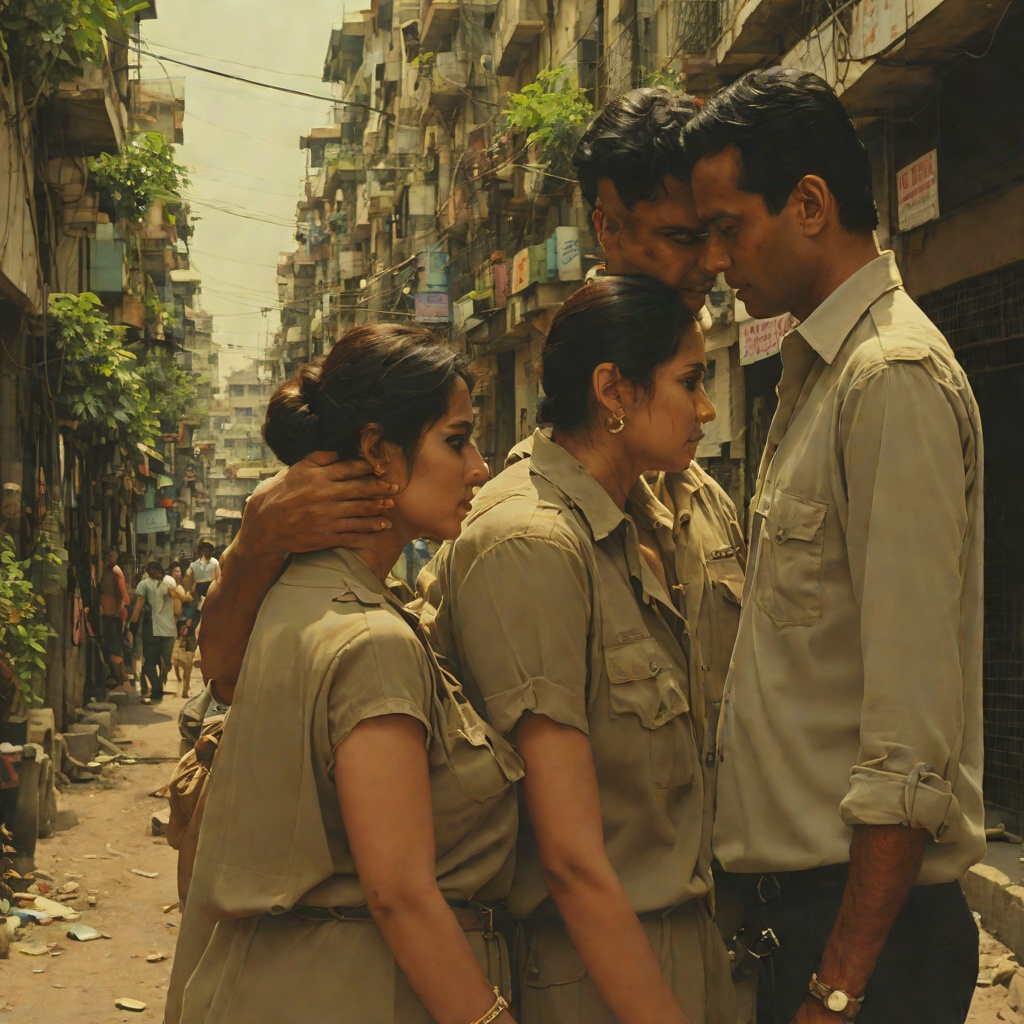
Monica Bedi
Mafia Queens of MumbaiMonica Bedi occupies a unique place in the rogues' gallery of Mafia Queens of Mumbai: she is the starlet turned mobster's moll, a woman whose celebrity was built not on her film roles but on her catastrophic entanglement with one of Mumbai's most wanted gangsters. Her narrative arc, from the tarmac of Lisbon airport to the confessional stage of a reality TV show, encapsulates the book's fascination with how women in the underworld are simultaneously criminalized and commodified by the media. More than any other figure in the book, Bedi's story is a study in the construction and reconstruction of a public image, a tale of scandal, punishment, and a carefully orchestrated comeback.
The Arrest in Lisbon and the Image of the Moll
The book introduces Bedi at her lowest point, through the eyes of deputy superintendent of police Devendra Pardesi, who receives her at Lisbon airport during a high-stakes extradition. The scene is staged like a film: a police convoy cuts across the runway, and as the second car's door opens, a woman's legs emerge "daintily," toes first, then heels, in a gesture of almost choreographed grace. Pardesi, a hardened officer, is struck by the contrast between her appearance and her circumstances. He notes that she is no Madhuri Dixit, but attractive enough to "fit the bill of a mobster's moll perfectly," a phrase that reveals how readily the law itself reads her through the lens of cinema. Clutching a Bible like a lifesaver, her fair skin pale and translucent in the afternoon heat, she seems naive and fragile, a stark mismatch for the grim reality of her situation. The moment crystallizes the central tension of her public persona: the woman who appears so vulnerable is also the woman who fled the country with Abu Salem, one of the men accused of masterminding some of Mumbai's most gruesome murders.
The Revelation of the Double Life
The path to that Lisbon runway began with a deception that Bedi narrates with painful clarity. She had known Salem as Arsalan, a supposed businessman from Dubai, and it was only when he ordered her to flee Mumbai that he revealed his true identity. He confessed that he was not a businessman but a gangster with underworld connections, and that the police, having discovered their relationship, might detain her under some law. The revelation was doubly devastating. Bedi, who had only heard of Dawood Ibrahim and Chhota Shakeel, had no idea who Abu Salem was, and the shock of his confession was compounded by an even more brutal disclosure: Salem was already married to Samira Jumani and had a child with her. His protestation that he only loved her and wanted to start a new life did little to soften the blow. Bedi describes crying more than she ever had in her life, realizing that fate had turned her into nothing more than a mobster's moll. This moment of betrayal, narrated from her own perspective, reframes her not as a willing accomplice but as a woman deceived, a distinction that becomes central to her later appeal for public sympathy.
Imprisonment, Scandal, and the Struggle for a New Life
Bedi's ordeal did not end with her extradition. While Salem languished in Arthur Road Jail, she faced her own legal battles and a relentless media assault. The book records her public declaration that she no longer pined for him, stating that she loved him but that all his actions were selfish and that he had duped her. This attempt to sever her public identity from his was complicated by a fresh scandal: exactly a month after her release, newspapers and TV channels published purported nude pictures of her, allegedly shot with hidden cameras from inside Central Jail. Bedi said the pictures "horrified and pained" her, and she framed the leak as a violation of her right to life and dignity. India's apex court intervened, restraining the media from showing the images, a rare legal victory for a woman whose body had become public property. After renting a modest flat in Mulund, she began the slow work of rebuilding, giving interviews to garner sympathy and support, yet a year on, she was still living in obscurity, her past defining her present.
The Bigg Boss Comeback and the Performance of Redemption
The turning point came in 2008 with Bigg Boss 2, the Indian version of the UK's Big Brother. When producers offered Bedi a place on the show in August 2008, she seized the opportunity, and within a few episodes she had won over both the other fourteen contestants and the audience. Her strategy was a masterclass in media performance. In one episode, she broke down, claiming she needed the prize money because she was leading a hand-to-hand existence. She insisted that people thought she had money but that it was not true, that she needed the money to buy a home because nobody would rent to her, that she was there to change the image the media had created of her. Her plea, delivered between sobs, was a direct appeal to the public to separate the woman from the scandal. The performance worked, winning her the sympathy of millions, including Congress MP Sanjay Nirupam, who promised her an apartment in the upmarket Lokhandwala colony. Even her eviction from the show was only temporary, as she returned as a wild card entrant, and her on-screen flirtation with the self-proclaimed Casanova Rahul Mahajan, who indirectly proposed marriage, provided yet more fodder for the media machine she was trying to control.
Narrative Role and Thematic Significance
Within the larger tapestry of Mafia Queens of Mumbai, Bedi's story serves as a counterpoint to the other women, who are largely defined by their agency within the criminal world. Unlike Gangubai, who commands respect in Kamathipura, or the drug lords who build empires, Bedi is defined by her relationship to a man and by her performance for the media. Her trajectory illustrates the book's broader argument about the thin veneer of civilization in Mumbai, where the lines between crime, celebrity, and politics are constantly blurred. Her story is also a testament to the power of narrative: the same woman who was vilified as a mobster's moll could, through a carefully staged performance of vulnerability on national television, be rehabilitated into an object of public sympathy. The book presents her not as a criminal mastermind but as a woman caught in a system that consumes and remakes her image, a figure whose ultimate crime may have been not her association with Salem, but her failure to control the story that was told about her.