Mumbai underworld
Mafia Queens of MumbaiThe Mumbai underworld is the vast, shadowy criminal ecosystem that defines the city's underbelly, a world of smuggling, extortion, drugs, and murder that operates alongside—and often in collusion with—the legitimate structures of power. It is a domain historically ruled by men, from the gold-smuggling don Haji Mastan to the gang lords Karim Lala and Vardharajan Mudaliar, and later the fearsome D-Company of Dawood Ibrahim. Yet the book that maps this territory is not primarily concerned with these male titans; instead, it trains its lens on the women who carved out their own empires within this brutal patriarchy. The underworld, as depicted here, is not a monolith but a complex, shifting network of alliances and enmities, a space where a woman's cunning, courage, and sheer audacity could, against all odds, make her a queen. It is a world where, as the narrative insists, it is far easier to be a Dawood Ibrahim than a Jenabai Daaruwali, precisely because the women who succeeded had to overcome not only the law and rival gangs but also the deeply entrenched gender dynamics of the criminal fraternity itself.
Geography of the Underworld
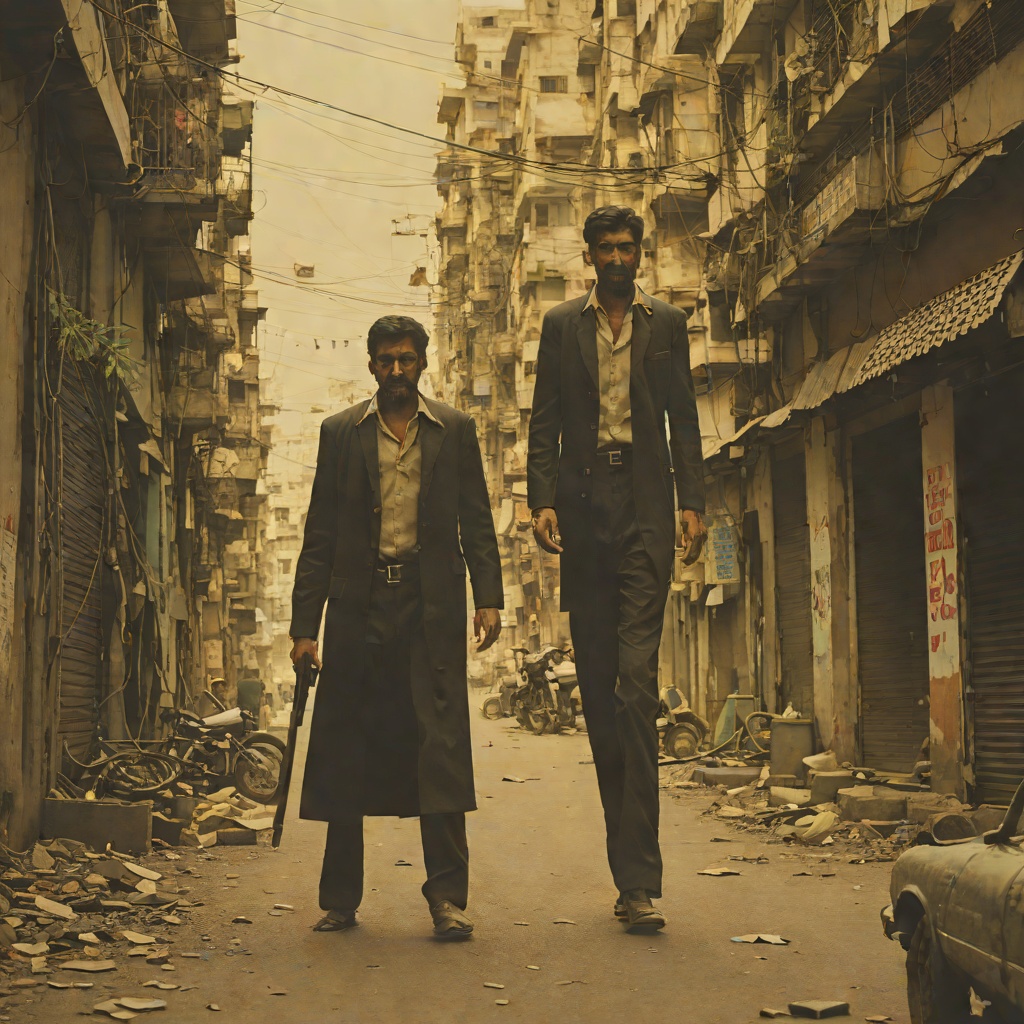
The underworld is not an abstract concept but is rooted in the specific, vividly rendered geography of Mumbai. Its heartland is Dongri, a dense, predominantly Muslim neighborhood that was once part of the original island of Mumbai, its hills levelled in the mid-1700s to merge the city's seven islands. By the book's present, Dongri is a warren of rickety old buildings, partially shadowed by the gigantic JJ Flyover, its bazaars spilling onto footpaths with the aroma of kebabs, biryani, and sweetmeats. This is the birthplace of Jenabai, who grew up in a one-room tenement on Mohammad Ali Road, and it remains a crucible of criminal activity. Nearby lies Bada Qabrastan, a sprawling 7.5-acre cemetery abutting Marine Lines station, a hundred-and-fifty-year-old testament to mortality where commuters cut across graves to reach the over-bridge, and where the city's rich, from Haji Mastan's daughters to Dawood Ibrahim, remember their dead with profusions of rose petals. Further south, the lanes of Kamathipura form the city's most infamous red-light district, the domain of Gangubai Kathiawadi, while the Sion-Koliwada slum on Antop Hill, once home to Vardharajan's illicit hooch distillery, became a drug den under Mahalaxmi Papamani. Even the cramped, thousand-shanty settlement of Sonapur Lane near Reay Road station, whose name refers not to gold but to the death and sleep of nearby Muslim graveyards, was transformed by Jyoti Adiramalingam into a source of untold wealth. Each of these locales is not merely a setting but a resource, a territory to be controlled, and a base from which these women launched their operations.
The Architecture of Power and Alliances
The underworld's structure is defined by a constant, violent jostling for power among rival gangs. The book's narrative is punctuated by the shifting fortunes of these factions, from the Pathan gang of Amirzada, Alamzeb, Shehzada, and Samad Khan to the then-underdogs, the Ibrahim brothers Dawood and Sabir. The incessant bloodshed between these groups was a great cause of concern for the stalwarts Haji Mastan and Karim Lala. It was into this volatile landscape that Jenabai Daaruwali stepped, not as a combatant but as a strategist and peacemaker. When Mastan despaired of ever uniting the warring factions, it was Jenabai who proposed the seemingly impossible: bringing the Pathans and the Ibrahim brothers together as a single force. She orchestrated a historic meeting at Mastan's house, encouraging Dawood and Sabir to place their hands on the holy book and swear to abstain from killing their brothers. This peace pact, engineered by Mastan but with Jenabai as its undisputed chief architect, was a watershed moment in the history of the Mumbai underworld, demonstrating that a woman's influence could shape the very architecture of criminal power. The alliance was immediately put to use, as the combined gangs forced the Chiliyas off their land on Belassis Road, allowing Mastan to build a tall, multi-storied building on the plot.
Women in a Man's World
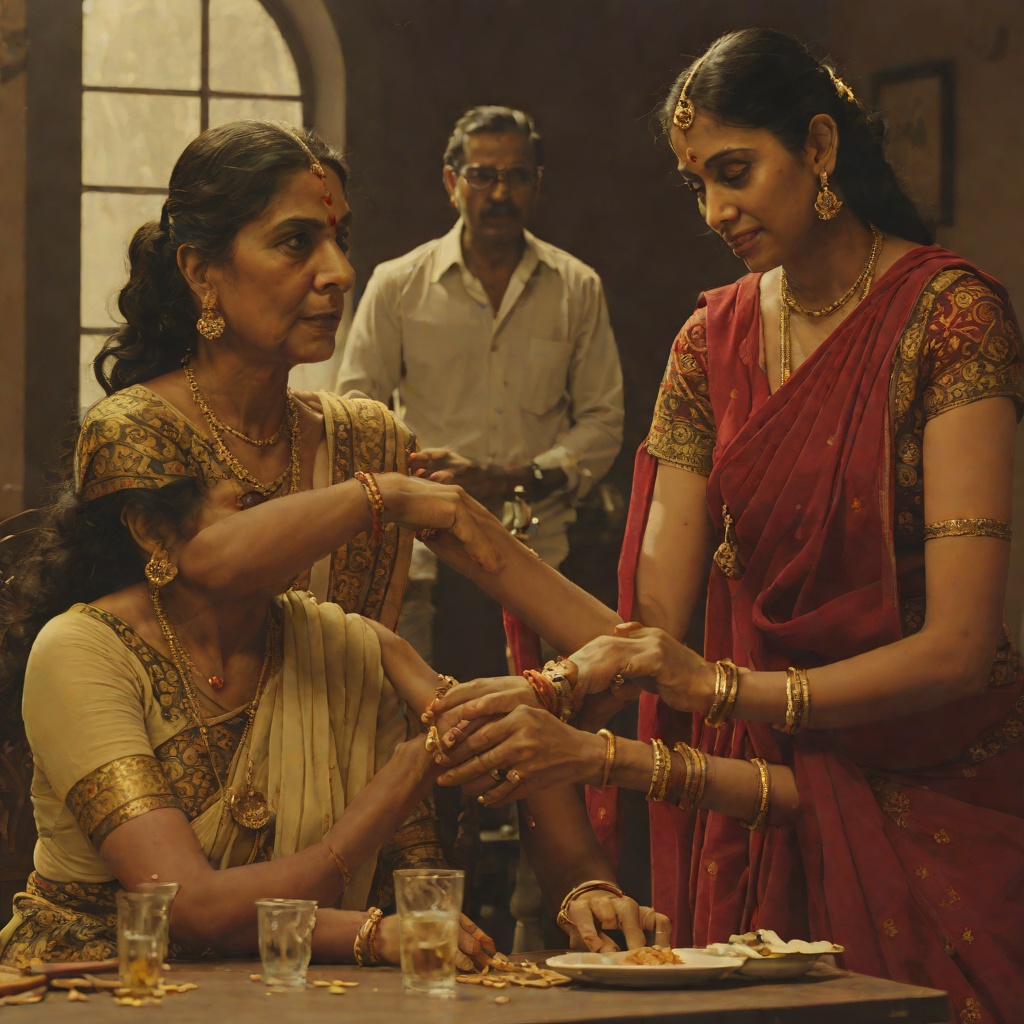
Within this male-dominated hierarchy, women occupied a precarious and paradoxical position. The mafiosi had long followed a rigid code of not hurting women or children, a code that offered a measure of protection but also underscored their status as outsiders to the real business of violence. Yet the women who rose to prominence did so by mastering the rules of the game. They were not blank slates written upon by dangerous men; they were active agents who pushed the boundaries of dominant moral codes. The narrative explicitly frames crime for these women as not only a way of transcending poverty but also a life-saving concept. This is starkly illustrated by the fate of Sapna Didi, a woman who dared to stand up against Dawood Ibrahim. Her audacity was met with a dastardly death: of the twenty-two stab wounds inflicted on her, four were specifically targeted at her private parts, a grisly message of warning to other women not to dally with the mafia. The underworld's tolerance for women was conditional, and the price of overstepping its bounds could be fatal. Yet others, like Mahalaxmi Papamani, built their power through sheer economic acumen. An illiterate slum-dweller, she split from her mentor Savitri in 1991 to run a heroin business independently, buying five kilogrammes of heroin for one to three lakh rupees and converting ten grams into forty pudis sold at twenty-five rupees each, earning a profit of around three lakh rupees per month—the salary of a CEO. She converted the Sion-Koliwada slum into a drug den, employing hundreds of unemployed men and women, and became known as the poor man's bank, keeping thirty to forty lakh rupees in cash tucked inside her sari.
The Underworld's Global Reach
The Mumbai underworld was never confined to the city's boundaries; it was deeply integrated into transnational networks of crime and global capitalism. Haji Mastan's rise began when he started as a coolie at the Mumbai docks in 1944, unloading boxes from ships coming from Aden, Dubai, and Hong Kong, before making millions from smuggling gold, silver ingots, and electronic goods. This global connectivity extended to the drug trade, with the Sion-Koliwada slum becoming a node in the Rs 1,000-crore drug trafficking industry that spanned borders. The underworld's reach is also evident in its patterns of exile and extradition. When Chhota Rajan split from the D-Company in 1993, he went into hiding in Southeast Asia, while his wife Sujata Nikhalje flew home to India with their three daughters. The global nature of the underworld is perhaps most dramatically captured in the flight from Lisbon, where a police convoy at the airport escorted a thirty-six-year-old man in a black T-shirt and track pants, who seemed to be smiling nervously, and a tall, slim woman clutching a Bible like a lifesaver. These were Abu Salem and Monica Bedi, being handed over by Portuguese police to Indian officials, a moment that underscored how the tentacles of Mumbai's criminal empire stretched across continents, from the smuggling hubs of Raxaul and Birganj on the Nepal border to the cities of Dubai, Karachi, and Lisbon.
The State and the Underworld
The relationship between the Mumbai underworld and the state was one of complex, often violent, entanglement. The police and various agencies—the Crime Branch, the Anti-Narcotics Cell, the Narcotics Control Bureau, the Central Bureau of Investigation—are ever-present, yet their efforts are frequently thwarted. Papamani, for instance, was arrested on several occasions but always managed to escape conviction for want of evidence. The state's response could also be brutally extrajudicial, as seen in the Suleman Usman Bakery firing on 9 January 1993, when the Special Operation Squad, suspecting terrorists were holed up on the terrace, opened fire inside the bakery, killing nine Muslims while failing to apprehend any terrorists or seize any firearms. This unwarranted police action was the last straw for Jenabai, who, in her long white chikan nightgown and a shawl covering the grey in her hair, with a rosary in one hand and a white flag in the other, led a peace demonstration through the torched lanes of Dongri to the Pydhonie junction. The underworld also intersected with the highest levels of political power, as when Gangubai Kathiawadi, through her political connections, secured an appointment with the then prime minister of India, Jawaharlal Nehru, at his residence in New Delhi, becoming the only local brothel madam to meet the head of the country. This blurring of lines between criminal enterprise, state power, and political influence is a defining feature of the Mumbai underworld as the book portrays it.
The Underworld's Enduring Significance
The Mumbai underworld, as chronicled in this book, is more than a collection of criminal gangs; it is a mirror reflecting the complex dynamics of gender, power, and survival in modern India. The book's central argument is that the women who navigated this world were not mere victims or appendages of their male counterparts but were fascinating figures who pushed the boundaries of society's dominant moral codes. Their stories, from Jenabai's peacemaking to Gangubai's advocacy for sex workers, from Papamani's drug empire to Sujata Nikhalje's takeover of her husband's extortion business, reveal a world where crime was a rational, if brutal, response to poverty and limitation. The underworld was a space of both extreme danger and extraordinary opportunity, a place where a woman could be simultaneously a queen and a target, a protector and a predator. By focusing on these thirteen women, the book offers a unique and unflinching look at the underbelly of Mumbai, a world that continues to shape the city's identity and whose legacy of violence, ambition, and resilience endures.