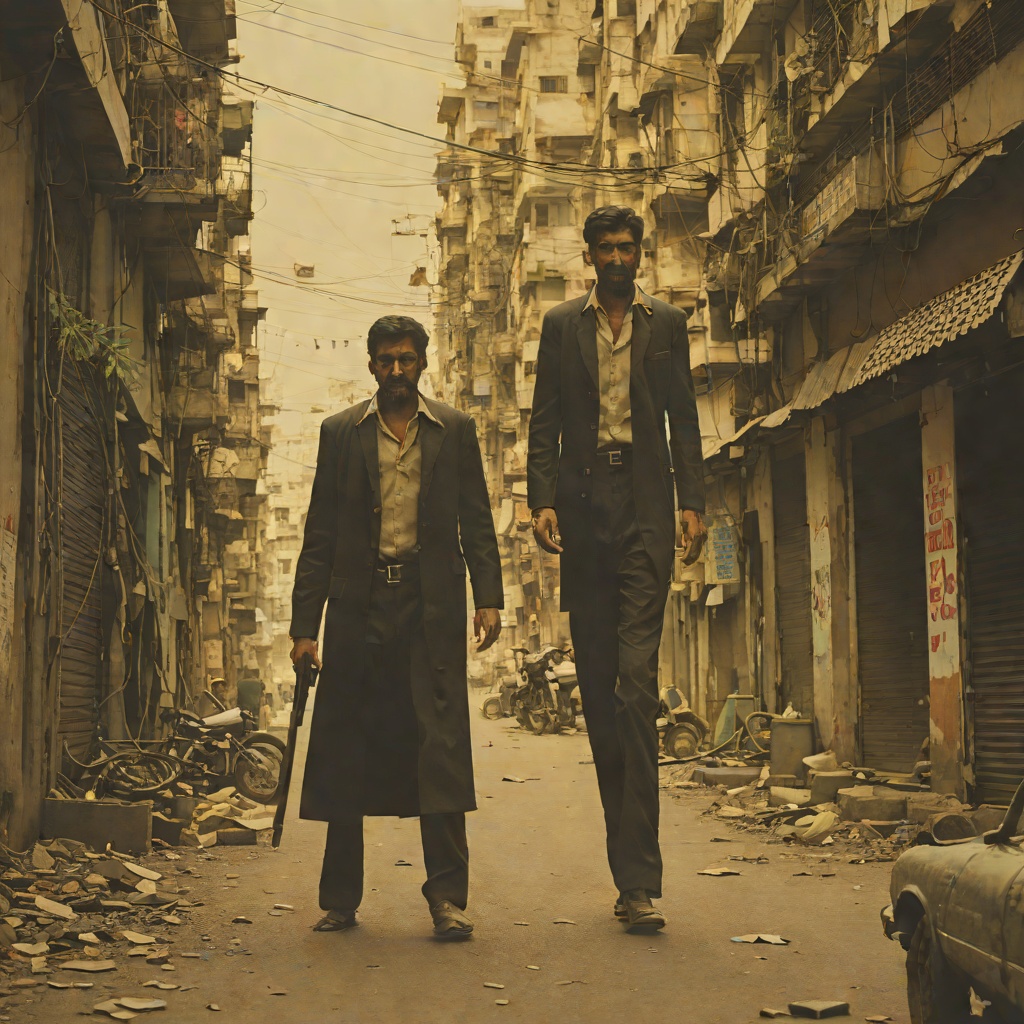
Murder of Sapna didi
Mafia Queens of MumbaiThe Murder of Sapna didi, also known as the Murder of Ashraf Khan, stands as one of the most brutal and instructive episodes in the annals of the Mumbai underworld. In 1994, a woman who had once been a beautiful, burqa-clad Muslim girl named Ashraf, and who had transformed herself into the vengeful gangster known as Sapna didi, was tortured and stabbed to death in her own home. The killing was not a random act of violence but a calculated, sadistic punishment ordered by the D-Company hierarchy, specifically its right-hand man Chhota Shakeel, for her audacious plan to assassinate the don Dawood Ibrahim. The event exposes the rigid patriarchal code of the mafia, the extreme vulnerability of women who challenge its power, and the profound failure of the legal system to convict the perpetrators, leaving a legacy of fear and silence in its wake.
The Victim and Her Transformation
Sapna didi was not born a gangster. She was Ashraf Khan, a strikingly attractive young woman who had grown up in a rigid, conservative family. Her life changed when she met Mehmood Khan, a man she fell in love with at a friend's wedding and married without hesitation. In their five years together, Mehmood's one aim was to make her happy, and she embraced the freedom marriage gave her, travelling with him and living the life of a queen. The only problem was that she was unsure what he did for a living. She disliked the men he hobnobbed with, who called him Mehmood Kalia because of his dark complexion, a nickname she took offence at. He would never explain what his work entailed, leaving her ignorant of his dangerous life.
Her world shattered on the day she went to receive him at the Santa Cruz airport. After a brief, loving phone call in which he promised to be back that evening, she saw him smile at her before he disappeared into a crowd. She then heard faint gunshots and found a pool of blood near a parked taxi. She was told he had been taken to Cooper Hospital, but no such patient was admitted there. After going from station to station, she was finally directed to J.J. Hospital, where she was told that a wanted gangster named Mehmood Khan had been shot dead in an encounter. She knew this was a lie, as he could not have carried a gun past airport security. In the morgue, she identified his body, holding his lifeless fingers, the same fingers that had wiped her tears. The vague premonition that had left her anxious earlier in the day had finally revealed itself: Mehmood was dead. The next day, his body was buried at Nariawali Qabrastan, and she stubbornly waited outside the masjid until all the rites were performed. She learned that the press reported police inspector Emanuel Amolik had led the encounter, and she memorised his name. This event, the fake encounter killing of her husband, was the catalyst that transformed the protected Ashraf into the vengeful Sapna didi.
The Plot and the Move to Hujjrah Mohalla
Driven by grief and a thirst for revenge, Sapna didi conceived a daring and dangerous plan: to kill Dawood Ibrahim himself. Her audacity was such that one of her own men squealed about her plan to Chhota Shakeel, Dawood's right-hand man. This betrayal meant things could turn extremely dangerous for her. To be closer to her enemy's den, she deliberately moved to a small house in Hujjrah Mohalla in Nagpada, a lane barely a few metres away from Mussafir Khana, Dawood's paternal home. The area was a den for small-time goons during the night, and her decision to house herself close to the serpent was a bold and risky move. She wanted to be alerted to any movement of Dawood's men. The narrator, who was besotted with her, learned of the betrayal but his ego wouldn't allow him to reveal what he knew, so he kept a watch on her whereabouts instead. He believed that the mafiosi followed a rigid code of not hurting women or children, and that they would only threaten her with dire consequences. He was very wrong.
The Night of the Murder
On that particular night in 1994, Sapna was down with a high fever and asked her men to leave her alone so she could rest. It is almost certain that one of her own goons alerted Shakeel to the fact that she would be alone. A little before 10 p.m., the bustling lane of Hujjrah Mohalla seemed to take a collective breath and stiffen when a red Maruti van drove in. Four men stepped out with daggers and pistols and forced their way into the building where Sapna lived. They barged into her house, woke her up, and dragged her down onto the floor. They began kicking her in the stomach and on the hands first, to prevent her from getting hold of any weapon. Defenceless, Sapna kept screaming for help, but her timid and unarmed neighbours stayed away. The four men then reached for their daggers and began stabbing her. Instead of killing her at one go, they deliberately targeted her breasts and vagina, subjecting her to an extreme level of torture. Her flesh was riddled with wounds and blood splattered on the floor. She suffered over twenty-two stab wounds before she finally collapsed. The men left the way they had come, and the people who had gathered outside, drawn by her screams, stood by in silence, knowing these were Dawood and Shakeel's men.
Aftermath and the Failure of Justice
The narrator rushed to the hospital when he heard the news, but was told that Sapna had succumbed to her wounds and been brought in dead. He felt responsible for everything that happened to her, regretting that he had turned her into Sapna didi. He knew her chances of killing Dawood were slim, and if he had put some sense into her, she would probably have remained the beautiful, burqa-clad Ashraf he knew. In the four years since the incident, he was sure of one thing: Chhota Shakeel and his men would never be brought to book for her murder. During the initial investigations, the police made a few arrests, but they were unable to convict anyone for the crime. The residents of Hujjrah Mohalla, many of whom were witnesses to the murder, don't even dare to speak about the incident, trying to forget it ever happened. The narrator, however, cannot forget her, as she was the only woman he had ever been so madly besotted with, the one who made him think and behave like a human being, treating him like a friend and not like a gangster.
Thematic Significance: A Woman's Place in the Underworld
The murder of Sapna didi is a chilling illustration of the necropolitical power exercised by the Mumbai underworld, where the lives of women are deemed expendable when they challenge the patriarchal hierarchy. The extreme, sexualised torture inflicted on her was not just a killing but a message, designed to make an example of anyone who dared to even think of taking on Dawood. The event also highlights the profound failure of the state's legal system, which was unable to convict the perpetrators despite the presence of many witnesses. The silence of the neighbours and the residents of Hujjrah Mohalla underscores the climate of fear that the mafia cultivated, a fear that proved more powerful than the law. The transformation of Ashraf, a protected and loving wife, into Sapna didi, a vengeful gangster, and her subsequent brutal death, serves as a tragic commentary on the cyclical nature of violence in the underworld, where the state's own extrajudicial killings, like the fake encounter of her husband, create the very monsters they claim to be fighting.